
Best Business Card Holder Material Comparison Guide: How to Choose Durable and Stylish Options
4th Feb 2026
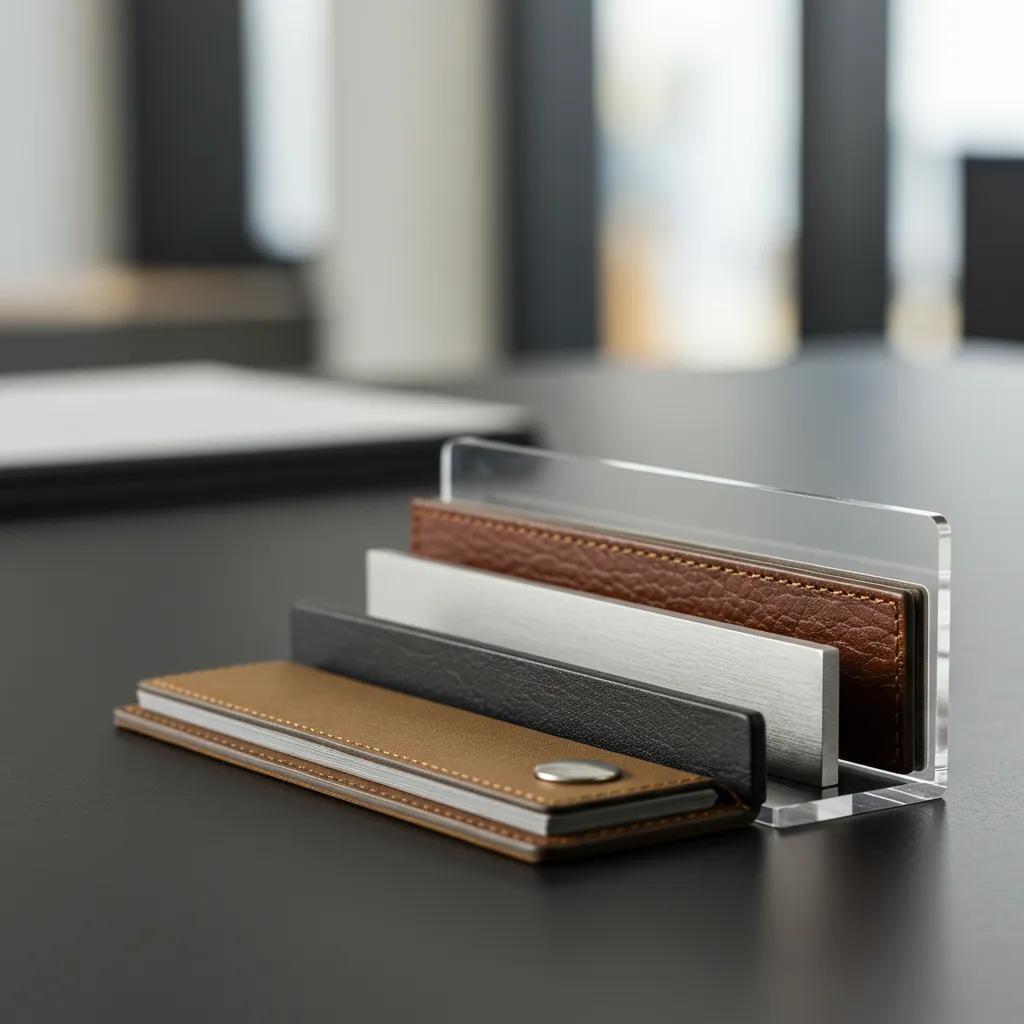
A business card holder is a small but strategic accessory that protects, organises and presents your cards; this guide explains how to choose the best material by comparing durability, style, cost and maintenance. Readers will learn which materials—metal, leather, acrylic, wood and plastic—perform best under specific conditions, how maintenance affects lifespan, and which materials suit desktop display, pocket carry or gifting. The guide compares scratch resistance, corrosion and impact tolerance alongside aesthetic cues such as texture, finish and customisation potential, so you can match material to professional context. Practical checklists and comparison tables help you weigh upfront cost against long-term value, and brief care instructions extend any holder’s life. We also highlight sustainability and functional features like RFID protection where relevant. Start by assessing durability, then review style and upkeep before using the decision checklist to pick a material that fits your daily use and budget.
What Are the Most Durable Materials for Business Card Holders?
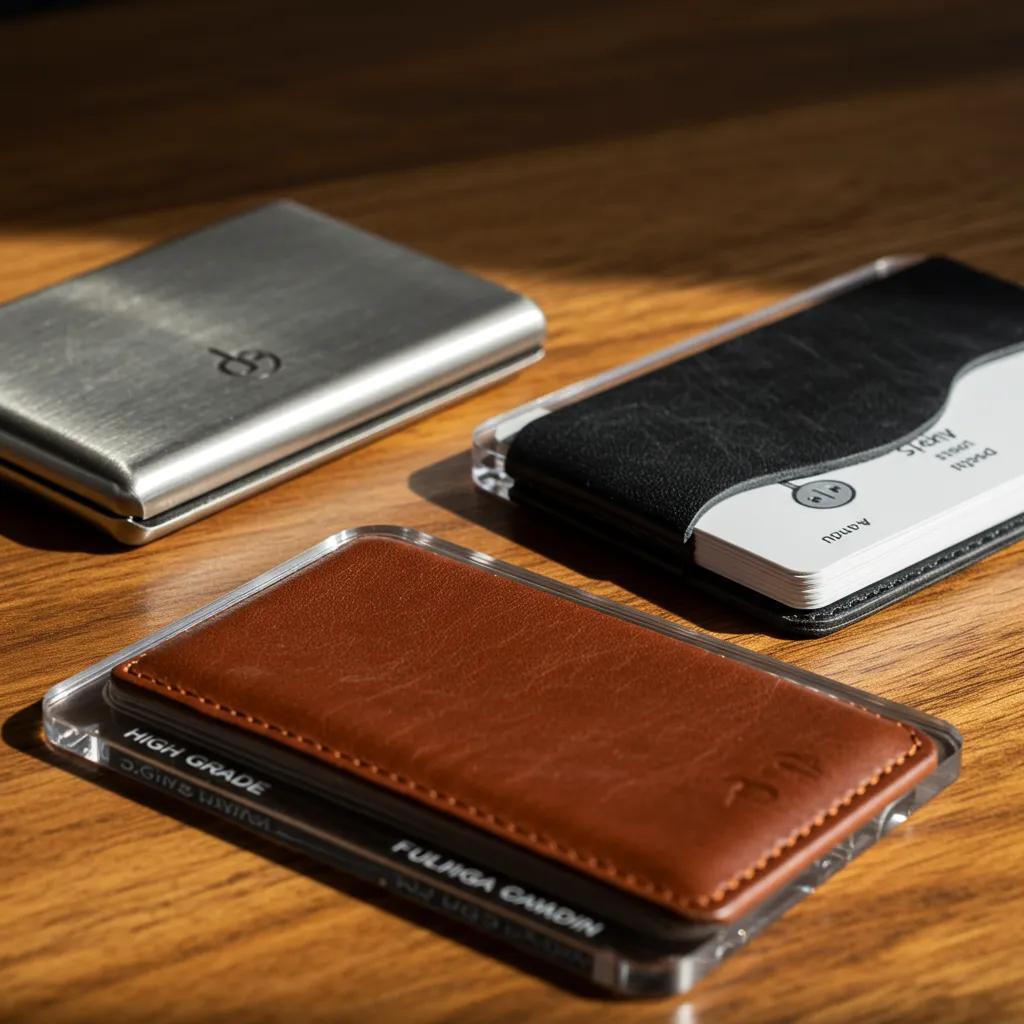
Durability for card holders means resistance to scratches, impact, corrosion and wear from frequent handling; this section ranks common materials and explains the mechanisms that make some materials last longer. Metal alloys like stainless steel and aluminium resist deformation and abrasion, leather develops a protective patina while requiring upkeep, and high-grade acrylic offers clarity and decent impact resistance when thick enough. Understanding these trade-offs helps you choose a holder that survives pocket carry, desktop traffic or outdoor events. Below is a short ranked list of the top durable materials followed by a comparison table that summarises durability attributes.
Top three most durable materials (ranked):
1. Stainless steel / aluminium: High strength, low corrosion, excellent scratch resistance.
2. High-grade acrylic (display-grade): Good impact resistance if thick; resists yellowing and maintains clarity.
3. Full-grain leather (well-maintained): High wear resistance develops attractive patina but needs conditioning.
Introduction to durability table — the table shows practical ratings and quick rationales for common materials.
|
Material |
Durability Rating |
Rationale |
|---|---|---|
|
Stainless steel |
High |
Resists scratches and corrosion; holds shape under pressure |
|
Aluminium |
High |
Lightweight and strong; anodised finishes improve scratch resistance |
|
Acrylic (display-grade) |
Medium-High |
Good impact resistance at thicker gauges; resists moisture and display wear |
|
Full-grain leather |
Medium |
Durable with conditioning; resists tearing but vulnerable to moisture |
|
Plastic (injection-moulded) |
Low-Medium |
Affordable but prone to scratches and deformation over time |
This comparison clarifies why metals typically top durability rankings and when acrylic or leather are suitable alternatives for specific uses. For display-focused durability and clarity, many retailers offer dedicated display-grade acrylic solutions such as single riser stands designed for frequent handling and desktop use, which combine resilience with visual presentation.
How Does Leather Compare in Durability and Style?
Leather balances durability with classic style because its fibres compact and form a protective surface over time, creating a patina that many professionals value. Full-grain leather offers the best longevity, resisting tears and maintaining structure with regular conditioning, while bonded or lower-grade leather will show wear faster and may delaminate. Leather’s porous nature makes it vulnerable to moisture and oils, so routine cleaning and conditioning extend usable life and preserve appearance. For gifting and executive use, leather communicates tradition and refinement, though it requires more upkeep than metal or acrylic options.
Are Metal Business Card Holders More Durable Than Acrylic?
Metals such as stainless steel and aluminium generally outperform acrylic for lifetime strength and scratch resistance, because metal hardness and corrosion resistance prevent deformation and maintain edges. However, acrylic can withstand impact without denting and offers optical clarity that metal cannot match; thick, display-grade acrylic resists cracking and retains a pristine finish on desktops. Choose metal for pocket carry and rugged use, acrylic for visible desktop displays and modern minimalist styling; in many cases weight, finish and intended use determine the better choice rather than raw durability alone.
Which Business Card Holder Materials Offer the Best Style and Professional Appeal?
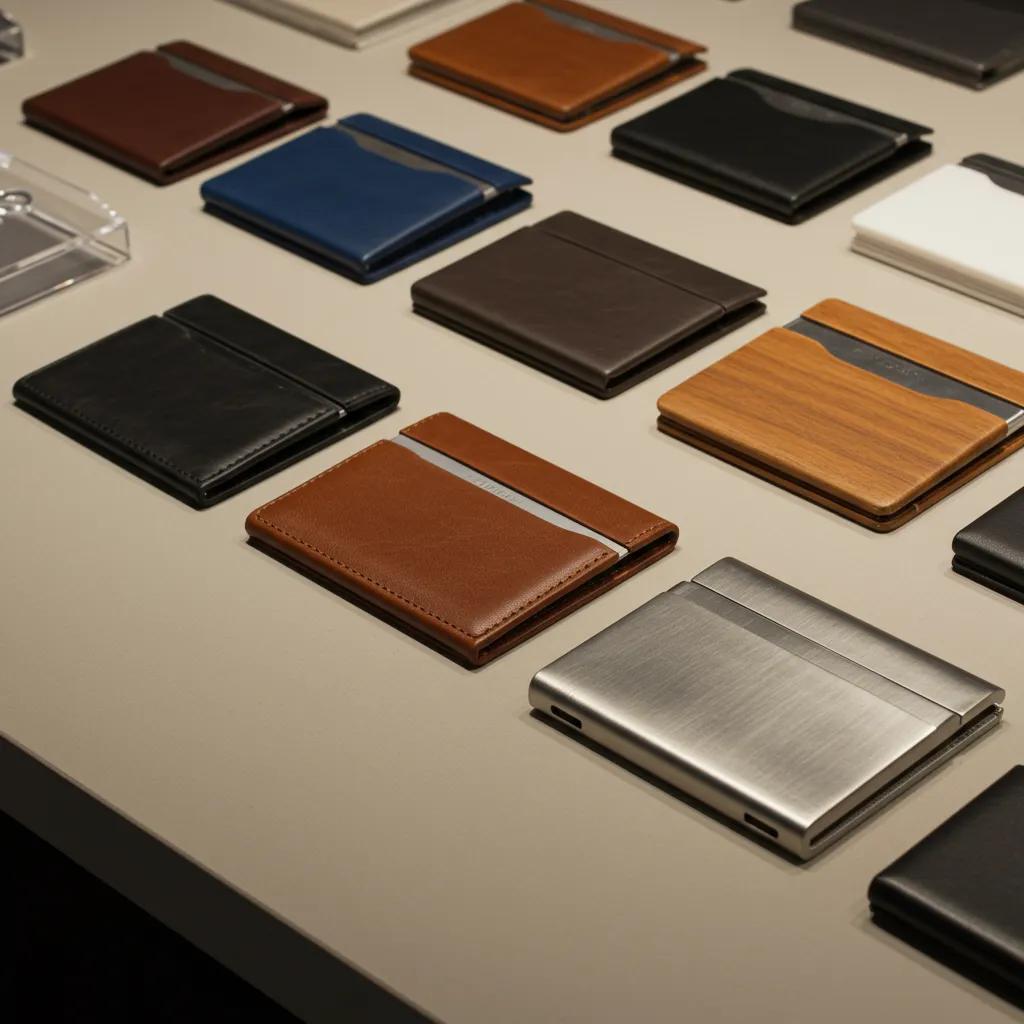
A material’s aesthetic traits—texture, finish and customisation potential—drive perceived professionalism; this section maps materials to professional contexts and offers styling tips to match brand or personal image. Modern workspaces favour clean, minimal materials like clear acrylic and brushed aluminium for contemporary brands, while traditional corporate settings often prefer dark leather or polished stainless-steel finishes. Creative industries may choose warm wood grains or coloured acrylics to reflect personality. The brief table below ties materials to typical professional contexts and helps you pick an aesthetic that aligns with your role and presentation needs.
Intro to style table — this mapping helps match material to the situations where its look and texture matter most.
|
Material |
Aesthetic traits |
Best professional contexts |
|---|---|---|
|
Leather |
Tactile, classic, monogram-friendly |
Corporate executives, gifting |
|
Acrylic (display-grade) |
Clear, modern, minimal |
Reception desks, creative studios |
|
Wood |
Warm, unique grain, natural |
Boutique brands, eco-focused businesses |
|
Brushed metal |
Sleek, durable, premium |
Tech, consulting, minimalist brands |
|
Plastic (coloured/transparent) |
Casual, affordable |
Informal settings, large events |
Styling tips list — quick practical actions to ensure a professional look.
- Clean and polish materials according to their finish to maintain visual impact.
- Match holder tone to brand colours or stationery for a coordinated presentation.
- Add subtle customisation (monogramming, engraving) where appropriate to elevate gifting.
These styling steps make even modest materials appear purposeful and professional when executed consistently.
What Makes Leather Business Card Holders a Classic Choice?
Leather conveys tradition and understated quality through grain, stitch detail and the potential for monogramming, which all signal attention to craft. Dark browns and blacks remain corporate defaults, while lighter or coloured leathers suit creative roles; finishes like pebble or smooth grain change tactile perception. Leather holders pair well with cloth-lined interiors and offer refined gifting appeal, though they require conditioning to keep edges from drying. For professionals wanting a timeless impression, a well-maintained leather holder remains a reliable choice.
How Do Acrylic and Wood Holders Enhance Aesthetic Appeal?
Acrylic provides a clean, contemporary presence with crisp edges and optical clarity that showcases cards without distraction, ideal for reception displays and modern desk setups. Wood introduces warmth and individuality through visible grain and finishes; it suits boutique, artisanal or eco-conscious brands. Both materials support customisation—acrylic can be laser-engraved or coloured, wood accepts stains and engraving—so choose based on whether you prefer minimal transparency or tactile uniqueness.
How Do Cost and Maintenance Vary Across Business Card Holder Materials?
Upfront price and ongoing maintenance determine total cost of ownership; this section summarises typical cost bands and upkeep tasks so you can weigh initial spend against expected lifespan. Metal and acrylic holders often require minimal maintenance beyond occasional polishing, while leather and wood need conditioning and humidity control. The table below outlines typical cost ranges and realistic maintenance commitments, enabling a quick assessment of value over time.
Intro to cost table — use this to compare initial investment versus routine care and expected life.
|
Material |
Typical cost range |
Maintenance requirements + lifespan |
|---|---|---|
|
Stainless steel |
Mid to high |
Occasional polishing; very long lifespan |
|
Aluminium |
Low to mid |
Low maintenance; anodising reduces wear |
|
Acrylic |
Low to mid |
Clean with non-abrasive cloth; good lifespan if thick |
|
Leather |
Mid to high |
Regular conditioning; lifespan depends on care |
|
Wood |
Low to mid |
Periodic polishing and humidity control; durable if treated |
Maintenance tips list — practical tasks to extend longevity across materials.
- Use microfiber cloths and mild cleaners on acrylic and metal to avoid scratches.
- Condition leather every 6–12 months and store away from moisture.
- Apply light oil or wax to wood and avoid prolonged sun exposure.
These practices reduce replacements and make higher upfront costs pay off through extended use.
What Are the Maintenance Needs for Leather and Wood Holders?
Leather and wood need scheduled care because both are porous natural materials that respond to humidity, oils and sunlight. Clean leather by wiping dirt away, then apply a suitable conditioner to replenish oils and protect seams; avoid water immersion. For wood, remove dust, use light furniture oil or wax to nourish the grain, and keep pieces away from direct heat and humidity swings to prevent warping. Proper storage—flat and protected—reduces edge wear and maintains appearance for years.
Are Plastic and Metal Holders More Affordable and Low-Maintenance?
Yes; injection-moulded plastic and metal holders tend to be more affordable upfront and demand less ongoing care. Plastics can scratch and may deform under heat, so avoid abrasive cleaners and high temperatures. Metals need occasional polishing to remove fingerprints or oxidisation on certain finishes, but stainless steel and anodised aluminium resist corrosion and provide excellent long-term value. For high-traffic or event use where replacement cost matters, plastic or metal is often the most pragmatic choice.
How to Choose the Right Business Card Holder Material for Your Needs?
Choosing the right material follows a simple three-step decision process that matches durability, style and budget to your primary use-case; use the checklist below to make a fast, confident choice. First identify where and how often the holder will be used, then prioritise durability or style, and finally factor maintenance willingness and cost. The short checklist below serves as a practical how-to for selecting the best material in different scenarios.
Decision checklist — three practical steps to choose a material:
1. Assess use-case: Is it for pocket carry, desktop display or gifting?
2. Prioritise attributes: Decide whether durability, visual appeal or low maintenance is most important.
3. Match material to budget and care: Choose metal or plastic for durability/low upkeep, acrylic for display clarity, leather or wood for premium style.
This checklist helps translate preferences into a material choice that aligns with daily realities and brand presentation.
Which Materials Are Best for Outdoor or Frequent Use?
For outdoor events or heavy handling, metals (stainless steel, aluminium) and high-grade acrylic are best because they withstand abrasion, moisture exposure and repeated removal. Metals offer superior drop and scratch resistance for pocket carry; acrylic resists moisture and stays visually intact on tables and stands. Protective coatings and cases further extend life in harsh environments, and choosing thicker gauges or anodised finishes improves resilience without sacrificing appearance.
How Does Budget Influence Material Selection?
Budget determines where you compromise between style and longevity: entry-level plastic or aluminium provides affordability and low maintenance, mid-tier acrylic and treated woods offer better aesthetics, while premium leather or designer metal choices prioritise appearance and gifting value. Invest more where the holder is a reflection of brand identity or a long-term personal accessory; save on disposable or event-specific holders. For display-grade needs combined with visual impact, consider dedicated acrylic single riser stands from reputable display suppliers that balance presentation with reasonable cost.
For direct sourcing of display-oriented acrylic solutions, retailers such as Retail Display Direct provide display-grade acrylic stands and risers that pair well with business card presentations; their product range focuses on durable, quality display solutions suited to reception and desktop use.