
DIY Cork Board Ideas to Transform Your Space with Creative and Organisational Solutions
11th Feb 2026
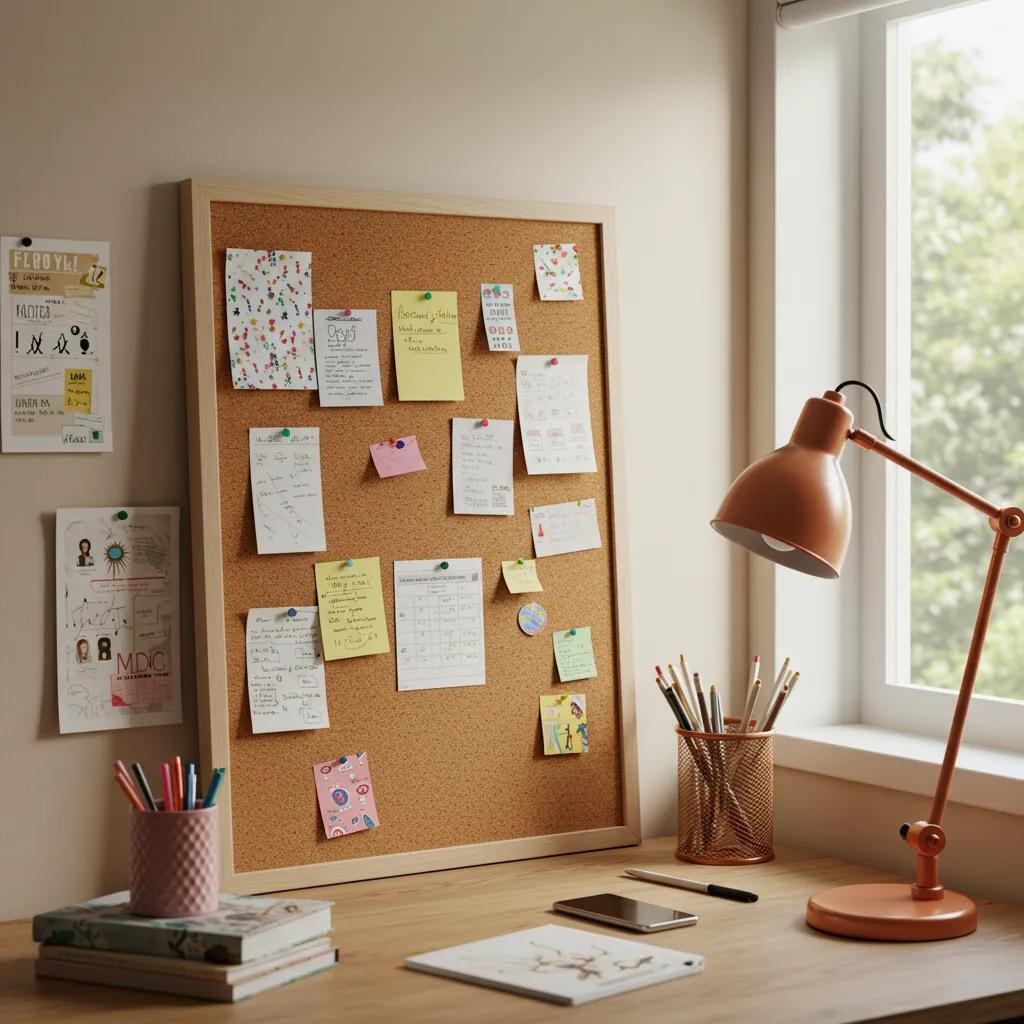
A cork board is a simple wall organiser that provides an instant canvas for creative expression and practical planning, and using DIY cork board ideas can dramatically transform a room’s look and function. This article shows how decorative cork board ideas and cork board organisation ideas bring style and order to home offices, kitchens and kids’ study areas, and explains practical techniques from fabric-covered cork board methods to painted cork board designs and upcycled wine cork projects. Many people struggle with cluttered walls and scattered notes; a well-designed pinboard solves that by centralising reminders, inspiration and schedules while doubling as décor. You’ll find step-by-step personalise tips, space-specific layouts, sustainable craft projects and clear buying guidance so you can choose the best cork boards for DIY projects. First we explore decorative finishes and design-led arrangements, then we cover organisation systems for different rooms, followed by sustainable and pattern-based projects, and finally how to choose quality cork boards for lasting results.
What Are the Best Decorative Cork Board Ideas to Refresh Your Space?
A decorative cork board refresh starts by treating the board as both a functional surface and a design element: simple finishes like fabric, paint or wallpaper create immediate visual impact, while tile layouts or framed boards elevate cork into wall art. This approach works because cork provides a forgiving, pin-friendly surface that accepts adhesives and trims, allowing creative techniques to bond securely and hold long-term. The following list highlights quick decorative approaches and a one-sentence how-to for each to inspire immediate projects.
- Fabric-covered cork board: Wrap cork in cotton or linen with spray adhesive and trim the edges for a soft, textile finish.
- Painted cork board designs: Prime the surface, use stencils or tape for geometric patterns, and seal with a clear matte spray.
- Wallpaper accent: Apply lightweight wallpaper with craft glue, smoothing bubbles, then frame the board for a gallery look.
- Washi tape accents: Create borders and gridlines with washi tape for removable, low-commitment decoration.
- Cork tiles and shapes: Arrange hexagon cork tiles into a honeycomb for texture and modular rearrangement.
These decorative cork board ideas offer fast visual updates and suit varied interiors from minimal study corners to bold living-room installations. Understanding the materials for each technique leads to safer application and better finish, which we’ll explain in the next subsection as we cover adhesives and finishing tips.
How Can You Use Fabric, Paint, and Wallpaper to Personalise Cork Boards?
Fabric, paint and wallpaper are primary tools to personalise cork boards because they change texture, colour and pattern while keeping the board’s pinning function intact.
For a fabric-covered cork board, start with a pre-cut cork sheet or framed board, use spray adhesive on the cork, stretch the fabric evenly and secure the reverse with staples or craft tape; finish the edges with trim to prevent fraying.
When painting, use a water-based primer suitable for porous surfaces, add masking tape for crisp shapes, and finish with a clear protectant to reduce pinhole wear; this process ensures painted cork board designs remain vibrant under frequent pinning.
Wallpaper application works best with light-weight papers and a decoupage adhesive, smoothing from the centre out to avoid trapped air; trim carefully and consider a shallow frame to protect the paper edges.
Using these methods you can create a fabric-covered cork board or painted cork board designs tailored to a room’s palette, and the next section highlights unique design arrangements that make pinboards read as art.
Which Unique Cork Board Designs Enhance Home and Office Aesthetics?
Unique cork pinboard ideas transform ordinary organisation into statement pieces by combining shapes, frames and mixed materials to match a space’s aesthetic. Consider hexagon cork board tiles arranged in an irregular cluster to create a sculptural wall, or a framed art-style pinboard with a decorative moulding to blur the line between noticeboard and artwork. Mixed-material designs—cork paired with reclaimed wood slats or a thin metal rail for clips—introduce contrasting textures that suit modern offices or reception areas. For precise execution, measure tile gaps carefully, use a level and temporary tape guides, and secure tiles with construction adhesive for a flush, professional finish. These design-led approaches let a cork board become a focal point, and next we’ll briefly note where to source durable base boards suitable for these decorative techniques.
Retail Display Direct supplies a range of cork boards and pinboards suitable as durable bases for decorative finishes, including commercial-grade options that withstand frequent pinning and re-styling. Choosing a sturdy, even-surfaced cork board reduces bubbling and wear when applying fabric, paint or wallpaper, so starting with a quality board simplifies every decorative technique.
How Can Cork Boards Improve Organisation in Different Spaces?
Cork boards improve organisation by centralising information and creating visually structured zones for tasks, schedules and lists; they work because pins and clips provide quick access while the board surface gives a persistent visual memory cue. In practical terms, cork boards convert scattered notes into tagged zones—project trackers, meal planners or reward charts—which reduces cognitive load and streamlines routines in home offices, kitchens and kids’ areas.
The following list outlines three high-value uses and simple layout ideas for each space to implement immediately.
- Home office project board: Use columns for To Do, In Progress and Done with coloured pins and a pinned mini-calendar for deadlines.
- Kitchen command centre: Combine a recipe pocket, meal-planner grid and magnetised clip for shopping lists to keep family routines aligned.
- Kids’ study station: Create a timetable, homework-inbox and reward chart with playful colours and clear labels to encourage responsibility.
These cork board organisation ideas map directly to everyday tasks and reduce friction in routine workflows; to choose the right board size and accessories for each space, review the table below for practical recommendations.
Different rooms call for specific board sizes and accessories to maximise usability and aesthetics.
|
Space |
Recommended Board Size |
Suggested Accessories |
|---|---|---|
|
Home office |
Medium (A2–A1) |
Clips, sticky note pads, coloured pins |
|
Kitchen |
Small to medium (A3–A2) |
Recipe pockets, marker clips, magnetic strip |
|
Kids’ study |
Small (A4–A3) |
Rounded frame, activity pockets, washable labels |
These comparisons show how matching board size and accessories to a space enhances function without overcomplicating installation. Choosing the right configuration leads naturally into installation and maintenance tips that keep boards tidy and durable.
What Are Effective Cork Board Organisation Ideas for Home Offices and Kitchens?
Home offices benefit from modular zones on a cork board that separate tasks, reference materials and inspiration so you can focus on priorities; cork pins provide fast reorganisation as project needs change.
For a simple home office layout, divide the board into labelled sections—planning, active tasks, archives—and use consistent pin colours to signal urgency or type; a pocket for frequently used forms keeps loose papers neat.
Kitchen command centres work best when centred near the work triangle and include a magnet or clip for the shopping list, a weekly meal plan grid and a family message area; laminate printable templates for durability and pin them to the board.
Installation tips: mount at eye level, anchor with appropriate wall hardware for the board’s weight, and refresh pins quarterly to maintain a tidy surface.
These practical layouts increase clarity and circulation of information, and the next subsection explains adaptations that make cork boards child-friendly.
How Do Kids’ Study Areas Benefit from Custom Cork Board Bulletin Boards?
Custom cork bulletin boards in kids’ study areas foster routine, visual learning and responsibility by giving children a dedicated place for schedules, achievements and reminders.
Design a kid-friendly board with bright colours, clear icon labels and low-mounted placement so children can interact independently; incorporate a homework checklist, timetable and reward stickers to reinforce positive habits.
Safety and durability matter: choose rounded frames, sturdy backing and low-toxicity adhesives to keep the surface safe for everyday use, and select wipe-clean accessories for messy projects.
Use larger pinheads or clips for small hands and rotate display items to keep interest high—this encourages ownership and makes study time more engaging.
With these strategies a cork pinboard becomes a learning tool rather than a static notice area, and that sustainability-focused creativity is explored next.
What Are Creative and Sustainable DIY Cork Board Projects You Can Try?
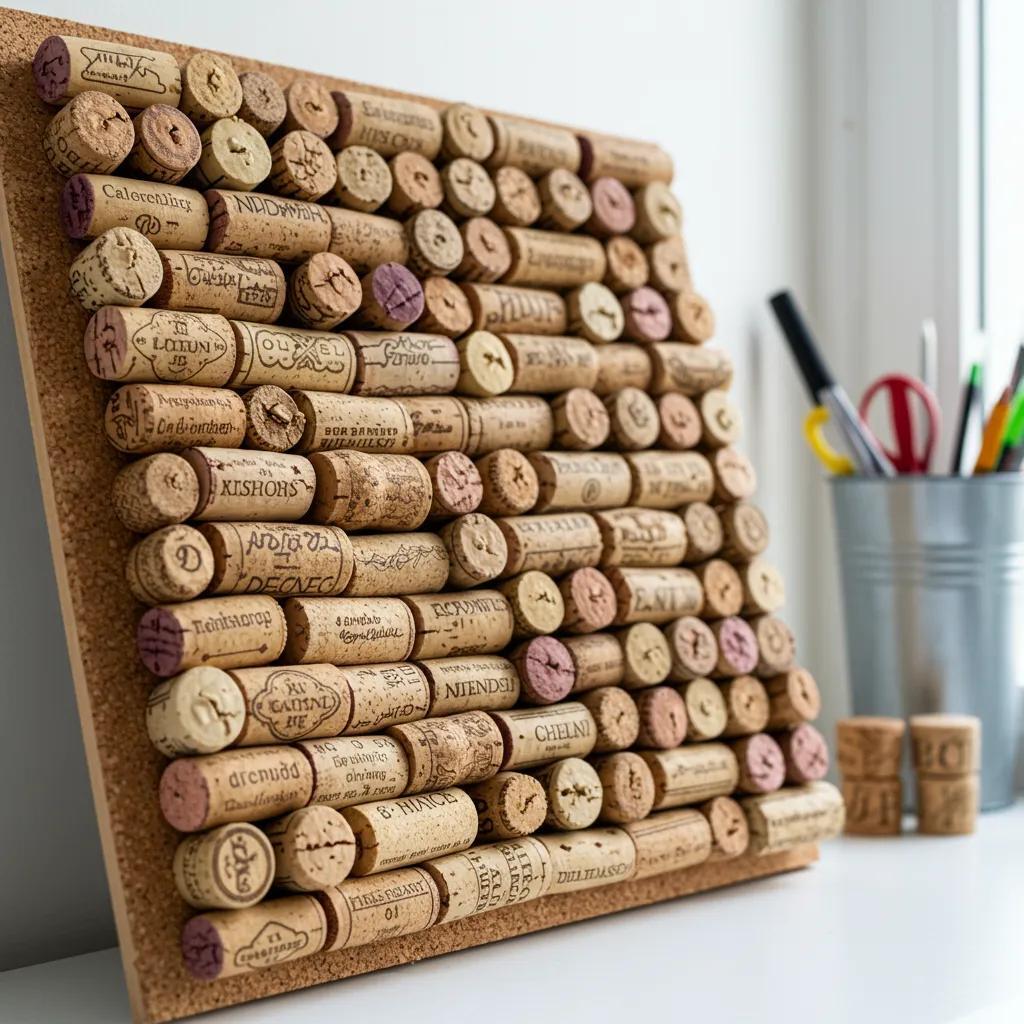
Creative cork board projects can be both decorative and sustainable, reusing wine corks or repurposed materials to build unique surfaces that reduce waste while adding texture. Upcycling wine corks into a mosaic panel demonstrates how recycled corks form a dense, attractive bulletin surface when glued onto a backing board; this approach combines craft with eco-friendly practice.
Beyond wine cork mosaics, consider using offcuts of cork roll to create mosaic tiles or mixing cork with reclaimed wood for contrast; these projects highlight cork’s renewable profile and acoustic benefits. The following short list suggests starter projects that balance creativity and environmental conscience.
- Upcycled wine cork board: glue corks in a tight mosaic on plywood backing for a tactile pinboard.
- Cork tile ombre wall: stain tiles and arrange by tone to create a gradient statement piece.
- Mixed-material notice strip: pair narrow cork strips with wooden ledges for clips and small shelves.
These sustainable DIY cork board ideas showcase cork’s versatility and recyclability while producing functional décor; for step-by-step upcycling instructions see the next subsection.
How Can You Upcycle Wine Corks and Use Eco-Friendly Materials for Cork Boards?
Upcycling wine corks into a cork board begins by collecting uniform corks, slicing any rounded ends for flush alignment and arranging them in a tight grid on a sealed plywood backing.
Use a strong PVA or construction adhesive and press corks firmly, working in small sections to maintain alignment and prevent gaps; when dry, trim the board edges and seal with a low-VOC clear coat to protect against grime.
Sustainable adhesives and recycled backing materials enhance the eco credentials of the finished board, and grouping corks by colour or cut creates visual patterns that resemble tiles. This process turns waste corks into a durable, pin-friendly surface and introduces an approachable way to combine sustainability with functional design, which pairs well with pattern-based installations described next.
What Innovative Cork Board Patterns and Shapes Can Transform Your Walls?
Pattern and shape innovations—like herringbone, ombre mosaics or interlocking hexagons—use cork tiles or cut sheets to create bold visual textures that scale across a feature wall or a compact notice area.
For herringbone or tile patterns, measure and mark a level grid, dry-fit tiles before adhering and use spacers or a small gap where required to account for expansion; adhesive selection and consistent pressure ensure a long-lasting bond.
Ombre effects work by staining or choosing tiles in graduated tones and sequencing them from light to dark across the installation, creating depth without additional materials.
Recommended tools include a fine-tooth saw for tile trimming, a spirit level, and a contact adhesive suitable for cork; attention to layout and sequence prevents mismatches and simplifies installation. Patterned cork installations convert functional pinboards into architectural details that anchor a room’s design and lead into how to pick the best base materials for these projects.
How Do You Choose Quality Cork Boards for Your DIY Projects?
Choosing quality cork boards starts with four attributes: material density, thickness, backing type and edge finish; these characteristics determine durability, pin-holding performance and suitability for decorative techniques.
The table below compares common cork product types by durability, size options and best use-cases, helping match the right substrate to your DIY cork board idea.
|
Cork Product Type |
Durability |
Best DIY Use |
|---|---|---|
|
Pre-framed board |
High |
Ready-to-hang notice boards and decorative framed pinboards |
|
Cork roll/sheet |
Medium |
Fabric-covered cork board and custom-sized panels |
|
Cork tiles |
High |
Pattern installations (hexagon or herringbone) and modular walls |
This comparison clarifies trade-offs: tiles and pre-framed boards are durable and install cleanly, while cork rolls give flexibility for custom shapes. Next, use a practical checklist to finalise selection before purchase.
The following checklist summarises key buying checks when selecting boards for DIY projects.
- Material density: Choose dense, self-healing cork for frequent pin use.
- Thickness: Opt for thicker boards (6mm+) where deep pins or heavy items are expected.
- Backing: Look for rigid backing or consider an MDF substrate for large panels.
- Size availability: Match board size to project scope to minimise seams and joins.
Checking these attributes ensures the board performs well under repeated use and accepts decorative finishes without warping, which leads into supplier considerations that help secure appropriate materials.
What Types and Sizes of Cork Boards Are Best for Different DIY Ideas?
Match project types to board formats: small desktop or study boards work well in A4–A3 sizes using pre-framed or sheet cork, while feature walls and tiled installations favour larger tiles or cork rolls for seamless coverage.
For modular hexagon cork board installations, select tiles of consistent thickness and order extras for cuts and mistakes; for fabric-covered desk pinboards, a pre-cut sheet or framed board in A3 size gives a neat, portable solution.
Consider mounting hardware and wall substrate: heavier boards need robust anchors, while lightweight cork roll can be mounted with construction adhesive or double-sided tape on smooth walls.
Choosing the right type and size reduces installation complexity and improves longevity, and for readers ready to buy materials the following subsection explains supplier benefits.
Why Choose Durable Cork Boards from Retail Display Direct for Lasting Results?
Retail Display Direct is an Australian supplier specialising in retail display solutions and offers cork boards and pinboards designed for commercial durability, which makes them a practical starting point for DIY projects that expect heavy use.
Retail Display Direct’s focus on cork board supply and bulk options is useful when planning larger projects or multiple boards; selecting the right board at the outset saves time during decorative and installation stages and supports long-term performance.