
Wooden vs Plastic A-Frame Signs: Which Material Is Better for Your Outdoor Signage?
23rd Feb 2026
Choosing between wooden and plastic A-frame signs involves balancing aesthetics, durability, cost, and environmental impact to fit your brand and location needs. This comparison clarifies key material differences in appearance, weather performance, maintenance, and eco-footprint so that you can make an informed choice. You will discover how wooden frames deliver rustic appeal but require sealing and repainting, while plastic variants offer superior weather resistance with minimal upkeep. The article then explores longevity under UV, wind, and rain; sustainability considerations and end-of-life handling; tailored recommendations for cafes, retail, and real estate; plus practical tips to enhance stability, graphic interchangeability, and overall lifespan.
What Are the Key Differences Between Wooden and Plastic A-Frame Signs?
Wooden and plastic A-frame signs differ in core material properties that influence aesthetics, longevity, and upkeep. Wood provides a natural grain and warmth rooted in renewable forestry, giving a handcrafted impression ideal for boutique venues. Plastic uses polymers such as HDPE, PVC, or corrugated Coroplast to deliver a water-resistant, low-maintenance display suited to high-traffic or urban environments.
How Do Wooden A-Frame Signs Stand Out in Aesthetics and Brand Appeal?
Wooden A-frame signs combine material authenticity with bespoke finishes to enhance brand storytelling. They showcase:
- Rustic texture that communicates traditional craftsmanship and a bespoke feel.
- Custom engraving possibilities for logos, borders, and decorative motifs.
- Painted chalkboard inserts that reinforce artisanal or café-style atmospheres.
These features strengthen brand alignment for businesses seeking organic or heritage positioning while setting the stage for durability and maintenance considerations.
What Makes Plastic A-Frame Signs Durable and Weather Resistant?

Plastic A-frames leverage synthetic polymers to protect graphics and structures in all seasons. Key advantages include:
- Waterproof composition that prevents water absorption and rot.
- UV-stabilized additives that reduce fading and brittleness under sun exposure.
- Lightweight construction for easy transport and repositioning.
These properties support long-term outdoor use with minimal intervention, preparing the foundation for cost and maintenance analysis.
How Do Cost and Maintenance Compare Between Wood and Plastic Signs?
Below is a concise comparison of initial cost and ongoing upkeep for wooden vs plastic A-frame signs:
|
Sign Type |
Initial Investment |
Maintenance Requirements |
Long-Term Value |
|---|---|---|---|
|
Wooden A-Frame |
Moderate to High |
Annual sealing or repainting, insect check |
Premium aesthetic, higher upkeep |
|
Plastic A-Frame |
Low to Moderate |
Occasional cleaning, UV-protective spray |
Low labor cost, durable finish |
Wood demands more attention but appeals to niche venues, whereas plastic minimizes expenses over its service life.
Which Material Offers Better Durability and Weather Resistance for Outdoor Use?
Selecting material for outdoor signage hinges on resistance to sun, rain, and wind. Durability and weather performance determine how long a sign remains legible and structurally sound in specific environments.
How Long Do Plastic A-Frame Signs Typically Last Outdoors?
Plastic A-frames display lifespans according to polymer type and exposure:
- HDPE or PVC signs often exceed 10 years with proper care.
- Rigid Coroplast panels perform well for 1–2 years before showing edge wear.
- Recycled-content plastics maintain strength but may fade faster in intense UV climates.
These timelines support planning replacement cycles and budget allocations for exterior displays.
What Maintenance Does Wood Require to Withstand Weather Conditions?
Wooden A-frames demand proactive protection against moisture and pests:
- Surface sealing with exterior-grade varnish or marine lacquer twice annually.
- Repainting of chalkboard or printed panels to freshen branding.
- Elevated placement on standoffs to prevent ground moisture contact.
Consistent maintenance preserves grain aesthetics and structural integrity while preparing for performance comparisons.
How Do Both Materials Perform Against UV Exposure, Wind, and Rain?
|
Environment Factor |
Wooden A-Frame |
Plastic A-Frame |
|---|---|---|
|
UV Exposure |
Gradual fading and fiber degradation |
Slower color loss with UV-inhibitor stabilizers |
|
Wind |
Heavy weight but risk of splitting |
Flexible frame reduces cracking risk |
|
Rain |
Water absorption without sealing |
Fully water-repellent by design |
Plastic outperforms wood in low-maintenance weather resistance, while wood delivers heft and tactile appeal when regularly treated.
What Are the Environmental Impacts of Wooden vs Plastic A-Frame Signs?
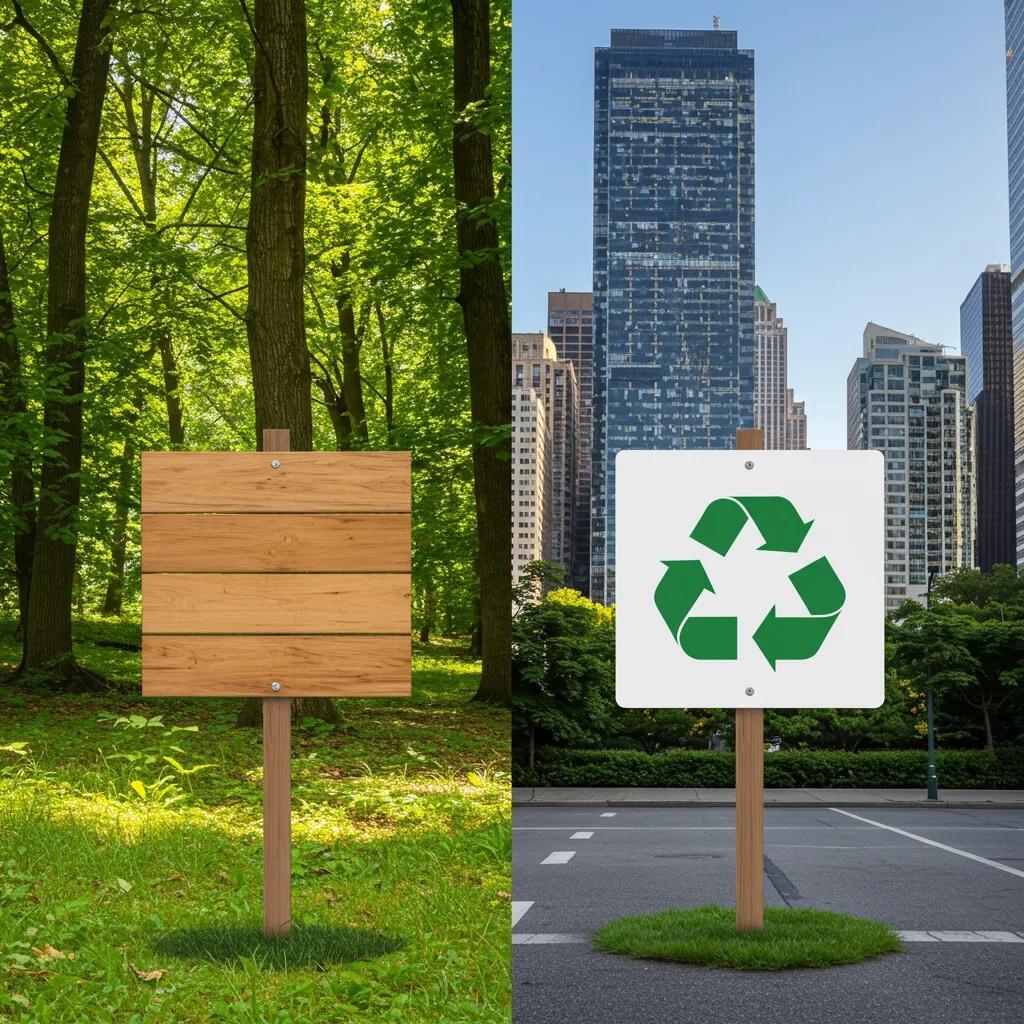
Comparing environmental footprints requires assessing resource sourcing, manufacturing energy, and end-of-life disposal. A holistic view reveals trade-offs in renewability, recyclability, and carbon storage.
How Does FSC-Certified Wood Contribute to Sustainability?
- Carbon sequestration during tree growth, offsetting greenhouse emissions.
- Biodiversity protection through regulated harvest practices.
- Renewable resource cycle when replanting safeguards long-term supply.
Certified wood supports brands aiming for eco-credentials and natural material narratives.
Are Recycled Plastic A-Frame Signs a Greener Alternative?
- Lower embodied energy compared to virgin plastic production.
- Closed-loop recyclability for certain HDPE and PVC panels.
- Reduced raw material extraction that minimizes environmental degradation.
Recycled-plastic signs align with circular-economy initiatives while retaining high durability.
What Happens to Wood and Plastic Signs at End of Life?
|
Material |
Disposal Option |
Environmental Outcome |
|---|---|---|
|
Wooden A-Frame |
Industrial composting or chipping |
Biodegrades into soil nutrients if untreated |
|
Plastic A-Frame |
Mechanical recycling into new boards |
Retains material utility but requires collection |
Wood biodegrades naturally, whereas plastic demands recycling infrastructure to avoid persistent pollution.
Which A-Frame Sign Material Is Best for Different Business Types and Locations?
Matching material traits to business goals and site conditions ensures maximum impact and return on investment.
What Material Suits Cafés, Retail, and Real Estate Signage Best?
- Cafés benefit from wood’s artisan texture that evokes handcrafted menus and cozy interiors.
- Retail outlets require plastic’s weatherproof durability for busy sidewalks and frequent repositioning.
- Real estate professionals favor plastic frames with interchangeable panels for rapid listing updates.
These alignments optimize both brand expression and operational convenience.
How Should Climate and Environment Influence Your Material Choice?
- Coastal regions demand marine-grade plastics to resist salt spray and high humidity.
- Windy urban sidewalks call for fillable bases and flexible plastic frames to prevent tipping.
- Protected courtyards or inland districts allow wooden A-frames to thrive with occasional sealing.
Assess local weather patterns and foot-traffic dynamics to select the ideal signage solution.
How Can You Enhance the Performance and Longevity of Your A-Frame Sign?
Beyond material selection, adding stability measures, graphic flexibility, and targeted maintenance extends service life and visibility.
What Stability Solutions Improve Wind Resistance for A-Frame Signs?
- Water- or sand-fillable bases that anchor frames against gusts.
- Weighted crossbars to lower the center of gravity.
- Ground-spike adapters in grassy areas for permanent stability.
How Do Graphic Options and Interchangeable Panels Differ by Material?
- Wooden frames typically use chalkboard or cork inserts for hand-written menus and tactile textures.
- Plastic A-frames accommodate printed PVC or Coroplast panels clipped in for quick message swaps.
- Reusable sleeve systems fit both wood and plastic to streamline seasonal promotions.
Understanding these options helps maintain fresh branding with minimal downtime.
What Are the Best Maintenance Practices for Wooden and Plastic Signs?
- Regular cleaning with mild detergent to remove dirt and pollutants.
- Periodic UV-inhibitor sprays on plastic to preserve color vibrancy.
- Reapplication of sealants on wood before the rainy season.
Adhering to a simple upkeep schedule keeps signage looking professional and ensures continued performance.
Wooden and plastic A-frame signs each offer unique advantages. Wood excels in crafting an organic, premium aesthetic, while plastic provides enduring weather resistance, easy maintenance, and cost-effective durability. By weighing longevity, visual impact, eco-credentials, and site-specific factors such as climate and foot-traffic, businesses can select the optimal signage material. Implementing stability enhancements, choosing appropriate graphic systems, and following material-specific care routines further improves performance and return on investment. With these insights, companies can confidently deploy outdoor signage that aligns with brand, budget, and environmental goals.