
Why Choose Glass Whiteboards for Your Home Office?
19th Jan 2026
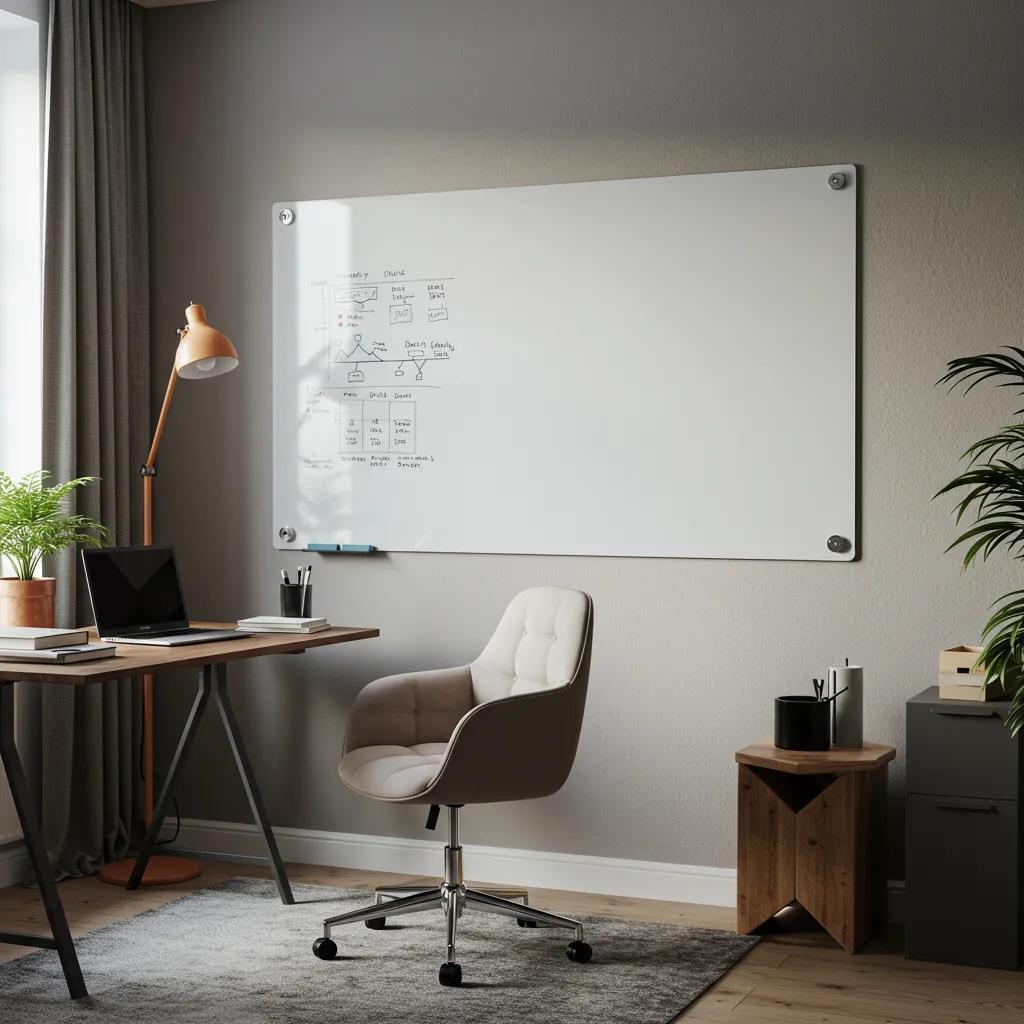
A glass whiteboard is a tempered glass writing surface that combines durability with a sleek, modern look, making it an ideal focal point for a productive home office. This guide explains why glass whiteboards for home use outperform conventional boards in longevity, ease of cleaning, and style, and shows how they support planning, brainstorming and video-call backdrops. Many remote workers struggle with limited space, cluttered planning systems and marker staining; a glass surface solves these by offering a non-porous, low-maintenance tool that stays clear over time. You will learn the key benefits, how to choose the right size and mounting, a direct comparison with melamine and porcelain options, and practical installation plus maintenance tips tailored to home environments. The article uses concise lists, EAV tables and stepwise instructions so you can quickly extract actionable advice and decide whether a magnetic glass whiteboard or frameless glass whiteboard fits your workflow.
What Are the Key Benefits of Glass Whiteboards for Home Office Use?
A glass whiteboard delivers five core advantages for home offices: lasting durability from tempered glass, virtually stain-free cleaning because the surface is non-porous, a premium aesthetic that fits modern interiors, improved organisation through writable planning space, and optional magnetic functionality for pinned notes. These attributes matter for a remote worker who needs reliable daily use without ghosting and wants a professional-looking backdrop for video calls. Below is a concise comparison of benefits expressed as entity, attribute and practical value to clarify why glass often makes sense at home.
|
Feature |
Attribute |
Practical Value |
|---|---|---|
|
Tempered glass surface |
Durability & scratch resistance |
Long lifespan reduces replacements |
|
Non-porous finish |
Cleaning & anti-ghosting |
Simple wipe-clean maintenance |
|
Frameless/coloured options |
Aesthetic integration |
Matches home decor and video backdrops |
This table shows how material choices translate into real user benefits, which leads naturally into the specific durability and cleaning mechanics that make glass distinct.
Glass whiteboards offer distinct benefits for everyday durability and reduced maintenance that suit frequent use and long-term organisation. To help you scan the top advantages quickly, the list below summarises the most impactful benefits for home-office users.
1. Durable surface: Tempered glass resists scratches and retains a pristine finish.
2. Easy maintenance: Non-porous glass prevents ink absorption and ghosting.
3. Design versatility: Frameless and coloured options integrate with modern decor.
These benefits make glass an attractive, long-term investment for homeowners looking to streamline planning and visual workflows. Retail availability of glass whiteboards varies by size and feature set, and the following short note points to where you can view product ranges.
Retail Display Direct stocks a range of glass whiteboards suitable for home and small office use, including frameless designs and magnetic options that match the attributes described above. Their assortment highlights tempered glass surfaces and easy-clean finishes across multiple sizes, which helps readers who prefer to see product examples before deciding. If you want to compare sizes or magnetic variants in more detail, consider exploring product categories and specification pages from specialist display suppliers. This availability note connects the benefits described here to where practical options can be found and tested.
How Does Durability Make Glass Whiteboards Ideal for Home Offices?
Tempered glass gains strength through controlled thermal treatment, so it resists scratches and daily wear better than typical melamine boards. This resilience matters for busy home offices used for brainstorming, frequent corrections and occasional projection; the glass surface retains its finish even with persistent marker use. A durable glass board reduces replacement cycles and supports sustainability by avoiding single-use replacements. Understanding durability leads directly into why the glass surface also simplifies cleaning and prevents long-term staining.
Why Are Glass Whiteboards Easier to Clean and Maintain?
Glass is non-porous, so marker pigments and cleaning residues do not penetrate the surface, which means stains and ghosting are far less likely than on porous materials.
Cleaning requires only a dry eraser for daily work and a mild glass cleaner or isopropyl solution for periodic deep wipes; avoid abrasive pads to preserve coatings. Regular maintenance—wipe after heavy use and perform a weekly deep clean—keeps the board ghost-free and bright for video calls.
Knowing how cleaning works helps when deciding between sizes and mounting options for your specific home setup.
How Do You Choose the Best Glass Whiteboard for Your Home Office?
Choosing the right glass whiteboard starts with matching size, mounting style and magnetic capability to your room and workflow needs. Measure available wall space and consider how you use the surface: compact boards suit small desks while wide panels serve planning walls and team whiteboards for collaborative households. Below is a practical size-to-use table to map common room scenarios to recommended board formats.
|
Recommended Use |
Typical Size Range |
Recommended For |
|---|---|---|
|
Desk-side notes |
300–600 mm width |
Small workspaces and standing planners |
|
Wall planner |
900–1500 mm width |
Project planning and weekly layouts |
|
Full backdrop |
1500–2400 mm width |
Video-call backgrounds and team walls |
This table helps prioritise sizes based on how you plan to use writable space; the next section explains mounting and magnetic choices to complete your selection.
1. Match scale: Choose a size that fits your normal line of sight during work.
2. Consider mounting: Permanent wall mounts offer stability; floating fixings improve aesthetics.
3. Decide on magnetic: Pick magnetic glass boards when you need to attach notes or reference documents.
These selection steps support a rapid decision process and naturally introduce the question of magnetic versus non-magnetic options. Retail Display Direct offers multiple sizes and both magnetic and non-magnetic variants, which makes it straightforward to compare options in one place when you’re ready to buy. This product availability note helps readers transition from planning to procurement without heavy sales language.
What Sizes and Mounting Options Suit Different Home Office Spaces?
Size choice depends on sightlines, wall area and intended function: compact 300–600 mm boards serve note capture while 900–1500 mm panels suit weekly planning and 1500 mm+ panels provide a professional backdrop. Mounting options include concealed fixings for a floating look, standoff brackets for a contemporary effect, or desk mounts for portability; each option alters perceived depth and weight support. Check wall type—plasterboard, brick or stud framing—before selecting fixings and consider professional installation for large or heavy panels. Correct mounting preserves both safety and the clean aesthetic that makes glass desirable.
Should You Choose Magnetic or Non-Magnetic Glass Whiteboards?
Magnetic glass whiteboards add document attachment and visual pinning to the writable surface, aiding organisation for paper-based workflows. Non-magnetic boards are typically lighter and may be marginally less expensive while still offering the same non-porous writing surface and anti-ghosting advantages. Choose magnetic when you frequently display reference pages or use magnetic accessories; choose non-magnetic for minimalism, lighter weight and simpler mounting. These trade-offs inform whether magnetic functionality is a workflow necessity or an optional convenience.
How Do Glass Whiteboards Compare to Traditional Dry Erase Boards?
Glass, melamine and porcelain differ across durability, maintenance and aesthetics; glass pairs premium looks with low maintenance, melamine is budget-friendly but prone to ghosting, and porcelain is highly durable but heavier and costlier. The comparison below summarises these materials to aid quick decision-making for home offices.
|
Material |
Durability |
Maintenance |
|---|---|---|
|
Glass |
High; scratch resistant |
Easy; non-porous, low ghosting |
|
Melamine |
Low–medium; scratches and stains |
Frequent cleaning; ghosting over time |
|
Porcelain |
Very high; chip/scratch resistant |
Low; heavy and requires strong mounting |
This EAV-style table highlights the practical trade-offs so you can weigh upfront cost against long-term value. The next subsection explains advantages and potential downsides to complete the picture.
1. Glass advantage: Superior cleanliness and refined aesthetics.
2. Melamine advantage: Lower initial cost for occasional use.
3. Porcelain advantage: Extremely durable for heavy daily use.
These concise comparisons clarify when glass is the preferred balance of style and performance versus heavier commercial-grade options. Understanding these trade-offs sets up mitigation strategies for the common disadvantages of glass.
What Are the Advantages of Glass Over Melamine and Porcelain Boards?
Glass resists staining better than melamine and keeps a brighter appearance for video calls, while offering a sleeker aesthetic than porcelain for many modern homes. Glass maintains marker contrast and cleans easily, reducing time spent on maintenance and improving long-term readability. Porcelain excels in toughness but requires stronger supports and often looks more industrial; glass offers a middle ground of performance and style. These benefits transition into a fair view of disadvantages and how to reduce them.
Are There Any Disadvantages to Using Glass Whiteboards at Home?
Glass boards have higher initial cost than melamine, potential glare issues if placed opposite windows or bright lights, and require secure mounting due to weight; tempered glass is engineered for safety and reduces breakage risk. To mitigate drawbacks, position boards to avoid direct reflections, choose anti-glare finishes where available, and verify wall fixings or use professional installation for larger panels. For many home offices the performance and longevity outweigh the higher upfront cost, especially when durability reduces replacement frequency. These practical cautions lead into the installation and accessory guidance that helps you get the most from your board.
What Are the Best Practices for Installing and Using Glass Whiteboards at Home?
Good installation begins with a site check: confirm wall type, locate studs, and select fixings rated for the board weight; this prevents failures and preserves the clean look.
Accessories such as low-odour glass markers, microfibre erasers and magnetic clips increase utility and protect the surface.
Below is a simple stepwise DIY approach for common installations followed by recommended accessories to maximise function.
1. Prepare and measure: Mark level lines and locate studs or anchors.
2. Use correct fixings: Choose standoffs or concealed brackets rated for weight.
3. Mount safely: Lift with helpers and secure all fastenings, then test stability.
These steps provide a quick DIY route while noting when to call a professional for heavy or complex installations. The accessory list that follows shows practical items that reduce wear and improve organisation.
How Can You Easily Install a Glass Whiteboard in Your Home Office?
A straightforward DIY install follows these steps: measure and mark, verify wall structure and stud locations, use appropriate anchors or standoffs, and lift with assistance to secure the board level. Use a spirit level and torque-rated fixings; for plasterboard consider toggle anchors or a batten across studs for larger panels. If in doubt about weight or wall integrity, professional mounting ensures safety and alignment. Proper installation preserves both function and the visual simplicity that makes glass boards valuable in home offices.
What Accessories Maximise the Functionality of Your Glass Whiteboard?
Accessories extend usability: low-odour glass markers preserve surface coatings, microfibre cloths remove residues without scratching, and magnetic clips or trays keep reference materials handy. Planning grids, coloured markers and magnetic labels help structure workflows and prioritise tasks, improving clarity during video meetings and collaborative sessions. Store markers in a dedicated tray to reduce clutter and prolong tip life, and use recommended cleaning sprays occasionally to avoid film buildup. These accessories round out a practical setup and ensure your board remains a long-lasting productivity tool, and they lead into a brief final note on sourcing.
The development of specialized cleaning systems highlights the ongoing innovation in whiteboard technology, aiming to simplify maintenance and improve user experience.
Development of an Efficient Automatic Whiteboard Cleaning System
Over time, traditional blackboards have been gradually replaced by whiteboards in schools and other educational institutions due to their ease of cleaning. With the increasing popularity of whiteboards featuring automatic cleaning systems worldwide, an efficient device is anticipated to completely supersede conventional cleaning methods. This study presents the development of a low-cost and effective automatic whiteboard cleaning system utilising locally sourced materials. Various design factors were considered to surpass the capabilities of existing systems. Our testing and results demonstrate that our design can clean specific areas of the whiteboard, unlike other automatic whiteboard cleaners that clean the entire board simultaneously. The recorded cleaning time was under 19 seconds, and our device leaves zero residue with just a few sweeps of the board. In conclusion, our whiteboard cleaning system is highly efficient and readily meets market standards.
Development and Fabrication of an Upgraded Automatic Whiteboard Cleaning Machine, E Orumwense, 2023
Retail Display Direct maintains a selection of glass whiteboards in various sizes and with magnetic or non-magnetic options to match the accessory types and mounting choices discussed above. If you prefer to view examples or check specific size availability, look for specialist suppliers and local business listings to compare product finishes and mounting kits. This soft call-to-action is informational and intended to help you locate appropriate models and finishes for your home office needs.