
Understanding Retractable Wall Safety Barriers Choices: A Clear Guide to Wall Mounted Retractable Barriers
23rd Jan 2026
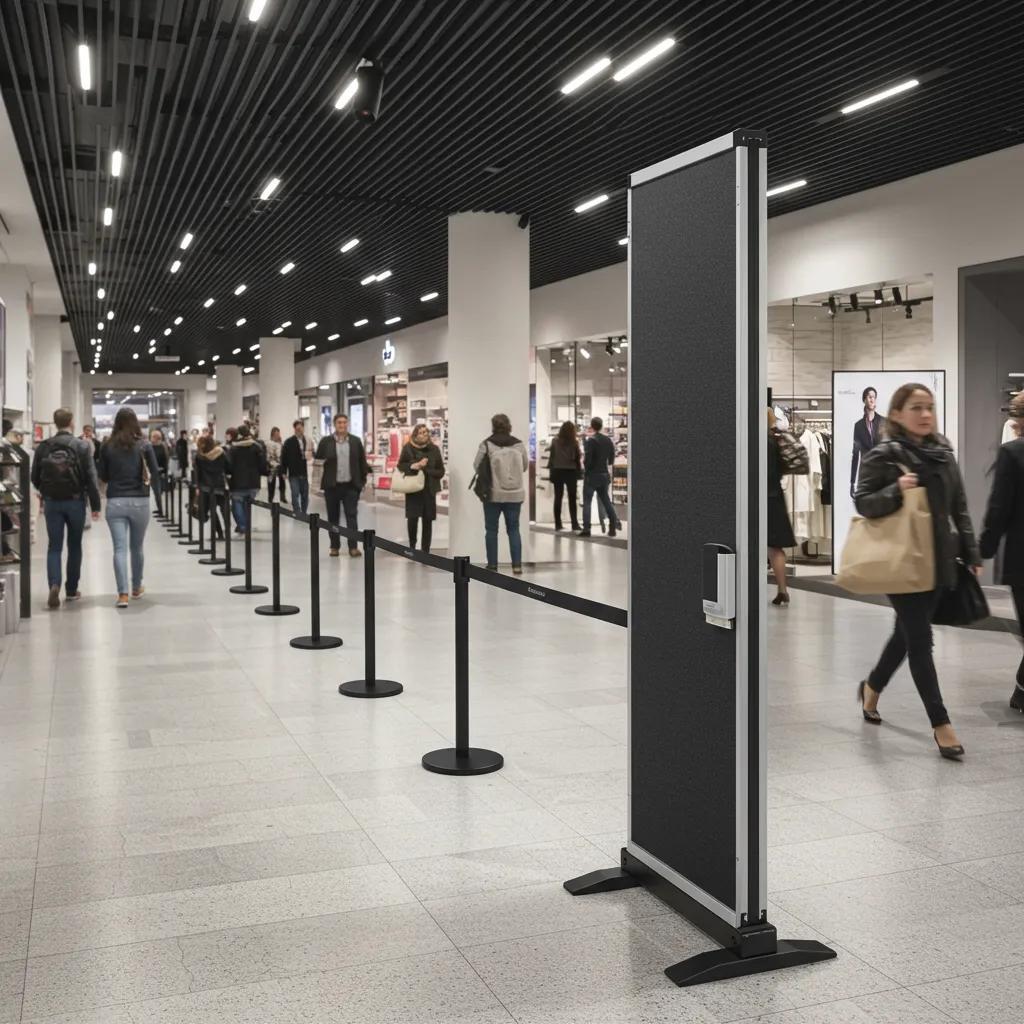
Retractable wall safety barriers are wall-mounted belt systems that extend a webbing or tape from a compact casing to create a visible, temporary boundary for access control and queue management. This guide explains how these wall mounted retractable barriers work, the main types available, and practical criteria to choose the correct belt length, material and mounting for specific environments. Many facilities struggle to balance space efficiency with effective crowd control; retractable belt barriers offer a low-profile, fast-deploy solution that reduces trip hazards and improves operational flow. The article covers component basics and safety benefits, compares permanent, magnetic and removable mounts, provides a decision checklist with belt-length recommendations, and maps typical specifications to warehouse, retail and public-space applications. Throughout, keywords such as retractable wall safety barriers, wall mounted retractable barriers and industrial crowd control barriers are used to keep the guidance actionable and search-focused.
What Are Wall Mounted Retractable Barriers and How Do They Work?
Wall mounted retractable barriers are compact safety barriers that store a retractable belt or tape inside a casing and release it to clip into a receiver, creating a quick boundary or queue line. The mechanism uses a spring-loaded retraction system housed in a casing that controls belt extension and a slow-retract feature that prevents the belt snapping back abruptly. These systems deliver immediate visual and physical separation for restricted zones and can be deployed in seconds, which reduces downtime during closures or emergencies. Understanding the components clarifies selection and maintenance choices for different environments, which is addressed in the following subsections.
What Are the Key Components of Retractable Wall Safety Barriers?
The main components are the casing, the retractable belt (webbing or printed tape), the mounting plate or bracket, and the end receiver or clip that secures the belt. The casing contains the retraction mechanism—often spring-based—with options for stainless steel or powder-coated finishes that affect durability and corrosion resistance. Belt material choices such as polyester webbing or high-visibility printed tape influence longevity and visibility; chevron or printed messaging improves recognition in hazardous areas. Accessories like anti-tamper tape ends and multi-directional connectors add security and allow multiple belts to join at odd angles for complex closures.
How Do Retractable Belt Barriers Enhance Safety and Crowd Control?
Retractable belt barriers create a clear, temporary boundary that prevents access to hazards and guides pedestrian flows, reducing accidental entry and collisions. They provide controlled access during machine maintenance, floor cleaning or temporary closures, which lowers incident risk and streamlines traffic patterns. In queueing contexts, belts shape orderly lines and reduce congestion at checkouts or service points, improving throughput and customer experience. These practical benefits inform the choice of belt length, material and mounting method discussed next.
Common safety benefits include:
- Immediate visual boundary for restricted zones.
- Rapid deployment and removal for temporary needs.
- Reduced trip hazards compared with loose ropes.
What Types of Wall Mounted Retractable Barriers Are Available?
Wall mounted retractable barriers come in three main mounting types—permanent, magnetic and removable—each offering a different balance of security, flexibility and installation requirements. Permanent mounts use fixed brackets for robust, tamper-resistant installation on solid surfaces, while magnetic mounts provide fast, drill-free attachment to ferrous surfaces for temporary closures. Removable clamp or adhesive-style mounts offer portability for short-term events but trade some security for convenience. Choosing between these types depends on surface compatibility, desired mobility and the environment’s security needs.
Pros and cons of mounting types:
- Permanent mounts: robust and secure but require drilling.
- Magnetic mounts: fast and reversible but need metal surfaces.
- Removable mounts: portable and flexible but less secure.
Retail Display Direct stocks a range of wall mounted retractable barriers and related crowd control systems suitable for these mounting styles, with casing finishes like stainless steel or powder-coated metal and belt options in various colours and lengths to match site requirements. This overview of mounting types leads into examples of where each is most useful.
|
Mounting Type |
Characteristic |
Typical Use |
|---|---|---|
|
Permanent |
High security, fixed installation |
Doorways, long-term closures |
|
Magnetic |
Quick attach/detach, needs metal surface |
Temporary area closures, events |
|
Removable |
Portable, low-installation time |
Short-term site changes, pop-ups |
How to Choose the Right Retractable Wall Safety Barrier for Your Needs?
Selecting a retractable wall safety barrier requires matching application, belt length, material, mounting and safety features to on-site needs rather than choosing by price or appearance alone. Key decision factors include the opening width to be spanned, expected foot traffic, surface type for mounting, and whether high-visibility or printed messaging is required for safety or branding. Maintenance considerations such as the durability of the casing finish (stainless steel vs powder-coated) and the belt material should influence procurement to reduce lifecycle costs. The checklist and mapping table below provide practical guidance to make a defensible choice.
1. Measure the opening: Select belt length slightly longer than doorway or aisle width.
2. Assess surface: Choose permanent mounts for solid walls, magnetic for metal surfaces.
3. Decide visibility: Use chevron or coloured belts for industrial hazards; printed belts for messaging.
|
Specification |
Attribute |
Recommended For |
|---|---|---|
|
Belt length |
Recommended for |
2.3m — doorways; 4.6m — wide aisles; 9m — large openings |
|
Belt material |
Trade-off |
Polyester webbing — durable; Printed tape — high visibility/branding |
|
Casing finish |
Suitability |
Stainless steel — corrosive areas; Powder-coated — indoor retail |
What Belt Lengths and Materials Are Best for Different Applications?
Common belt lengths map directly to typical openings: approximately 2.3m suits standard doorways, 4.6m covers wide aisles or counters, and 9m suits large openings or multi-point closures. Polyester webbing provides durable, long-lasting service in high-use areas, while printed or chevron tape increases visibility in industrial settings and supports branding in retail queues. Colours such as black, red, blue or yellow/black chevron are selected to match warning standards or store aesthetics, and anti-tamper ends and slow-retract mechanisms protect both users and the system.
Which Safety Features and Mounting Options Should You Consider?
Essential safety features include a controlled slow-retract mechanism to prevent belt snap-back, anti-tamper tape ends to deter misuse, and multi-directional connectors for flexible closure geometries. Mounting choices must factor surface compatibility and security needs: permanent mounts suit long-term closures, magnetic mounts enable quick emergency deployment on metal surfaces, and removable mounts support temporary events. For industrial applications, prioritise heavy-duty casings and chevron belts; for retail, consider printed belts for messaging and customer guidance.
Checklist after feature review:
- Ensure slow retract and anti-tamper features are present.
- Match mounting to surface type and security requirement.
- Choose belt colour/pattern for visibility or brand messaging.
These recommendations set the stage for applying barrier specifications to real-world settings such as warehouses and retail spaces.
Where Are Retractable Wall Safety Barriers Commonly Used?
Retractable wall safety barriers are widely used in warehouses, retail environments, offices and public spaces to control access, direct queues and isolate hazards quickly without permanent fixtures. Their compact casings and varied belt lengths make them ideal for confined areas such as lift lobbies and narrow doorways, while longer belts and heavy-duty casings serve loading docks and maintenance zones. Understanding the environment helps specify material, mounting and visibility features that deliver measurable safety and operational improvements.
Top application environments and benefits:
1. Warehouse: demarcates hazardous zones and restricts access during maintenance.
2. Retail: shapes queues and supports branding with printed belts.
3. Public spaces: controls pedestrian flow for events and temporary closures.
|
Application |
Recommended Spec |
Primary Benefit |
|---|---|---|
|
Warehouse |
Heavy-duty casing, 4.6m+, chevron belt |
Clear hazard delineation |
|
Retail |
Powder-coated casing, 2.3–4.6m, printed belts |
Queue control and branding |
|
Office/Public |
Magnetic or removable mounts, 2.3–3m |
Flexible temporary closures |
How Do These Barriers Improve Safety in Warehouses and Industrial Settings?
In industrial settings, wall mounted retractable barriers limit access to active machinery, define safe walkways and isolate maintenance areas, which reduces the likelihood of accidents and unauthorised entry. Heavy-duty casings with stainless steel finishes resist damage and environmental wear, while high-visibility chevron belts alert staff to potential hazards. Longer belt lengths and multi-directional connectors enable flexible perimeter setups around large equipment or loading bays. These design choices directly impact incident rates and operational uptime in busy industrial environments.
What Are the Benefits for Retail and Public Queue Management?
For retail and public-facing spaces, retractable belts simplify queue formation, reduce congestion and communicate temporary closures clearly to customers. Printed belts allow messaging such as "Queue Here" or branded colours that support store identity while directing flow. Magnetic or removable mounts are attractive for pop-up events or seasonal layouts, enabling staff to reconp spaces quickly without specialist tools. Choosing the right belt length and visual option improves customer experience and reduces staff time spent managing lines.
Quick retail deployment benefits:
- Faster queue setup and reconfiguration.
- Clear visual cues reduce customer confusion.
- Branding on belts supports a professional appearance.
This final practical guidance ties the earlier technical comparisons and selection checklist directly to on-site outcomes and procurement choices.