
Understanding Retractable Safety Barriers for Events: Essential Crowd Control and Safety Solutions
9th Jan 2026
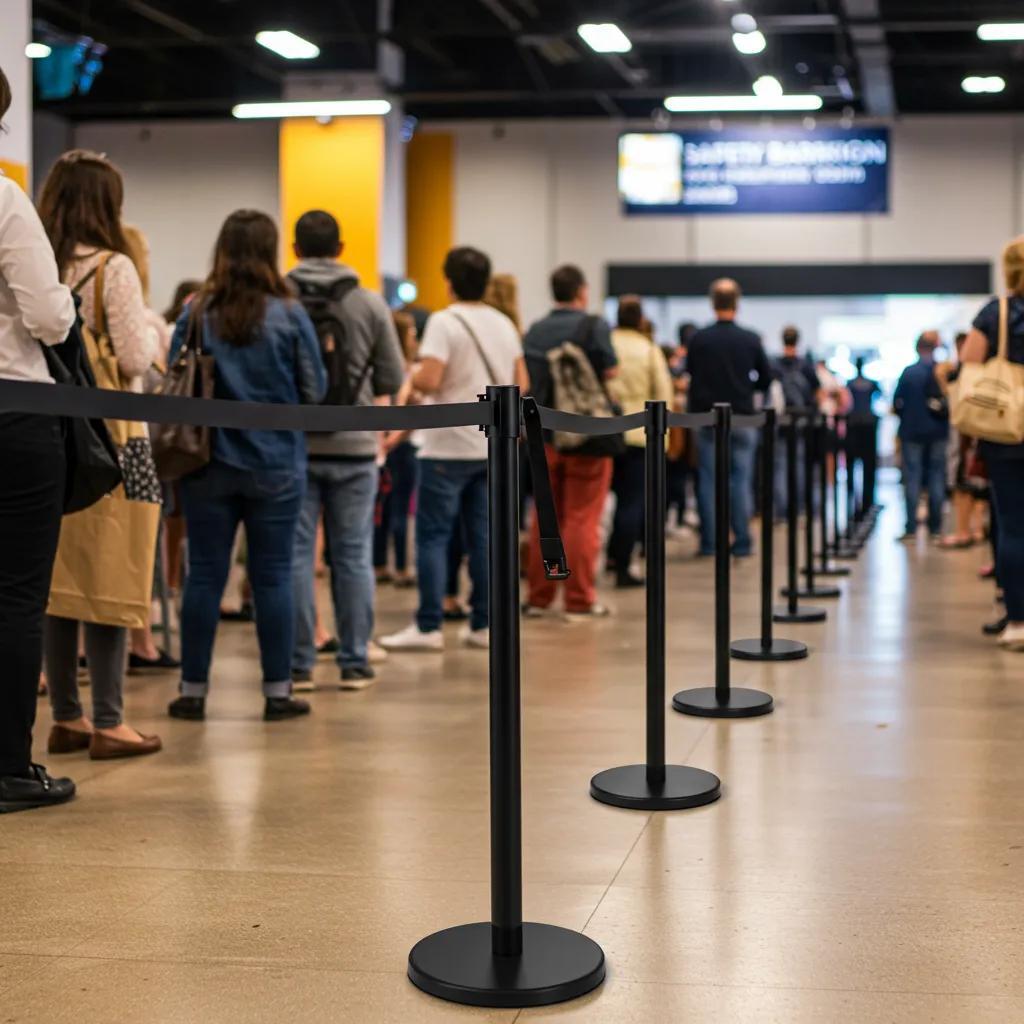
Retractable safety barriers are portable crowd control systems that combine a retractable belt, post or stanchion, and a stable base or wall bracket to create organised queues and controlled access at events. This article explains how retractable belt barriers, rope barriers, expandable barriers and wall-mounted retractable barriers work, why they matter for event safety, how to choose the right type for different event formats, and which UK regulations and best practices apply. Event organisers face recurring problems with bottlenecks, unauthorised access and emergency egress; well-chosen retractable barriers solve these by directing pedestrian flow, creating clear sightlines and enabling rapid reconfiguration. You will find practical deployment tips, comparative EAV-style tables of barrier types, checklists for selection and maintenance, and a concise mapping of UK guidance such as HSE duties and the Purple Guide to barrier practice. Read on to learn the mechanics, benefits, selection criteria and compliance actions that make retractable safety barriers an effective part of any event safety plan.
What Are Retractable Safety Barriers and How Do They Work?
Retractable safety barriers are modular crowd control systems that rely on a spring-loaded belt housed in a post or wall unit that extends and locks into a receiver to form a continuous line. The mechanism uses a tensioned retractable belt that winds back into the post when released, which provides quick deployment and reduces tripping hazards while maintaining a visible boundary. These barriers create flexible queue geometries and can be combined with weighted bases, wall brackets or interlocking posts to suit indoor queues or temporary outdoor access control. Understanding these mechanical basics leads naturally to a comparison of the main barrier types and their typical event applications.
Different retractable barrier types vary in belt length, portability and best-use scenarios; the table below summarises core differences and trade-offs to help event teams match equipment to operational needs.
|
Barrier Type |
Key Component |
Best-Use Scenario |
|---|---|---|
|
Retractable belt barrier (stanchion) |
Spring-loaded retractable belt and free-standing post |
Indoor queues, ticketing, retail entrances |
|
Rope barrier |
Rope and post connectors, decorative focus |
Ceremonial lines, premium queuing in corporate events |
|
Expandable barrier |
Telescopic or accordion panels |
Quick cordon of small areas, temporary restricted access |
|
Wall-mounted retractable barrier |
Belt cartridge with wall bracket |
Narrow corridors, space-saving queue management |
What Types of Retractable Barriers Are Used for Event Crowd Control?
Event organisers commonly choose from retractable belt barriers, rope barriers, expandable panels and wall-mounted retractable barriers depending on crowd size and spatial constraints. Retractable belt barriers (stanchions) are the workhorse option, offering varied belt lengths, weighted bases for stability and optional finish choices for visibility and branding. Rope barriers are often selected for aesthetic separation in VIP or ceremonial contexts where appearance matters more than heavy-duty crowd control. Expandable and temporary barriers are useful for cordoning service areas or emergencies because they deploy rapidly and occupy minimal storage space. These typologies inform placement decisions for festival entrances, indoor conferences and retail lines.
The next section explains how belt length, post spacing and configuration directly influence queue geometry and throughput.
How Do Retractable Belt Barriers Manage Queues and Crowd Flow?
Retractable belt barriers manage queues by creating defined lanes and controlled turns that influence queue density and throughput; belt length and post spacing determine how compact or sprawling a queue will be. Placing stanchions at regular intervals with serpentine configurations increases effective queue capacity without compromising visibility, while single-file alignments speed processing where throughput points are limited. Good practice includes using high-contrast belt colours and clear signage at belt ends to communicate direction, combined with stewarding at pinch points to maintain flow. These operational choices reduce dwell time and improve patron predictability while keeping emergency egress routes accessible.
A clear understanding of benefits helps justify why these systems are essential for modern events.
Why Are Retractable Safety Barriers Essential for Event Safety and Crowd Management?
Retractable safety barriers provide predictable circulation, reduce accidental injuries and create controllable access points that support both safety and operations at events. By physically separating queues and routing pedestrians, barriers reduce chaotic crowding near entrances, exits and concession areas, which lowers the risk of trips, falls and crush incidents. They also enable security teams to establish temporary exclusion zones (VIP, media, staff) quickly and with minimal manpower, improving incident response and access control. Appreciating these advantages clarifies why barriers are often specified in event safety plans and why their correct selection and maintenance are crucial for compliance and guest experience.
Below are practical benefits that event teams can expect when they deploy portable safety barriers thoughtfully.
- Safety: Reduces collisions and prevents uncontrolled surges near choke points.
- Operational efficiency: Creates orderly queues that reduce perceived wait times.
- Security: Establishes clear boundaries for restricted areas and integrates with stewarding.
- Flexibility: Allows rapid reconfiguration between sessions or during incidents.
These benefits translate into measurable operational gains at events when paired with trained stewards and appropriate layouts; the following subsection maps benefits to specific event types.
What Are the Key Benefits of Using Portable Safety Barriers for Events?
Portable safety barriers save setup time, lower storage and transport costs compared with fixed structures, and make it straightforward to reconp spaces between event phases. Their lightweight deployment reduces staff hours needed to manage queues, while modularity allows organisers to scale barrier layouts to expected attendance and venue footprint. For organisers concerned with guest experience, orderly queues and clear circulation paths reduce stress and increase throughput at points of sale or entry. Considering these practical advantages leads naturally to how retractable barriers support security across varying event formats.
From safety and efficiency we move to event-specific security roles these barriers can fulfil.
How Do Retractable Barriers Enhance Security at Different Event Types?
Retractable barriers support security by creating controllable perimeters and regulated access points at concerts, corporate events and sporting fixtures where crowd movement varies by zone and time. At concerts, barriers help separate general admission from restricted mixing areas and provide staging for stewarded entry; at conferences, they organise registration queues while preserving emergency routes; at sports events they channel arrivals and limit unauthorised access to pitchside or VIP areas. Combining barriers with stewarding and temporary fencing provides layered control that adapts to crowd dynamics as an event progresses. These interoperability benefits make barriers a core component of contingency planning and active crowd management.
Understanding security roles informs purchasing and configuration decisions covered in the next section.
How to Choose the Right Retractable Barrier for Your Event Needs?
Choosing the right barrier begins with assessing event type, expected attendance, indoor/outdoor setting and how frequently the equipment will be used. Durable materials and heavier bases are necessary for outdoor or high-traffic events, while wall-mounted retractable barriers conserve floor space in narrow venues. Consider belt length and locking mechanism for desired queue geometry and look for anti-trip designs to reduce accidents at high-density points. Finally, weigh hire versus purchase based on recurring need; frequent organisers benefit from ownership while one-off events may be better served by hire options.
The table below converts selection attributes into recommended values for small, medium and large events to simplify decisions for procurement or hire.
|
Selection Attribute |
Small Events (≤200) |
Medium Events (200–2,000) |
Large Events (>2,000) |
|---|---|---|---|
|
Durability |
Lightweight base |
Weighted base |
Heavy-duty base, wind-resistant |
|
Belt length |
Short (1.5–2m) |
Standard (2–3m) |
Extended (3–5m) |
|
Material |
Polished finish |
Steel or heavy alloy |
Corrosion-resistant, reinforced |
|
Customisation |
Colour/branding |
Custom belts available |
High-visibility and branding options |
This checklist clarifies how attributes scale with event size and points to practical procurement choices; next is a concise feature checklist for barrier selection.
- Assess event type and capacity: Match barrier robustness to crowd size.
- Choose base and material: Select weighted or wind-resistant bases for outdoor use.
- Decide belt length and locking: Ensure belts lock securely and match queue geometry.
- Plan for branding and signage: Use custom belts or high-visibility colours for communication.
After neutral buying guidance, organisers often need a reliable supplier; Retail Display Direct supplies rope barriers and retractable barriers, including retractable barriers and posts as well as wall mounted retractable barriers, and highlights same day dispatch on most orders placed before 11am plus a lowest-price guarantee.
What Features Should You Consider When Selecting Retractable Belt Barriers?
Critical features include belt length and retraction quality, base type and weight, locking mechanism reliability, anti-trip base design and finish for visibility or branding. Belt lengths influence spacing and queue turns — longer belts reduce the number of posts required while shorter belts create tighter control. Heavy, low-profile bases reduce trip hazards and improve stability in crowded conditions, and robust locking mechanisms prevent accidental release under pressure. Prioritising these features ensures barriers both perform operationally and meet safety expectations for your venue.
These feature choices directly affect when wall-mounted or expandable options are preferable, which the next subsection addresses.
When to Use Wall-Mounted or Expandable Barriers for Space-Saving Solutions?
Wall-mounted retractable barriers are ideal where floor space is constrained, such as narrow corridors, retail entrances or museums, because they free up walking space while still providing controlled closure. Expandable barriers work well for temporary restricted access, servicing areas or emergency cordons where rapid deployment and compact storage are priorities. When choosing space-saving options, verify that sightlines and emergency egress remain unobstructed and that wall bracket mounting meets structural requirements. Selecting the correct mounting style preserves both operational flow and evacuation routes.
The practical choice of barrier ties into UK regulations and best practices, which we cover next.
What Are the UK Regulations and Best Practices for Using Retractable Safety Barriers at Events?
UK event organisers must follow general duties under Health and Safety Executive (HSE) guidance and apply practical crowd management recommendations from the Purple Guide to ensure safe use of barriers. Core obligations include performing a suitable and sufficient risk assessment that identifies pinch points, determining stewarding levels, and ensuring emergency egress routes remain unobstructed by any temporary barrier. Recording inspection and maintenance activities demonstrates due diligence and helps meet regulatory expectations. Translating regulations into on-the-ground checks prevents non-compliance and reduces incident risk during events.
The table below maps primary guidance documents to actionable barrier practices to make compliance straightforward.
|
Guidance Document |
Relevant Requirement |
Practical Barrier Action |
|---|---|---|
|
HSE guidance |
Duty to assess and control risks |
Include barriers in risk assessments; document placements |
|
The Purple Guide |
Stewarding densities and crowd movement |
Use barriers to create stewarded lanes; adjust as recommended |
|
Fire safety regs (local) |
Maintain unobstructed egress |
Keep belts clear of escape routes; mark exits clearly |
This mapping helps organisers convert regulation language into tangible inspection and deployment tasks; next is a concise checklist for installation and maintenance.
- Pre-event inspection: Check belt integrity, locking function and base stability before deployment.
- Routine maintenance: Clean belts, inspect bases for wear, and replace frayed belts promptly.
- Storage and records: Store units to avoid UV or moisture damage and log inspections for due diligence.
Which UK Event Safety Regulations Affect Retractable Barrier Usage?
Primary influences on barrier use are the HSE's duty-holder responsibilities and the Purple Guide's practical recommendations for crowd management; both stress risk assessment, stewarding and unobstructed emergency access. Organisers should record how barriers are used within risk assessments, allocate adequate stewarding levels where barriers create controlled flows, and ensure that evacuation routes are never impeded by temporary installations. Applying these regulatory principles reduces legal and safety risks while supporting effective crowd control during events.
Defining and Classifying Safety Barriers for Event Risk Mitigation
The PSA has developed requirements for safety barriers, but has not provided a clear definition of what constitutes a safety barrier. Safety barriers are employed to prevent or mitigate the consequences of hazardous events. They are utilised across a broad spectrum of industries and applications, ranging from protection against the release of radioactive materials to event reporting and safety management.
Safety barriers: Definition, classification, and performance, S Sklet, 2006
These regulatory considerations naturally lead into specific installation and maintenance practices that prolong barrier life and ensure safety compliance.
What Are the Recommended Installation and Maintenance Practices for Event Barriers?
Recommended practices include a pre-event checklist verifying belt alignment, locking engagement, base security and clear signage; during events, stewards should monitor critical points and adjust layouts as crowd dynamics change. Maintenance routines should include routine belt cleaning, scheduled inspections for retractile mechanism wear, prompt replacement of damaged belts and periodic base integrity checks; a simple logbook or digital record demonstrates compliance. Proper storage — sheltered from prolonged UV, moisture and heavy stacking — extends service life and maintains functional reliability for future events.
UK Event Health and Safety Legislation and Best Practice
In the UK, this is the most significant legislation to which the events industry must comply. It is the primary piece of legislation governing health and safety in the workplace. The Event Safety Guide (HSE 1999) offers detailed guidance on how to adhere to the Act.
Event health, safety and risk management, J Kennell, 1999
Adopting these maintenance measures completes the practical lifecycle approach to barrier management and prepares teams for operational deployment.
Retail Display Direct supplies a range of rope barriers and retractable barriers (including retractable barriers and posts, and wall mounted retractable barriers) and promotes same day dispatch on most orders placed before 11am together with a lowest-price guarantee, providing logistical advantages for organisers needing rapid replenishment or urgent replacements.
For assistance comparing options or requesting product and availability information, please contact Retail Display Direct to discuss solutions that fit your event requirements; their dispatch and pricing UVPs can help meet tight lead times and budgets.