
Ultimate Guide to Outdoor Donation Boxes for Charities: Choosing Secure, Weatherproof Collection Solutions
21st Jan 2026
Outdoor donation boxes are purpose-built collection containers placed outside buildings or in public spaces to capture donations securely while withstanding weather and vandalism. This guide explains how charities can choose outdoor donation boxes for charities that balance visibility, security and longevity, giving clear steps for selecting types, materials and security features. Many organisations struggle with water ingress, theft and regulatory permissions when deploying outdoor charity collection boxes, and this guide provides practical prevention measures and installation checklists to reduce those risks. You will learn the main box types and when to use each, how to choose durable and weatherproof materials, which lock and anchoring options protect collections, and where to place boxes for maximum impact while complying with UK rules. The article also compares common materials and mounting styles in easy-to-read tables and offers actionable maintenance and monitoring routines to keep donation infrastructure reliable year-round.
What Are the Best Types of Outdoor Donation Boxes for Charities?
An outdoor donation box is a donation collection container designed for external use that combines a mounting style, capacity and access method to meet a charity’s operational needs. Choosing the right type depends on visibility requirements, security expectations and installation constraints, because mounting method directly affects mobility, anchoring options and theft risk. Below we compare the three principal mounting and form-factor types used by charities to match use-cases with practical trade-offs and installation notes. The next subsections map styles to scenarios and then present a compact comparison table to help you decide between freestanding, wall-mounted and post-mounted options.
Which donation box styles suit different outdoor fundraising needs?
Different outdoor donation box styles suit distinct fundraising scenarios because each offers unique visibility, capacity and installation implications. For high street or retail-front charity points, freestanding donation boxes provide strong visibility and easy relocation for events, while wall-mounted boxes work well for premises with limited floor space such as community centres or places of worship. Post-mounted donation posts are ideal for parks or public walkways where standalone fixtures are needed and anchoring into concrete is acceptable; these posts often offer higher tamper resistance. Consider capacity, donor accessibility (height and approach), and maintenance access when selecting a style, and ensure permissions and sightlines are arranged before installation to reduce placement delays.
How do freestanding, wall-mounted, and post-mounted boxes compare?
This compact comparison highlights mounting, mobility, security and cost trade-offs so a charity can choose the best outdoor charity collection boxes for their context. Freestanding boxes offer portability and high visibility but need weighted bases or bolt-down options to resist tipping. Wall-mounted boxes minimise footprint and can be harder to remove, but require competent wall fixings and assessment of substrate strength. Post-mounted donation posts are robust in public spaces and facilitate anchoring into concrete, yet they may require more complex installation and planning permission depending on location. The following table summarises these differences to help you match mounting type to site characteristics.
Different mounting styles have distinct installation and operational profiles.
|
Mounting Type |
Typical Installation / Mobility |
Pros / Cons / Best for |
|---|---|---|
|
Freestanding |
Placed on flat ground; can be bolt-fixed or weighted |
High visibility and portable; best for events and retail fronts; vulnerable to tipping unless anchored |
|
Wall-mounted |
Fixed to building walls or vertical surfaces |
Space-saving and discreet; good for premises entrances; requires strong fixings and landlord permission |
|
Post-mounted |
Installed on posts anchored into ground or concrete pads |
Durable and visible in public spaces; best for parks and streets; needs permanent anchoring and planning checks |
This comparison helps charities prioritise mounting type by visibility, security and installation complexity before selecting materials or locks.
How to Choose Durable and Weatherproof Materials for Outdoor Donation Boxes?
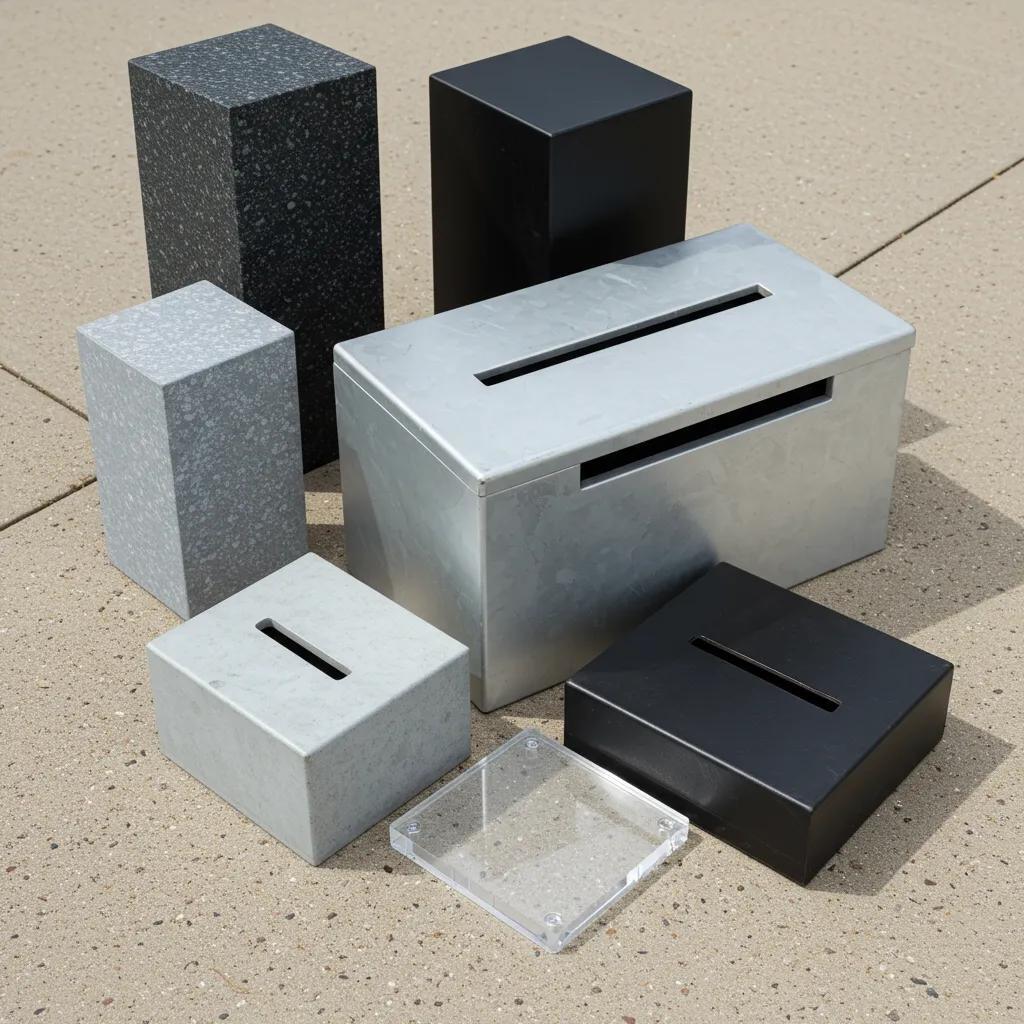
Material choice defines how well an outdoor donation box resists rain, UV, corrosion and impact, because each material brings distinct weatherproofing and maintenance characteristics. Selecting between metal, plastic and acrylic involves trading off strength, visual clarity and lifetime cost, so match material to exposure level and desired branding. Below are concise assessments and a table that compares weather resistance, security, weight and cost to inform procurement decisions. After materials, the following subsection explains how treatments and seals extend service life.
What are the advantages of metal, plastic, and acrylic donation boxes?
Metal donation boxes deliver strong security and resistance to impact because steel or aluminium panels are difficult to pry open, though metals can corrode without appropriate coatings in coastal or wet environments. Plastic boxes, typically high-density polyethylene or engineered polymers, offer lightweight corrosion resistance and lower cost, but they may be more prone to cracking or UV degradation over many years. Acrylic donation boxes provide transparent visibility of contents and excellent customisation for branding while remaining relatively weather-resistant; however, acrylic can scratch and requires UV-resistant grades for prolonged outdoor exposure. Choose metal where security is paramount, plastic where budget and corrosion resistance matter, and acrylic when content visibility and branding are priorities.
Design of a Smart Charity Box for Enhanced Security and Efficiency
Charity boxes play a significant role in funding the activities and maintenance of mosques. However, they frequently encounter issues such as inefficient manual calculations, the risk of theft, and security concerns in the implementation of e-money systems. This article investigates the design of a smart charity box intended to address these challenges.
Design a Smart Charity Box Based on Line Followers, 2023
The properties of materials directly influence their susceptibility to environmental degradation and their overall lifespan. Understanding these characteristics is crucial for planning effective maintenance strategies and ensuring the longevity of the donation boxes.
How does material choice affect weather resistance and longevity?
Material properties determine common outdoor failure modes such as rust, UV-fade, seal failure and thermal expansion; understanding these helps plan maintenance schedules. Protective coatings, anodising or powder-coating on metal prevent corrosion and extend lifecycle, while UV stabilisers and opaque additives improve plastic longevity; acrylic benefits from UV-resistant grades and periodic cleaning to prevent micro-scratches that trap moisture. Regular inspection of seals around collection chutes and hinged lids reduces water ingress risk, and a documented maintenance frequency—quarterly inspections with touch-up coatings where necessary—keeps boxes serviceable. Selecting materials compatible with anchoring methods and replacement parts will reduce long-term costs and downtime.
The following table compares common material attributes to aid a durable selection.
|
Material |
Weather resistance / UV |
Security / Weight |
Cost / Typical lifecycle |
|---|---|---|---|
|
Metal (coated steel) |
High when powder-coated; vulnerable if coating damaged |
Very high security; heavier |
Medium–high cost; long lifecycle with maintenance |
|
Plastic (HDPE/Polymer) |
Good corrosion resistance; UV can cause brittleness unless stabilised |
Moderate security; lightweight |
Low–medium cost; moderate lifecycle |
|
Acrylic |
Good weather resistance with UV grade; transparent |
Low–moderate security; light |
Medium cost; moderate lifecycle with care |
This comparison clarifies which materials balance weatherproofing and operational needs while guiding maintenance planning.
Retail Display Direct, an Australian supplier of display and signage solutions based in Padstow, NSW, lists donation box and suggestion box options within its acrylic display category and highlights durable, weather-resistant, customisable and easily portable solutions as product UVPs. Referencing supplier examples like weatherproof freestanding donation boxes and acrylic donation boxes can illustrate real-world form factors and custom branding possibilities when specifying materials and finishes.
What Security Features Protect Outdoor Charity Collection Boxes?
Security features for outdoor charity collection boxes focus on preventing unauthorised access and deterring vandalism, because effective design combines robust physical locks, anti-pry construction and secure anchoring to protect collections. Prioritise tamper-resistant chutes, high-grade locks and anchor points; supplement physical measures with procedural controls such as frequent collections and visible monitoring. The next sections list core features and operational best practices, then present a decision table to help allocate budget to the most impactful security investments.
How do locks, tamper-proof designs, and anchoring improve security?
Locks, anti-pry elements and anchoring together reduce the attack surface and delay thieves, which increases the chance of deterrence or detection. Use locks rated for outdoor use with shrouded cylinders to prevent cutting, design internal chutes that prevent fishing attempts, and choose bolt-down or concreting anchoring methods appropriate to the mounting type. Anti-pry flanges, recessed hinge designs and welded seams add passive resistance, while selecting materials that hide access points prevents opportunistic attacks. Implementing these physical features should be followed by structured installation checks to ensure each element functions as intended.
What are best practices to prevent theft and vandalism?
Operational practices complement physical design by reducing opportunity and increasing visibility, because systematic routines and community engagement lower risk of theft and damage. Maintain a clear collection schedule with sealed cash-handling procedures, ensure boxes are sited in well-lit and visible locations, and use signage that signals CCTV monitoring or regular emptying to deter tampering. Engaging local businesses and volunteers to report suspicious activity and including contact details for authorised collections improves rapid response when incidents occur. Together, physical hardening and operational discipline significantly reduce losses and maintain public confidence in outdoor collection points.
Security features prioritised by effectiveness and application are summarised below to guide investments.
|
Security Feature |
Effectiveness / Complexity |
Recommended use-case |
|---|---|---|
|
Tamper-resistant lock |
High effectiveness; moderate replacement complexity |
Essential for high-value sites and unattended boxes |
|
Reinforced chute / anti-fishing |
High effectiveness; low complexity |
Important where cash or small valuables are collected |
|
Anchoring kit (bolt/concrete) |
Very effective; installation complexity varies |
Use for freestanding and post-mounted units in public spaces |
|
Surveillance integration (CCTV) |
High deterrent; higher cost/complexity |
Use in high-risk urban locations with power/access |
This table helps charities prioritise security investments according to site risk and installation complexity.
Where Should Charities Place Outdoor Donation Boxes for Maximum Impact?
Placement must balance visibility and donor convenience with safety and compliance because location influences donation volume and operational risk. High-footfall areas increase donations but may require stronger security and formal permissions, while quieter but secure on-premises locations reduce theft risk. The subsections list practical high-impact locations with deployment tips and then outline UK-specific legal and regulatory considerations charities must observe before installing outdoor collection infrastructure.
Which high-traffic and accessible locations boost donations?
High-traffic retail fronts, community centre entrances, places of worship and near public transport hubs typically deliver higher donation volumes because they combine footfall with dwell time and easy access. Ensure donation box height and approach paths meet accessibility needs so donors of differing mobility can use boxes comfortably, and place clear branded signage to communicate charitable purpose and collection schedules. Obtain landowner or venue permission, coordinate with staff for regular emptying, and avoid obstructing pedestrian flow to maintain community goodwill. Thoughtful placement improves both donations and security outcomes by fostering natural surveillance.
What legal and regulatory considerations affect placement in the UK?
In the UK, charities should secure landowner permission and check local authority rules and advertising restrictions since placing outdoor collection containers can intersect with planning, highways and public-space regulations. Follow Charity Commission guidance on transparent handling and visible identification of collections, ensure any signage complies with local advertising rules, and avoid collecting personal data at outdoor points unless you meet data protection obligations. Before installation, consult with landowners and local councils to document permissions and reduce the risk of removal or enforcement action.
Deploying boxes that comply with permissions and accessibility expectations reduces the likelihood of disputes and helps sustain long-term collection locations.
- Key placement checklist for charities deploying outdoor donation boxes: Secure written permission from landowners or venue operators before installation. Choose locations with high visibility and natural surveillance to deter theft. Ensure donor accessibility and clear signage that states collection ownership and schedule.
- Regular maintenance and monitoring routines charities should follow: Inspect seals, locks and fixings quarterly and after severe weather events. Record collection times and use sealed transfer procedures to maintain chain of custody. Rotate box locations or upgrade physical security if a site experiences repeated vandalism.
These routines, combined with the guidance above, complete a practical framework for safe and effective outdoor fundraising infrastructure.
Retail Display Direct in Padstow, NSW is an example of a supplier that markets donation box and suggestion box ranges within acrylic display categories and emphasises durable, weather-resistant, customisable and easily portable options; charities considering acrylic solutions can use such supplier examples to specify clear branding panels and portable mounting choices while matching local regulatory and security needs.