
Types of Retractable Safety Barriers Explained: Key Variants and Uses for Effective Crowd Control
17th Dec 2025
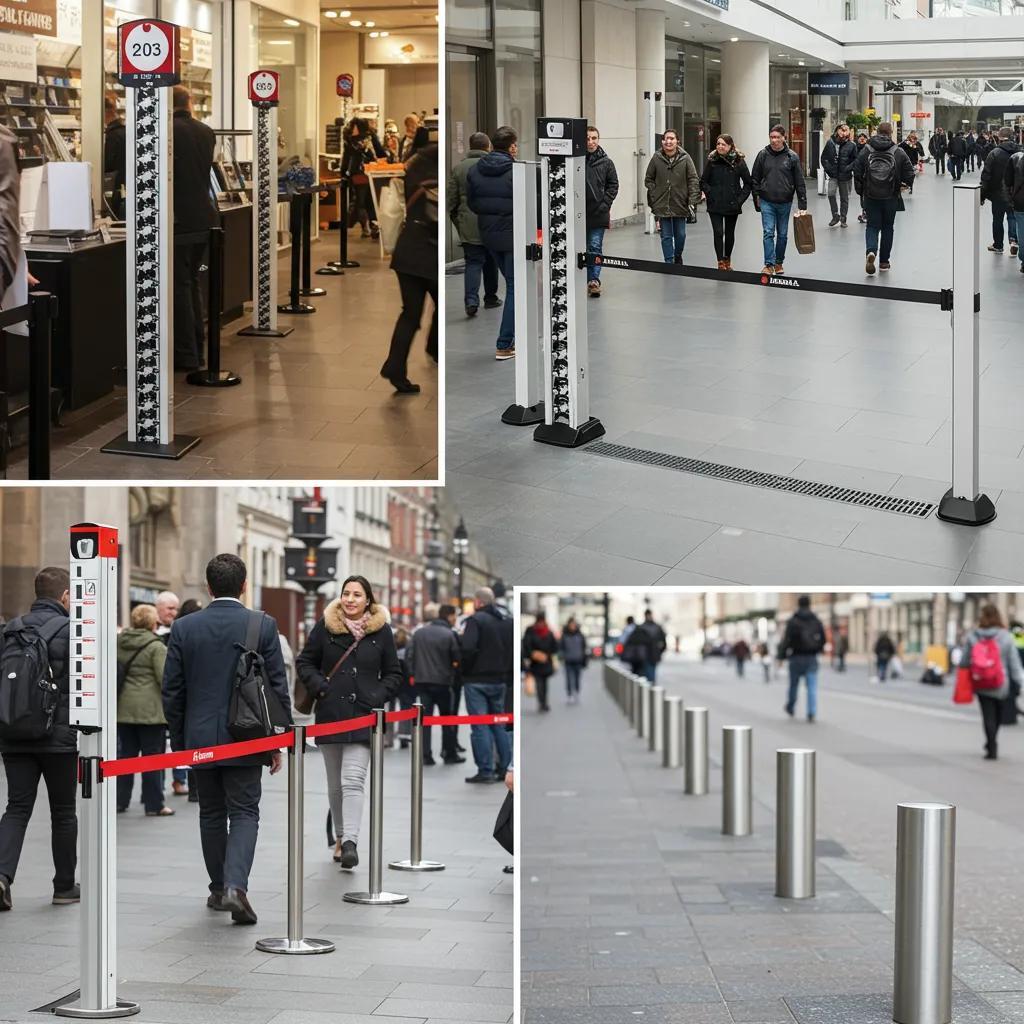
Retractable safety barriers are modular systems that use a retractable belt or expandable section to control access, guide queues and protect hazards, offering flexible crowd control without permanent fixtures. This article explains the main types of retractable safety barriers, how to choose the right variant for different environments, which features and materials affect performance, and how barriers support compliance and safer operations. Many organisations need quick, robust solutions for retail queues, warehouses, outdoor events and temporary access control; the right barrier type reduces confusion, speeds reconfiguration and limits accident risk. The following sections define freestanding, wall-mounted, bollard-mounted and expandable barriers, present decision rules for choosing between them, compare materials and locking features, and outline the practical safety benefits and compliance checks to keep systems effective. Read on to get concise decision guidance, comparison tables and maintenance-minded tips designed to help procurement and operations teams match barrier choice to specific use-cases.
What Are the Main Types of Retractable Safety Barriers?
Retractable safety barriers broadly fall into freestanding retractable belt barriers, wall-mounted retractable barriers, bollard-mounted retractable units and expandable (concertina) barriers, each using a retractable webbing or folding section to limit access quickly. These types differ by portability, typical belt or span length, installation needs and best-use scenarios, so selecting a variant depends on whether you need temporary queue control, semi-permanent aisle blocking or wide-span closure. Below is a concise overview of each type to help you identify the right family for your setting. After reviewing types, a compact comparison table summarises portability, belt length and typical applications to speed decision-making.
Different barrier types suit different operational patterns, so understanding those trade-offs prepares you to decide on base weight, mounting and span before considering materials and locking mechanisms.
What Defines Freestanding Retractable Belt Barriers?
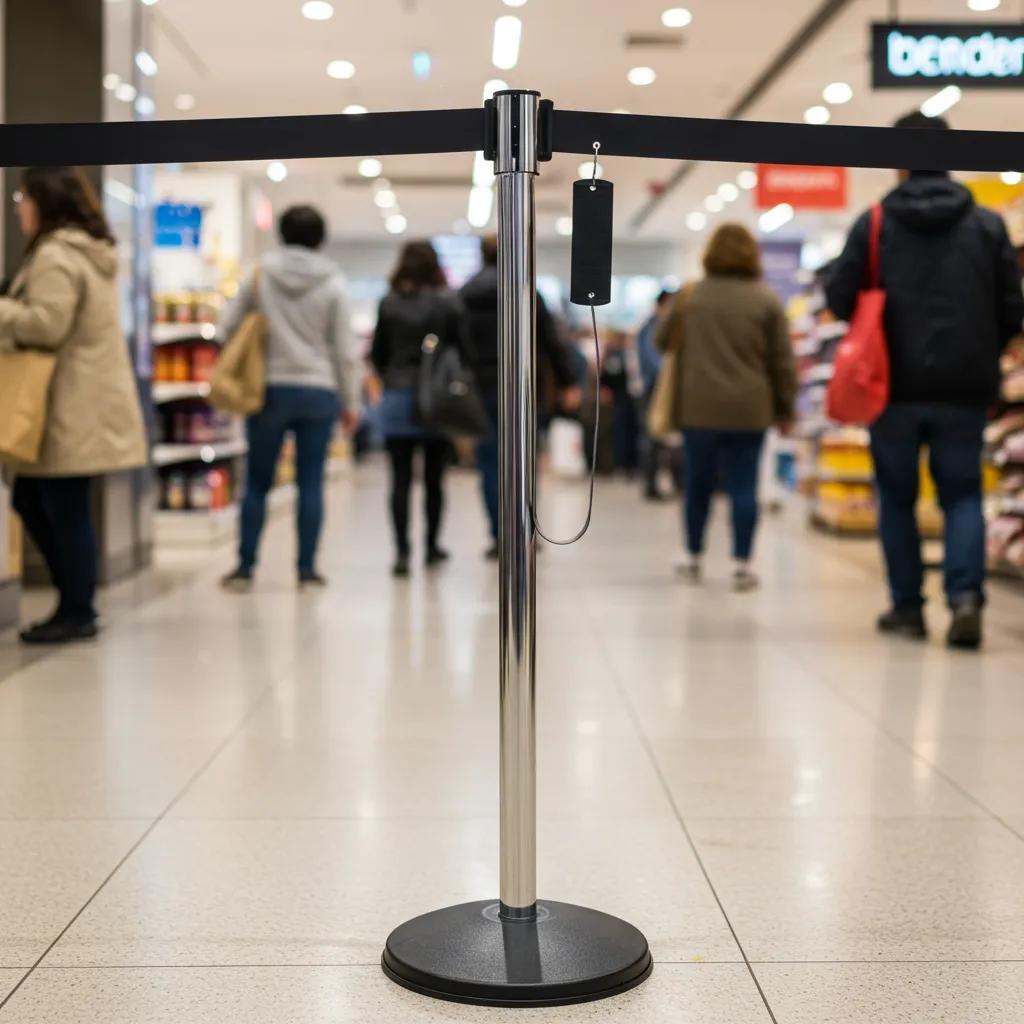
Freestanding retractable belt barriers are portable stanchions with a coil-mounted webbing cassette, a weighted base and a belt that locks into another post or wall receiver to create a temporary barrier. They work well for retail queues, event lines and airports because they deploy quickly and reconp without tools; typical belt lengths range from one to three metres depending on the model. Stability depends on base weight and design, with heavy-duty bases preferred in high-traffic or windy indoor spaces to avoid tipping. Choosing the right freestanding unit means balancing portability against base mass and selecting belt colours or printed messaging for visibility and communication.
How Do Wall-Mounted Retractable Safety Barriers Work?
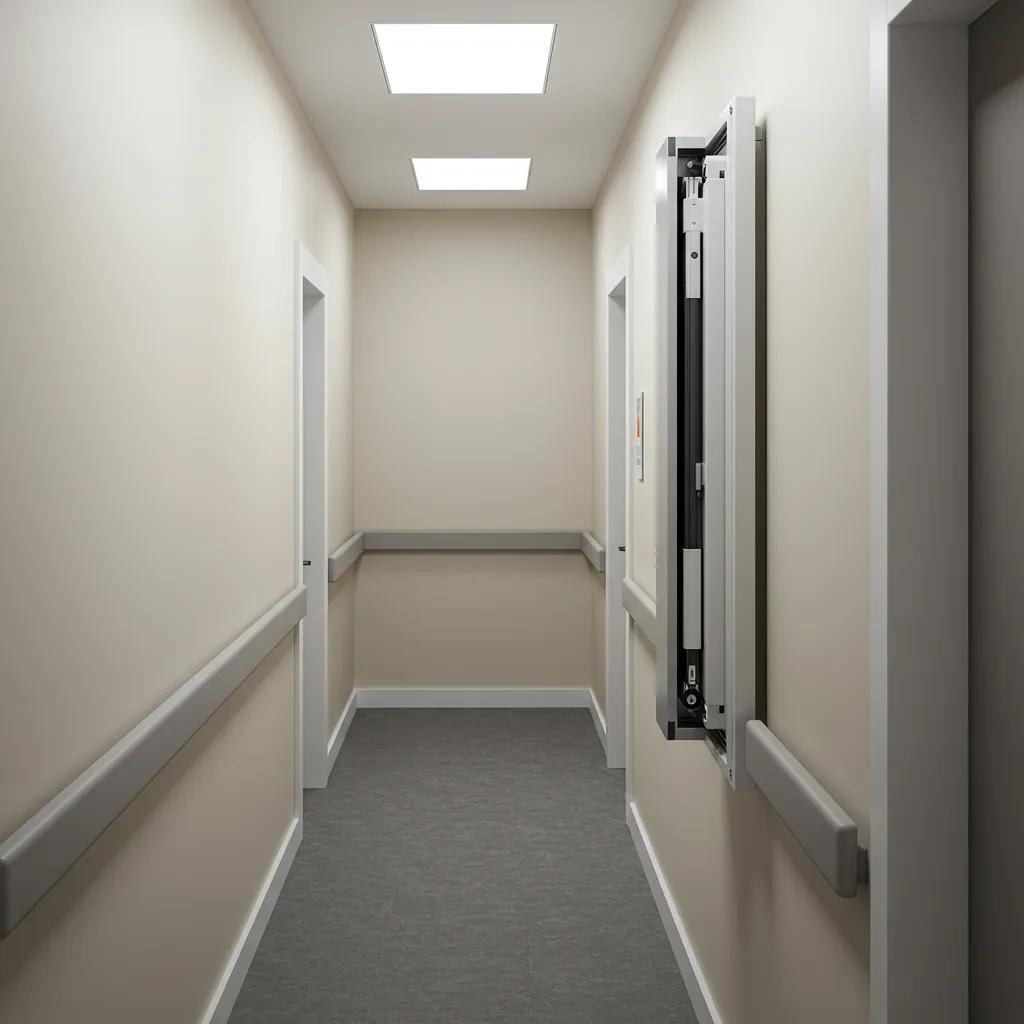
Wall-mounted retractable barriers fix a cassette to a wall or column and use a receiving point on an opposite surface or post, offering a space-saving, semi-permanent means to close aisles and service areas. The mechanism retracts into a compact housing and often includes magnetic or mechanical ends that secure to receivers; this makes them ideal for warehouses, kitchens and corridors where floor space must remain clear. Installation requires appropriate fixing points and surface strength, and magnetic end options can speed connection to steel receivers but need compatible surfaces. Because they remain attached to a wall, they reduce trip hazards and are practical where frequent temporary closure is required.
Different providers supply these variants and accessories in varying configurations; for example, Retail Display Direct offers a range across the freestanding and wall-mounted categories appropriate for retail and industrial settings.
The following table compares the main types by portability, typical belt length and common applications to help you scan differences quickly.
|
Barrier Type |
Characteristic |
Typical Application |
|---|---|---|
|
Freestanding retractable belt barrier |
Portable post with weighted base; belts 1–3 m |
Retail queues, events, temporary queues |
|
Wall-mounted retractable barrier |
Fixed cassette; compact retraction to wall |
Warehouses, corridors, service doors |
|
Bollard-mounted retractable barrier |
Attachment to bollard or post; medium span |
Pedestrian / vehicle separation, outdoor zones |
|
Expandable (concertina) barrier |
Foldable sections for wide spans |
Temporary wide-span closures, construction sites |
This comparison highlights that portable freestanding units suit dynamic queueing while wall-mounted and bollard solutions favour space-saving, semi-permanent control. Understanding these differences leads to choosing features and materials that match your environment.
When Should You Use Different Retractable Barrier Types?
Selecting a retractable barrier starts with mapping the environment, traffic patterns and exposure to weather or vehicle movement; each context has clear rules-of-thumb that steer the choice. Use durable, heavy-base freestanding units for high-footfall indoor environments, wall-mounted units for tight corridors and semi-permanent closures, bollard-mounted systems where pedestrian and vehicle zones intersect, and expandable barriers when a wide temporary closure is required. The list below gives direct decision rules to help non-expert purchasers make a fast selection.
Quick decision rules for choosing a barrier type:
1. High indoor footfall and frequent reconfiguration: choose freestanding retractable belt barriers for mobility and rapid redeployment.
2. Fixed aisle closures or service doors where floor space must remain clear: choose wall-mounted retractable barriers for compact storage.
3. Pedestrian-vehicle separation or outdoor curbside control: choose bollard-mounted units with robust anchors and visible belts.
4. Temporary wide-span closures or construction access: choose expandable (concertina) barriers for broad coverage.
These rules map environment and hazard to barrier family and prepare you to select material and locking options that support durability and safety in the next section.
Which Retractable Barriers Are Best for Industrial and Warehouse Safety?
Industrial and warehouse contexts prioritise durability, visibility and secure locking because barriers must withstand impacts, heavy use and hazardous movements of equipment. Choose heavy-duty bases or bollard integration, high-visibility belts (yellow or red), slow-retraction braking to prevent whip-back, and keyed or mechanical locks where unauthorised disconnection presents risk. Fixtures should be corrosion-resistant if exposed to moisture, and wall-mounted receivers can keep aisles clear while allowing quick closure during maintenance or cleaning. The emphasis on robust materials and locking leads naturally to comparing plastic versus metal constructions and belt options in the following section.
What Retractable Barriers Suit Outdoor and Temporary Access Control?
Outdoor and temporary access control require UV-stable webbing, weather-resistant housings and heavier bases or fixed mounts to resist wind and accidental displacement. Expandable barriers are particularly useful for temporary, wide-span closures where multiple posts would be unwieldy, while bollard-mounted retractable belts anchored to fixed posts provide a durable pedestrian-vehicle buffer. Select materials rated for UV and moisture exposure and consider adding weighted bases or ground fixings in exposed locations to maintain stability. These considerations set up the next section, which explains how features and materials impact long-term performance.
What Features and Materials Affect Retractable Safety Barrier Performance?
Key features—belt length and width, webbing colour and printed messaging, locking mechanism type and slow-retraction brakes—directly affect coverage, visibility and operational safety of retractable barriers. Material choices for posts and housings (plastic, stainless steel, aluminium) influence durability, corrosion resistance and maintenance needs; selecting the right combination depends on indoor/outdoor use and expected wear. The short list below summarises practical feature trade-offs and helps procurement teams prioritise what matters most in their context.
- Belt length and width: longer or wider belts provide greater span and visibility but require sturdier posts and may increase recoil force.
- Locking mechanism: keyed or mechanical locks prevent accidental disconnection in high-traffic areas while simple catches suffice for low-risk zones.
- Slow-retraction brake: reduces wear and prevents the belt from snapping back dangerously, improving safety and longevity.
The following table compares common materials and features by durability, maintenance and suitability for indoor or outdoor use to help finalise selections.
|
Material / Feature |
Durability & Maintenance |
Indoor/Outdoor Suitability |
|---|---|---|
|
Plastic housing |
Lightweight, lower cost, prone to UV degradation unless stabilised |
Best for controlled indoor use |
|
Stainless steel post |
High durability, corrosion-resistant, low maintenance |
Suitable for indoor and outdoor use |
|
Aluminium post |
Corrosion-resistant and lighter than steel, moderate durability |
Good for portable outdoor use |
|
UV-stable webbing |
Resists fading and weakening from sun exposure |
Required for prolonged outdoor use |
This table demonstrates how selecting the right material-feature mix reduces maintenance and aligns barrier performance with environmental demands. Retail Display Direct supplies models with belt colour and webbing options plus metal and plastic constructions available via product filters to match these practical needs.
How Do Belt Length, Colour, and Locking Mechanisms Impact Barrier Use?
Belt length determines how many posts or which span a single cassette can cover; typical belts run from around one metre to several metres, with longer belts useful for joining a post to a wall across wider openings. Colour choices and printed webbing support hazard signalling and can fulfil basic on-site messaging needs, improving compliance and awareness. Locking mechanisms vary from simple catches to keyed locks and magnetic ends; keyed locks and slow-retraction brakes are preferable in industrial settings to prevent accidental release and reduce wear. Understanding these elements clarifies procurement specs and reduces operational surprises during deployment.
What Are the Differences Between Plastic and Metal Retractable Barriers?
Plastic housings are cost-effective and lightweight, making them suitable for low-abuse indoor environments, but they may fade or crack with extended outdoor exposure unless UV-stabilised. Metal options such as stainless steel offer superior longevity and corrosion resistance for outdoor or heavy-use situations, while aluminium balances weight and weather resistance for portable outdoor needs. Maintenance needs differ: plastic requires inspection for UV damage, whereas metal units may need occasional cleaning to avoid surface corrosion in harsh environments. These material trade-offs should guide choices based on expected lifespan, maintenance capacity and budget.
How Can Retractable Safety Barriers Improve Crowd Control and Safety?
Retractable safety barriers improve crowd control and safety by providing rapid, visible, and configurable separation between people and hazards, enabling dynamic space management and clearer pedestrian flows. They reduce confusion at entry points, streamline queues to prevent crowding, and create physical demarcation that lowers the risk of accidental intrusion into hazardous areas. The list below summarises primary operational benefits and links these to practical outcomes for safety and compliance.
1. Rapid deployment: barriers can be set up and reconpd within minutes to respond to changing operations.
2. Clear delineation: visible belts and colours communicate restricted zones to reduce accidental entry.
3. Space efficiency: wall-mounted and retractable systems free floor space when not in use while providing quick closure.
These benefits translate into measurable improvements in pedestrian flow and reduced incident rates when combined with proper signage and inspection routines.
For organisations ready to source barriers that match these needs, Retail Display Direct supplies a range of retractable and rope barrier options and can advise on selecting material and feature combinations suited to retail, industrial and public settings; enquiries can be directed to their Padstow NSW location for product and specification assistance.
What Are the Benefits of Using Retractable Barriers for Crowd and Access Management?
Retractable barriers reduce setup time compared with fixed fencing and enable rapid reconfiguration of spaces for peak periods or emergency routes, which improves operational flexibility. They guide queues and entrances in retail or event environments, decreasing customer frustration and improving throughput. Additionally, belt colours and printed messaging reinforce hazard zones and combine with other safety measures to reduce incidents. Regular inspection and maintenance of belts and retraction mechanisms ensure these benefits persist over time.
How Do Retractable Barriers Comply with Safety Standards and Regulations?
Compliance depends on selecting materials and features that meet local workplace safety expectations, using high-visibility belts where required and ensuring installations do not create trip hazards or obstruct evacuation routes. Practical checks include verifying secure fixings for wall-mounted units, testing slow-retraction brakes and locks, and replacing frayed webbing promptly. When in doubt, consult on-site safety officers or regional regulatory guidance to confirm barrier placement and signage meet applicable standards. Following these checks maintains both legal compliance and the operational reliability of barrier systems.