
Snap Frame Types Comparison for Your Business Needs: Choosing the Best Display Solution
19th Dec 2025
Snap frames are purpose-built poster frames that open at the edges to allow rapid poster changes, providing businesses with a fast, repeatable way to refresh signage while protecting printed material. They combine a clamping snap mechanism, a clear protective cover and a backing board so posters stay flat, readable and present a professional finish. This article explains how different snap frame types — from lightweight aluminium to lockable and outdoor weatherproof models — meet typical retail, hospitality, office and public-display needs and how to choose the right option for your environment. Readers will learn practical trade-offs around durability, security, weather resistance and size selection, plus installation and maintenance steps that extend service life. The guide maps common A-sizes to display roles, compares security and weatherproofing features, and includes EAV-style comparison tables and concise checklists to speed purchasing decisions. If you manage in-store promotions, menu boards, transit notices or external signage, this comparison will help you match frame characteristics to business objectives and operational constraints.
What Are Snap Frames and Why Are They Essential for Your Business?
A snap frame is a poster frame with hinged aluminium or metal profiles that “snap” open to hold a poster securely and allow tool-free replacement; this mechanism makes frequent updates quick and consistent. The snap mechanism reduces labour time for poster swaps, protects graphics behind a clear cover from fingerprints and light dust, and keeps a neat, professional appearance that supports branding. For many businesses the core benefits are speed of change, graphic protection and a tidy finished look that improves perceived quality of promotions. Understanding these core benefits makes the next step straightforward: how snap frames specifically improve display effectiveness in store, hospitality and public environments.
Snap frames improve readability and operational efficiency by combining hardware and protective covers that keep posters flat and visible. This functional foundation leads directly into practical examples of how snap frames raise the impact of in-store and public messaging.
Snap frames offer three practical features that drive business value:
- Easy-change mechanism: Fast poster swaps reduce labour and downtime for promotions.
- Protective cover: Clear PVC or acrylic shields prints from handling and dust.
- Professional finish: Mitred aluminium corners and slim profiles upgrade presentation.
These features translate to measurable operational improvements such as faster campaign rollouts and reduced poster waste. The next section compares snap frames to similar framing options to clarify terminology before choosing types.
How Do Snap Frames Improve Poster Display and Signage?
Snap frames improve poster display by securing printed material behind a clear protective cover while allowing quick replacement, which reduces staff time for updates and maintains consistent presentation. The mechanism uses a hinged aluminium profile that clamps the poster and cover flat against a backing board, preventing curling and improving viewing clarity for customers. In retail this speeds promotional changes; in hospitality it allows menu updates within minutes; and in offices it standardises notices across multiple locations. Because the assembly combines a durable profile, a clear cover and a backing board, businesses gain both protection and a repeatable installation process that supports frequent graphic updates.
Maintaining readability under different lighting and traffic conditions is the next concern, and that leads to a direct comparison with clip frames to clarify when each term is used.
What Is the Difference Between Snap Frames and Clip Frames?
Snap frames and clip frames are often used interchangeably, but the terms emphasise slightly different features: snap frames refer to hinged profiles that open fully for poster replacement, while clip frames sometimes imply simple edge clips without a continuous hinged profile. In practice most businesses recognise snap frames as the commercial solution for frequent changes and clip frames as a lower-cost alternative for occasional swaps. Suppliers may use these terms variably, so confirming the mechanism — full-snap hinge versus simple clips — avoids confusion on durability and ease of use. Understanding this distinction helps buyers pick the correct hardware for intended update frequency and display environment.
Clarifying the difference between snap/clip frames naturally leads to evaluating specific snap frame types for various business settings.
Which Snap Frame Types Are Best for Different Business Environments?
Different business settings require distinct snap frame characteristics: retail and hospitality prioritise aesthetics and quick change, public spaces demand security, and outdoor sites need weather resistance and UV protection. Choosing among aluminium snap frames, lockable snap frames, outdoor weatherproof frames and standard A-size snap frames depends on material, security features, weather resistance and budget. Below is a compact EAV-style comparison to map core types to attributes businesses use when deciding which frame to specify.
|
Frame Type |
Characteristic |
Typical Business Value |
|---|---|---|
|
Aluminium snap frames |
Lightweight, corrosion-resistant profile |
Professional finish for retail and office displays |
|
Lockable snap frames |
Integrated keyed or snap locks |
Security for unsupervised public locations |
|
Outdoor weatherproof frames |
Seals, drainage, anti-UV cover |
Protects posters from rain, sun and debris |
|
A-size snap frames |
Standardised dimensions (A4–A1) |
Rapid deployment across multiple sites |
This table highlights how material and feature choices map directly to business value and environment suitability. After comparing types, the next section examines aluminium and lockable options in more depth.
What Are the Benefits of Aluminium Snap Frames for Durability and Style?
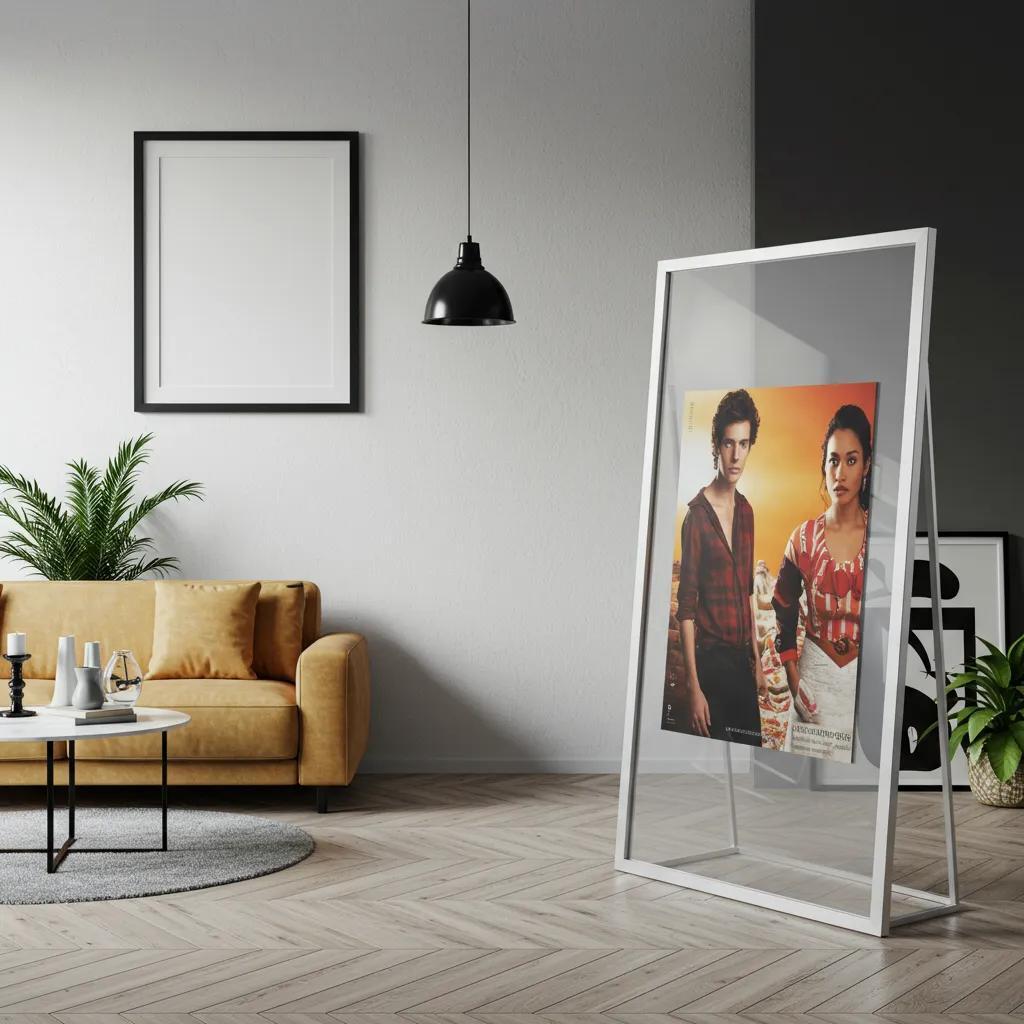
Aluminium snap frames combine corrosion-resistant metal profiles and slim mitred corners to deliver a durable, lightweight frame that complements branded interiors and shopfronts. The metal profile resists warping, provides crisp edges for a professional look and supports repeated poster changes without losing alignment. Available finishes — commonly in neutral tones such as silver or black — allow visual consistency across multiple installations, and the weight advantage simplifies shipping and mounting. For high-visibility retail displays aluminium balances form and function, giving businesses a long-lasting solution that enhances signage aesthetics.
The durability of aluminium suggests another requirement for some settings: security, which is the focus of the next subsection on lockable frames.
How Do Lockable Snap Frames Provide Security for Public Displays?
Lockable snap frames incorporate a locking clasp or keyed mechanism that prevents unauthorised poster removal and tampering, making them ideal for transit hubs, schools and communal noticeboards. The lock increases tamper-resistance while allowing authorised staff controlled access for scheduled updates; this trade-off typically raises cost and weight versus non-locking models. Lockable profiles may also include anti-theft screws or reinforced backings to deter vandalism in high-traffic public areas. For unsupervised locations, the added security preserves message integrity and reduces replacement frequency due to theft or damage.
Recognising security needs completes the comparison of core snap frame types and leads into outdoor and size-specific considerations next.
How Do Outdoor and A-Size Snap Frames Meet Specific Business Needs?
Outdoor snap frames must combine sealing systems, drainage and UV-stable covers so graphics remain legible and intact despite rain, sun and wind; A-size frames must match poster purpose and mount location so visibility and layout suit the message. Weatherproof features prevent moisture ingress and fading, while correct A-size selection ensures a poster performs for the viewing distance and location. This section provides an EAV-style breakdown of outdoor frame features and guidance on choosing A-sizes for common applications.
|
Feature Area |
Attribute |
Typical Implementation |
|---|---|---|
|
Sealing & drainage |
Gaskets, overlapping cover channels |
Prevents water entry and sheds rain |
|
Protective cover |
Anti-UV, anti-glare PVC or acrylic |
Reduces fading and improves legibility |
|
Mounting options |
Wall, pole, freestanding |
Matches site conditions and sightlines |
This EAV table clarifies which outdoor attributes need specification to keep displays reliable. Proper outdoor detailing then connects to size decisions that follow.
What Features Make Outdoor Snap Frames Weatherproof and Reliable?
Weatherproof snap frames rely on sealed profiles, drainage channels and UV-stable protective covers to keep posters dry and readable over time, preventing water pooling and sun-induced fading. Materials such as powder-coated aluminium resist corrosion, while rubber gaskets or foam seals close the profile perimeter and block wind-driven moisture. Anti-glare, anti-UV covers protect inks and help maintain consistent visual contrast under varying daylight; drainage features ensure any trapped water exits the assembly. Simple scheduled inspections for seal integrity and cover clarity preserve performance and reduce replacement costs.
Having ensured weatherproofing, businesses next need clear guidance on which A-size frames match common poster roles and viewing distances.
Which A-Size Snap Frames Are Ideal for Your Posters?
A-size snap frames map directly to poster roles: A4 is suited to notices and point-of-sale shelf displays, A3 works well for internal promotions and staff notices, A2 and A1 scale up for window displays and shopfront promotion where viewing distance increases. Orientation also matters: portrait A4 or A3 for informational signs, landscape A1 for wide shopfront graphics that need lateral visibility. Choosing the right A-size balances visibility, cost and mounting practicality, and selecting a standard size simplifies poster production and replacement logistics.
|
Size |
Typical Use |
Visibility Range |
|---|---|---|
|
A4 |
Notices, information points |
Close-range (0–2 m) |
|
A3 |
Internal promotions, menus |
Near to mid-range (1–4 m) |
|
A2 |
Larger internal displays |
Mid-range (3–6 m) |
|
A1 |
Window displays, shopfronts |
Mid to long-range (5+ m) |
This size table helps match content to expected viewing distance and mounting location. Next we cover selection factors and maintenance to ensure chosen frames last.
How Can You Choose and Maintain the Right Snap Frame for Your Business?
Choosing the right snap frame requires prioritising environment, poster-change frequency, security needs and budget while planning installation and routine maintenance to extend usable life. A simple decision checklist helps businesses evaluate trade-offs between cost, durability and functionality; once selected, correct mounting, cleaning and part replacement schedules keep frames performing. The following EAV-style maintenance table summarises expected upkeep and longevity by material to guide lifecycle planning.
|
Material |
Maintenance Action |
Expected Longevity |
|---|---|---|
|
Aluminium profile |
Wipe clean, inspect seals annually |
5–10 years with routine care |
|
Protective cover (PVC/acrylic) |
Clean with non-abrasive cleaner, replace if scratched |
2–5 years depending on exposure |
|
Locking mechanism |
Lubricate and test locks twice yearly |
3–7 years with regular servicing |
This maintenance matrix clarifies care requirements and helps buyers budget for replacement parts and servicing. With selection and upkeep defined, concrete installation and maintenance steps make deployment reliable.
What Factors Should Influence Your Snap Frame Selection?
Key factors that should influence selection are environment (indoor vs outdoor), traffic and exposure levels, frequency of poster updates, security needs and branding objectives; budget and ease of installation also shape final choices. For high-traffic retail, choose durable aluminium with anti-glare covers; for unsupervised public sites, prioritise lockable frames and reinforced backing. Frequent poster changes favour snap mechanisms and standardised A-sizes to minimise downtime, while outdoor sites require sealed profiles and UV-stable covers to avoid accelerated fading. Prioritising these factors helps you select a frame that balances cost with operational performance.
Deciding on materials and features then informs specific installation and maintenance steps addressed next.
What Are the Best Installation and Maintenance Tips for Longevity?
Correct installation starts with the right anchors for substrate type, ensuring the frame is level and sealed where required; use corrosion-resistant fixings for outdoor mounts to prevent rust staining. Regular maintenance includes gentle cleaning of the protective cover with non-abrasive solutions, inspection and replacement of worn gaskets, and occasional lubrication and testing of locks; schedule checks quarterly in high-exposure locations. Troubleshooting simple issues—replacing scratched covers, tightening mitred corners, or swapping backing boards—keeps displays presenting well and extends service life. Following these steps reduces downtime and total cost of ownership.
- Supplier note: For businesses seeking ready supply and advice on snap frames, Retail Display Direct in Padstow, NSW stocks display solutions including snap frames and related signage hardware. The company advertises same-day dispatch on most orders placed before 11am, a lowest-price guarantee or they will beat it, and fast shipping across Australia. Contact details are available through their business listings for procurement queries and local service.