
Local Retail Display Solutions to Boost Sales Efforts with Effective Shop Display Equipment
26th Dec 2025
Local retail display solutions are physical tools and strategies—like A-frame signs, sandwich boards and point-of-sale displays—that attract passersby, highlight promotions and convert browsers into buyers. This guide explains how targeted shop display equipment and visual merchandising translate into measurable sales uplift for small, local retailers. Many independent shops struggle to cut through street-level clutter and grab attention; the right pavement signs and countertop stands solve that by increasing visibility, clarifying offers and nudging impulse purchases. Below we cover how displays drive sales, which equipment types work best for small businesses, practical customisation approaches to reflect brand identity, and actionable visual merchandising tips you can implement quickly. Throughout, the focus is on local retail display solutions and shop display equipment you can deploy with minimal disruption to store operations.
How Do Local Retail Display Solutions Increase Sales for Small Businesses?
Local retail display solutions increase sales by drawing attention, clarifying offers and shortening the path to purchase; they work because humans respond to visual cues and immediate value propositions. A-frame signs and pavement signs act as directional prompts and offer notification of time-limited deals, while indoor POS displays capture last-minute add-ons at checkout. The result is more foot traffic, higher average transaction value and faster turnover of promoted stock. Below are three direct mechanisms merchants can use to translate display presence into sales gains, followed by a short real-world example to illustrate impact.
Local displays convert visibility into measurable action through simple behavioural cues that guide customers from curb to counter.
- Attracting passersby: Clear, bold pavement signs increase the chance that foot traffic notices your store and steps inside.
- Highlighting offers: Time-sensitive promotions on sandwich boards create urgency and stimulate immediate purchases.
- Encouraging impulse buys: Point-of-sale displays near checkouts present low-cost add-ons when purchase intent is high.
These mechanisms are visible in everyday retail environments and set the stage for choosing the most effective equipment and design for your shop.
What Role Do A-Frame Signs Play in Attracting Customers?
A-frame signs are portable, double-sided pavement signs that boost visibility by presenting messages to pedestrians approaching from both directions. Their mechanism is simple: they create a visual interruption on the sidewalk that prompts passersby to look, read and then act—often by entering the store. A-frames are useful for directional messaging, daily specials and event promotion because they can be repositioned quickly and updated with new copy. Smart placement on the pavement or outside entrances maximises sightlines and ensures the sign functions as an invitation rather than background clutter.
A-frames’ adaptability leads naturally into choices about materials and display types that suit local weather and footfall patterns.
How Can Visual Merchandising Improve Retail Sales Performance?
Visual merchandising improves sales by structuring the shopping environment so customers notice priority products, spend longer and make additional purchases; it works through focal points, signage hierarchy and traffic flow management. Creating a clear focal point near the entrance or an aisle end guides attention to promoted items, while consistent signage hierarchy reduces cognitive friction and simplifies decision-making. Together with point-of-sale displays, coherent merchandising increases dwell time and the likelihood of cross-sales. Practical steps like updating focal displays weekly and aligning in-store messaging with pavement signs sustain the effect and make visual merchandising an operational habit.
Understanding these merchandising mechanisms helps when selecting specific display equipment to support them.
What Are the Best Types of Retail Display Equipment for Small Businesses?
Best-fit shop display equipment divides into outdoor, indoor and point-of-sale categories; each serves a distinct purpose in the customer journey. Outdoor A-frame and pavement signs attract passersby, indoor retail display stands and shelving create shopper pathways, and countertop/acrylic holders communicate product information and pricing at point of decision. Choosing the right mix depends on your foot traffic, product size and promotional cadence, with durability and portability as key selection criteria. The short comparison below helps you match display types to common small-business needs and conditions.
Common choices for small retailers include A-frame signs for pavement messaging, countertop displays for impulse purchases, and acrylic holders for clear product information.
Introductory comparison of common display types and their primary attributes:
|
Display Type |
Material / Attribute |
Ideal Use / Weather Resistance |
|---|---|---|
|
A-frame / Pavement sign |
Lightweight frame, weather-tolerant panels |
Outdoor promotions, directional signage; choose weather-resistant panels for year-round use |
|
Countertop display stand |
Compact, visible at eye level |
POS impulse items and small-ticket add-ons indoors; high portability for quick resets |
|
Acrylic sign holders |
Clear panel, rigid construction |
Product details, pricing and warranties at point of decision; best for indoor, dry environments |
This comparison highlights how material and portability influence where and how each display performs in practice.
Which Features Make A-Frame Signs Ideal for Shops?
A-frame signs are effective because they combine visibility, ease of customisation and portability into a single, low-cost tool that influences footfall. Durable materials and weather-resistant panel options allow A-frames to stay on the pavement through varied conditions, while printable panels or chalk-ready surfaces enable fast message changes for daily specials. Lightweight construction keeps handling simple for staff during opening and closing, and double-sided messaging doubles exposure for passing pedestrians. Choosing the right panel finish and message hierarchy ensures the sign functions as an active marketing touchpoint rather than decorative clutter.
Practical feature choices then inform how you deploy A-frames for maximum visibility and longevity in your local area.
How Do Point of Sale Display Stands Boost Impulse Purchases?
Point-of-sale display stands boost impulse purchases by presenting relevant, low-cost items at the moment of highest buying intent—typically near the checkout or queue. The mechanism relies on convenience and cognitive availability: when a small, attractive product is within arm’s reach, customers are more likely to add it without much deliberation. Effective POS setups include compact countertop pyramids, a small dump bin for rotating seasonal items, and a focused endcap for last-minute gifts or add-ons. Rotating these assortments and keeping pricing and messaging clear sustains novelty and prevents display fatigue.
These POS tactics work best when supported by clear signage and a merchandising rhythm that keeps the offer fresh.
Point-of-Sale Promotions and Buying Stimulation in Retail Environments
This paper analyses the drivers of compulsive buying behaviour induced by in-store promotions through an empirical investigation in Mexico. The buying behaviour in reference to point-of-sale promotions offered by retailing firms and the determinants of sensitivity towards stimulating shopping arousal and satisfaction among customers in order to build store loyalty have been discussed. This study also builds arguments around the convergence of the attractiveness of point-of-sale promotions and the effectiveness of customer services as a tool for gaining a competitive advantage in the retail business environment. The results indicate that point-of-sale promotional programmes have become the principal tool of retailing in Mexico in order to acquire new customers and retain loyal customers. We also found during the study that loyal customers are attracted to store brands during promotional offers, while new shoppers are price-sensitive and are attracted by the in-store ambience of sales promotions and volume discounts.
Point-of-sales promotions and buying stimulation in retail stores, 2008
How Can Retailers Customise Display Solutions to Reflect Their Brand?
Customising display solutions means aligning colours, materials, messaging tone and logo placement so every sign and stand reinforces brand identity and local relevance. The mechanism is consistency: repeated visual cues increase recognition and trust, which in turn supports conversion when customers evaluate where to spend. Options range from full printed panels for long-term branding to blank boards designed for daily chalk or marker updates that keep messaging current. Choosing between permanent print and writable surfaces depends on whether your primary goal is long-term identity or flexible promotions.
Below is a compact guide showing common customisation routes and the benefits each provides for brand alignment.
Introductory customisation options table:
|
Display Type |
Customisation Option |
Benefit |
|---|---|---|
|
Pavement / Sandwich board |
Printed design or logo panel |
Consistent brand presence and polished look for long-term promotions |
|
Pavement / Sandwich board |
Blank chalk or wipeable surface |
Daily updates and timely promotions with low-cost refreshes |
|
Countertop displays |
Colour-matched panels and logo placement |
Reinforces brand identity at point of purchase and improves perceived value |
These options let small retailers pick a mix of permanent and flexible solutions depending on promotional frequency and brand goals.
Retail Display Direct provides concrete examples of these customisation approaches, offering durable, weather-resistant A-frames and sandwich boards available as blank boards or with printed designs. Their products emphasise portability and versatile usage across business types, and they offer same-day dispatch for orders placed before 12 PM across Australia, which can be useful when you need quick replacements or campaign-specific signage.
What Customisation Options Are Available for Sandwich Boards and Pavement Signs?
Sandwich boards and pavement signs can be customised with full-colour printed panels, vinyl overlays for branded accents, or chalk-ready surfaces for day-to-day offers; each option serves different promotional horizons. Printed panels deliver a professional, consistent look ideal for permanent messaging, while chalk or wipeable surfaces give staff flexibility to change specials daily. Material choice affects durability: weather-resistant panels extend outdoor life, and lighter frames support portability for events or festivals. Consider lead time against promotional cadence when selecting a customisation route to match marketing needs.
Choosing the right option balances brand consistency with operational flexibility and environmental exposure.
How Does Custom Retail Display Design Support Local Business Identity?
Customised display design supports local business identity by incorporating community motifs, local language or event-specific messages that resonate with nearby customers and build recall. The mechanism is relevance: displays that reference local landmarks, events or cultural cues create an immediate emotional connection and differentiate a store from generic competitors. Small touches—like colour palettes reflecting local tastes or rotating promotions tied to community events—reinforce that connection and encourage return visits. Use customisation strategically to show community involvement without overwhelming practical messaging like pricing or opening times.
Local design choices should always support the core call-to-action, ensuring brand personality enhances rather than distracts from purchase decisions.
What Are Practical Visual Merchandising Tips to Maximise Retail Display Effectiveness?
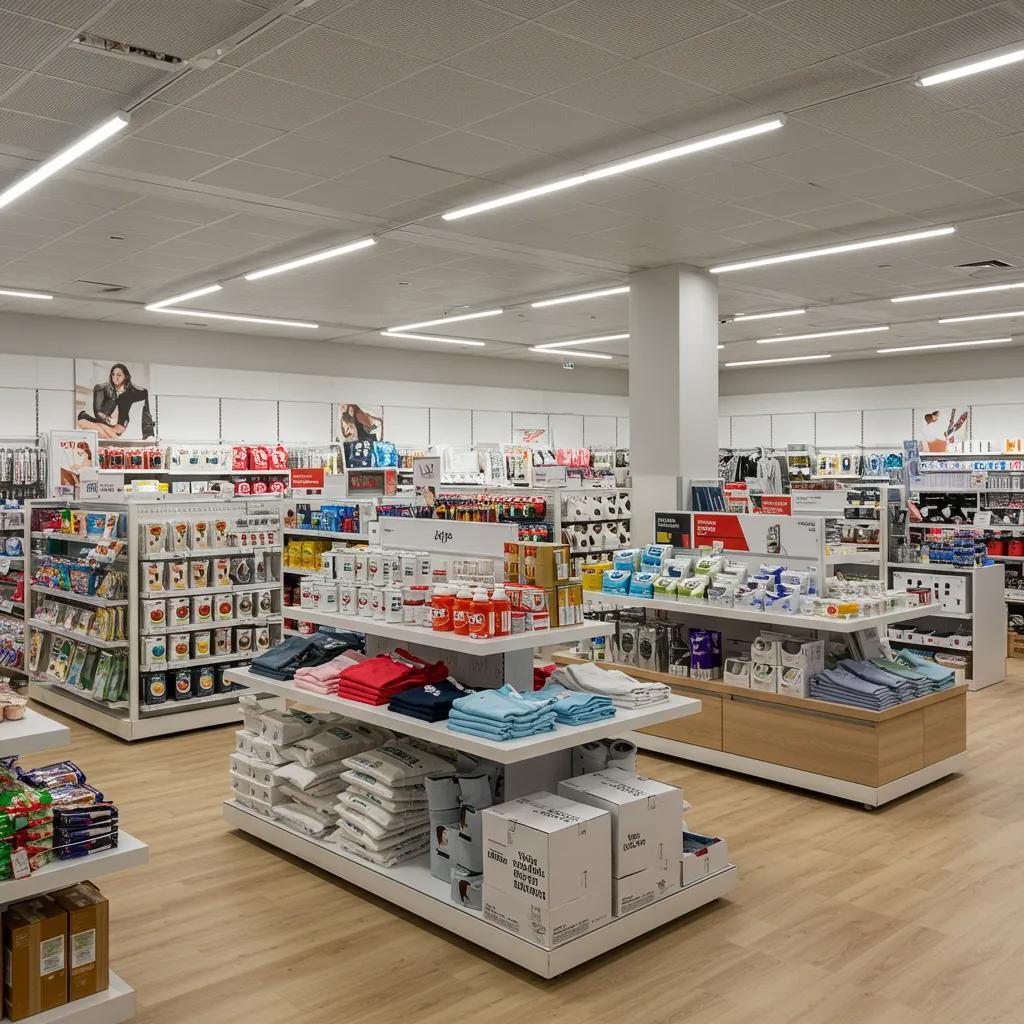
Practical visual merchandising tips focus on lighting, colour contrast, product grouping and store layout to create attention paths and simplify purchase decisions. Each element modifies customer behaviour by guiding sightlines, increasing dwell time and encouraging add-on purchases when applied consistently. The table below maps key merchandising elements to their expected effects so retailers can prioritise quick wins that suit their store footprint and product mix. Implementing small changes on a weekly cadence preserves novelty and keeps displays performing.
Use these tactical changes to make your displays work harder for every customer who enters the store.
Introductory merchandising elements table:
|
Element |
Application |
Effect on Customer Behaviour |
|---|---|---|
|
Lighting |
Spotlight focal products and endcaps |
Increases attention and perceived value, raising likelihood of purchase |
|
Colour Contrast |
Use bold contrast for call-to-action areas |
Directs eye movement and signals urgency for promotions |
|
Product Grouping |
Cross-merchandise complementary items |
Encourages add-on sales and simplifies purchase decisions |
This mapping helps staff prioritise which merchandising changes deliver the most immediate sales impact.
1. Use targeted lighting to create focal points and spotlight promotions near entrances and endcaps.
2. Apply colour contrast to CTAs on pavement signs and in-store tags so important offers stand out.
3. Group complementary products together to simplify choice and increase cross-sell opportunities.
These tactical tips are low-cost and repeatable, making them suitable for busy small retailers seeking measurable improvements in traffic and conversion.
How Can Lighting and Colour Influence Customer Engagement?
Lighting and colour influence engagement by establishing mood, drawing attention and guiding customers toward high-priority items; they operate through simple perceptual cues humans respond to rapidly. Warmer lighting creates an inviting atmosphere for lifestyle or boutique stores, while brighter spotlights on featured products elevate perceived value and prompt closer inspection. Colour contrast—such as a bright accent against a neutral background—creates a visual hierarchy that helps shoppers process information quickly. Combining lighting and colour strategies on both pavement signs and in-store displays ensures a cohesive visual path from street to shelf.
These sensory adjustments are inexpensive but powerful ways to increase dwell time and conversion rates when applied consistently.
What Are Effective Product Grouping and Store Layout Strategies?
Effective grouping and layout strategies optimise customer flow, reduce decision friction and create natural opportunities for add-on sales by placing complementary items together. Start with a clear decompression zone at the entrance to let customers acclimatise, then design sightlines that lead to a primary focal point—usually a promo or seasonal display. Cross-merchandise at eye level and use endcaps to highlight curated assortments that pair well with main purchases. Regularly rotate groupings and monitor which combinations improve average transaction value to refine layout decisions over time.
These layout principles ensure your retail display stands and fixtures work together to convert attention into action, completing the semantic chain from pavement sign to point-of-sale.