
Innovative Retail Display Concepts to Captivate Shoppers with Interactive, Sustainable, and Phygital Solutions
16th Jan 2026
Innovative retail display concepts combine technology, materials and sensory strategy to transform passive shelving into compelling experiences that increase dwell time and drive sales. This article explains how interactive retail displays, sustainable shop fixtures and phygital experiences work, why they matter for modern retailers, and how to implement them tactically in real stores. Retailers face short attention spans and tight budgets, so practical solutions that balance cost, measurement and fulfilment deliver the greatest return; this guide focuses on hands-on recommendations, quick-start checklists and supplier-aligned options to help pilots scale. You will learn which interactive hardware yields the best engagement, which eco-friendly materials improve brand perception, how phygital tools bridge online and in-store journeys, and the key trends shaping retail displays in 2025. Along the way there are comparison tables, stepwise tactics for QR and AR activations, lists of actionable ideas, and concise supplier integration notes that highlight fulfilment advantages for Australian retailers.
What Are the Most Effective Interactive Retail Displays for Customer Engagement?
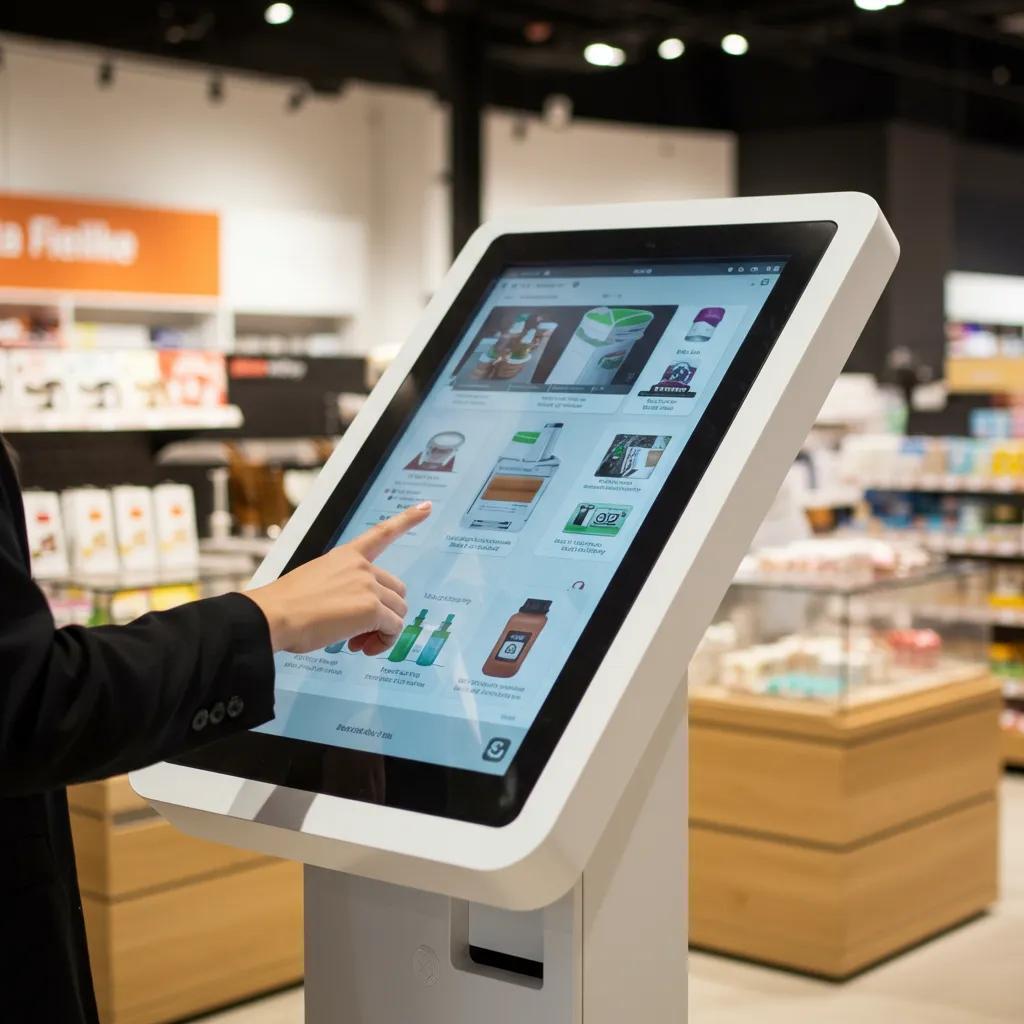
Interactive retail displays are fixtures that invite shopper input or reaction through touch, motion or augmented content, increasing engagement by making the shopping experience participatory rather than observational. The mechanism is simple: interactivity extends dwell time, enables personalisation, and produces measurable behavioural signals that drive conversion optimisation. Retailers should prioritise durable, low-friction interfaces where measurement (analytics) and content management systems can be added without major renovations. The practical trade-offs are cost versus scalability, required staff training, and content production cadence; planning for CMS integration and clear KPIs upfront reduces pilot risk and accelerates learning.
Different interactive approaches suit different retail formats and budgets:
- Touchscreen kiosks: Provide product discovery and self-service checkout in higher-traffic zones.
- Augmented reality overlays: Enable virtual try-ons and product visualisation without inventory handling.
- Digital mirrors: Enhance fitting rooms with cross-sell suggestions and outfit previews.
These interactive types vary in complexity and cost, so the next table compares typical interactivity attributes to help choose the right option for a store pilot.
|
Display Type |
Attribute |
Typical Value |
|---|---|---|
|
Touchscreen kiosk |
Interactivity level |
High; direct input |
|
Augmented reality (AR) |
Setup complexity |
Medium–High; app or web AR |
|
Digital mirror |
Measurement capability |
Moderate; session data via sensors |
This comparison clarifies selection: choose touchscreens for transactional interaction, AR for visualisation benefits, and mirrors for experience-led conversion. Understanding those choices informs content and measurement plans for the pilot stage.
How Do Touchscreens, AR, and Digital Mirrors Enhance Shopper Interaction?
Touchscreens, AR and digital mirrors each operate through distinct mechanisms that increase relevance and reduce friction for shoppers. Touchscreens provide immediate product information, configurators and self-checkout, turning passive browsing into task completion and enabling measurable clicks and conversion funnels. AR overlays let customers visualise items in context—furniture in a room or eyewear on a face—so perceived risk falls and purchase confidence rises. Digital mirrors combine visual feedback with data-driven cross-sell prompts, letting retailers serve personalised recommendations during fitting-room moments. Collectively, these technologies map to the broader discipline of visual merchandising and retail experience design, creating measurable touchpoints for optimisation.
Research indicates that augmented reality systems can significantly improve the retail experience by offering enhanced navigation and product visualization capabilities.
Augmented Reality for Improved Retail Navigation and Product Visualisation
In numerous large retail environments, such as shopping centres, sports retailers, or food stores, customers frequently experience disorientation due to the challenge of locating specific products. While these large stores typically employ visual signage to direct customers to particular items, such signs can themselves be difficult to find and may not always be up-to-date. This paper proposes a system that integrates deep learning and augmented reality techniques to furnish customers with valuable information. Initially, the proposed system learns the visual characteristics of different store areas using a deep learning architecture. Subsequently, customers can utilise their mobile devices to capture an image of their current location within the store. Upon uploading this image to the trained image classification system, the customer's location can be identified. Leveraging this information and novel augmented reality techniques, the system provides details pertaining to the customer's location, including directions to areas where products are available, 3D product visualisation, user positioning, and analytics. The developed system demonstrates the capability to accurately locate a user within an example store with 98% precision. The synergistic combination of deep learning systems and augmented reality techniques yields promising outcomes for enhancing user experience in retail and commerce applications, encompassing branding, advanced visualisation, personalisation, and an improved customer journey.
Which Interactive Display Solutions Does Retail Display Direct Offer?
Retail Display Direct supplies durable, customisable hardware that supports interactive concepts without requiring full IT rebuilds, making it suitable for rapid pilots and rollouts across Australian stores. Product types relevant to interactive projects include LED light boxes for dynamic backdrops, robust sign holders for integrating QR triggers, and tailored A-frame or sandwich board signs adapted to promote AR experiences outside a store entrance. The company emphasises operational advantages that matter during pilots: lowest-price guarantees, same-day dispatch on most orders before 11 am, and Australia-wide delivery, which support fast deployment and iteration. For retailers planning quick interactive tests, these product options and fulfilment strengths reduce lead times and help keep pilot costs predictable.
How Can Sustainable Shop Displays Improve Brand Image and Shopper Experience?
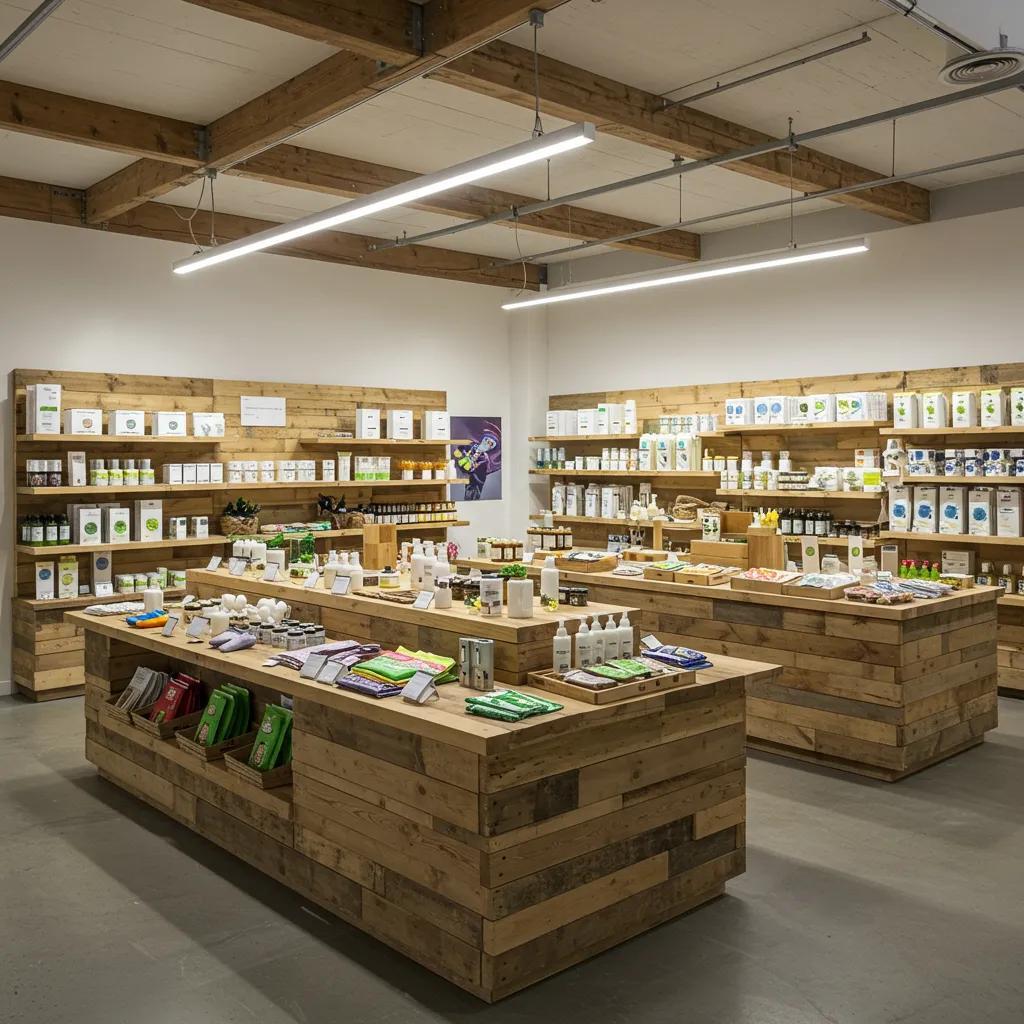
Sustainable shop displays use recycled, reclaimed or low-impact materials and energy-efficient lighting to signal brand values while often reducing lifecycle costs; the result is stronger brand trust and a differentiated in-store experience. Mechanically, materials with a visible eco-credential (reclaimed wood, recycled plastics) enhance perceived authenticity and align with shoppers who prioritise sustainability, while LEDs lower energy consumption and maintenance. Retailers should weigh initial cost against longevity and end-of-life recyclability when specifying fixtures. Selecting modular designs and standardised fixing points enables reuse and rapid reconfiguration, supporting seasonal merchandising without waste.
Common sustainable materials and lighting choices are:
- Reclaimed wood: Durable, premium feel, high perceived value.
- Recycled plastic panels: Lightweight, moisture-resistant and versatile.
- LED lighting: Low power draw, long life and desirable colour temperatures.
This short list highlights options that blend aesthetics with environmental performance, and the table below contrasts durability, recyclability and cost to guide material selection.
|
Material |
Characteristic |
Typical Use-Case |
|---|---|---|
|
Reclaimed wood |
Durability |
Feature shelving, display islands |
|
Recycled plastic |
Recyclability |
Lightweight signage, POS panels |
|
LED lighting |
Energy efficiency |
Backlit cases, window displays |
Choosing materials that match brand tone and operational realities improves perceived sustainability while maintaining merchandising effectiveness. Retailers can prioritise modular, repairable fixtures to extend service life and reduce replacement cycles.
What Eco-Friendly Materials and Energy-Efficient Lighting Are Used in Sustainable Displays?
Eco-friendly displays commonly combine reclaimed or recycled structural materials with LED illumination to deliver strong aesthetics and low operational impact. Reclaimed wood offers natural texture and longevity, recycled plastics reduce virgin material use and allow for colourful, moulded forms, and bamboo or cork provide renewable-sourced alternatives for accent pieces. LEDs provide daylight-simulating colour temperatures that enhance product appearance while using a fraction of the energy of traditional lamps. For pop-ups and temporary activations, modular, reusable panels and snap-fit connections reduce waste and simplify transport.
How Does Retail Display Direct Support Sustainable Retail Display Initiatives?
Retail Display Direct supports sustainable display rollouts by offering customisable, durable products and logistics that suit phased or national deployments, which is crucial for measured sustainability programmes. The supplier’s product range includes durable, portable and customisable display products that can be specified with longer-life materials and reused across campaigns. Operationally, advantages such as same-day dispatch on most orders before 11 am and Australia-wide delivery enable quick replacement, repairs and iterative testing—reducing waste from full fixture replacements. Retailers implementing sustainability initiatives are advised to request material specifications and discuss modular design options with the supplier to align procurement with lifecycle goals.
What Are Phygital Retail Experiences and How Do They Captivate Shoppers?
Phygital retail experiences merge physical fixtures with digital overlays to create seamless journeys that increase conversion by connecting inspiration to instant action. Phygital works because it reduces friction between discovery and purchase: a shopper scans a QR code or triggers AR, engages with personalised content, and converts either in-store or online. Technologies range from low-friction QR landing pages to sensor-driven personalised messages, and each touchpoint should be instrumented to feed analytics back into merchandising decisions. A clear KPI framework—footfall uplift, session length, conversion rate—lets retailers measure the business case and iterate quickly.
|
Technology |
Touchpoint |
Engagement Benefit |
|---|---|---|
|
QR codes |
On-shelf or window |
Instant product info and offers |
|
AR try-ons |
Fitting rooms or mobile |
Reduced return rates; higher confidence |
|
Beacons / NFC |
Proximity alerts |
Personalised push content in-store |
The integration of augmented reality in retail is revolutionising the shopping experience by enabling interactive product visualization and potentially contributing to sustainability efforts.
AR in Retail: Transforming Shopping with Interactive Visualization and Sustainability
Extend Reality (AR) is changing the retail industry, offering immersive and interactive product visualization experiences. This paper differs from past literature as it is the first to focus on AR in retail from a numerical and quantitative perspective, with a framework that is based on real samples in the industry that may close the gap between theory and practice. Drawing on an extensive academic literature review and case studies from diverse retail domains such as fashion, electronics and grocery shopping, this study dissects the impact of AR on user experience, customer engagement and purchasing behaviour. It also explores the technological, psychological and security impediments to AR adoption and offers strategic insights into scalable implementation. Utilizing AR, the study illustrates optimisation of marketing strategies, favourable consumer trust and ultimately long-term consumer retention in mustering artificial intelligence, data analysis and personalisation methods. In addition, the study examines the role of AR in sustainable retailing, business model formation, and future trends like blockchain-based AR transactions and 5G-enhanced experiences. By comparing AR with convent
Which Technologies Integrate Physical and Digital Retail Displays?
Several technologies integrate seamlessly with physical fixtures to create phygital touchpoints that augment shopper journeys without heavy infrastructure changes. QR codes link printed or on-fixture signage to focused landing pages or checkout flows, requiring minimal development and providing straightforward tracking. AR overlays use web AR or apps to render products in situ, enhancing visualization for categories like furniture, apparel and cosmetics. Beacons and NFC enable location-aware messaging and personalised content, though they require opt-in and careful privacy handling. Each technology fits different budgets and use-cases: QR for cost-effective pilots, AR for high-impact visualization, and proximity tech for data-driven personalisation.
How Can Retailers Use QR Codes and AR Try-Ons to Boost Engagement?
To deploy QR and AR effectively, retailers should follow a simple stepwise approach: design a clear CTA, place the trigger where attention and action align, ensure landing content is fast and mobile-optimised, and instrument analytics for optimisation. Good CTAs explain the benefit (try-on, exclusive offer), QR placement should be at eye level or on fixtures where product context matters, and AR experiences should minimise load time and avoid forcing app installs when possible. Track engagement through unique landing UTM parameters, monitor conversion lift versus control areas, and iterate creative based on session behaviour. Practical experimentation with small pilots followed by rapid scaling reduces risk while proving ROI.
- Design CTA: Explain immediate value in three words or less.
- Place trigger strategically: Window entries, endcaps, fitting rooms.
- Measure and iterate: Use landing analytics to refine creative.
These steps convert curiosity into measurable, repeatable engagement and integrate results into merchandising decisions.
What Are the Key Retail Display Trends for 2025 to Attract and Retain Shoppers?
Retail display trends for 2025 centre on blending phygital convenience with sensory-rich, sustainable environments and data-driven personalisation to create distinct in-store advantages. These trends matter because shoppers increasingly expect seamless omnichannel journeys, authentic sustainability credentials and experiences that reward time spent in-store. Retailers should pilot low-cost phygital hooks, incorporate modular sustainable fixtures, and add analytics to signage to capture effectiveness. Prioritising experiments that are inexpensive to run but easy to measure will identify winners quickly and support phased rollouts across locations.
Key trends to watch and act on:
1. Phygital integration: Merge QR, AR and dynamic signage for frictionless journeys.
2. Sustainable fixtures: Use reclaimed and recyclable materials to signal values.
3. Personalisation at shelf: Dynamic signage and targeted offers to raise conversion.
4. Sensory merchandising: Coordinate scent, sound and tactile elements to increase dwell time.
These trends interact: sensory cues enhance phygital activations, and personalisation makes sustainability messages more relevant to target segments. The next two subsections explain sensory merchandising and data-driven personalisation in practical terms.
How Do Sensory Merchandising Techniques Create Memorable Shopping Experiences?
Sensory merchandising coordinates sight, sound, scent and texture to shape emotional responses and buying behaviour, leveraging multi-sensory triggers to increase dwell time and purchase intent. Lighting sets mood and highlights key products; warm colour temperatures can create intimacy for premium ranges while cooler, high-CRI LEDs reveal product detail. Soundscapes and curated playlists guide pace and perceived price points, and signature scents can create strong brand recall that amplifies promotional messages. Small retailers can start with simple pairings—warm lighting plus tactile display tags and a short playlist—and measure uplift using time-in-store and conversion metrics.
Why Is Personalisation and Data-Driven Merchandising Essential in Modern Retail?
Personalisation and data-driven merchandising ensure displays present the right product, at the right time, to the right customer, increasing relevance and reducing decision friction. Dynamic signage and targeted offers use customer segments or localised inventory feeds to tailor messages, while in-store analytics such as heatmaps and POS integration validate what works. Rapid A/B testing of content plus a clear data loop (display → metric → hypothesis → update) turns displays into learning instruments rather than static investments. Implementing lightweight analytics and a content management workflow enables continuous improvement and ties display spend to measurable sales outcomes.
This article has outlined interactive, sustainable and phygital approaches to modern retail displays and provided practical comparisons, lists and tables to help retailers plan pilots and rollouts. For Australian retailers seeking supplier support, Retail Display Direct in Padstow, NSW supplies durable, customisable and portable display products—such as A-frame and sandwich board signs, LED light boxes and sign holders—and offers same-day dispatch on most orders before 11 am, lowest-price guarantees and Australia-wide delivery to accelerate deployment and iteration. Contact details for procurement discussions are available from the supplier’s published business information.