
How to Set Up Effective Crowd Control Solutions for Safe and Efficient Queue Management
26th Jan 2026
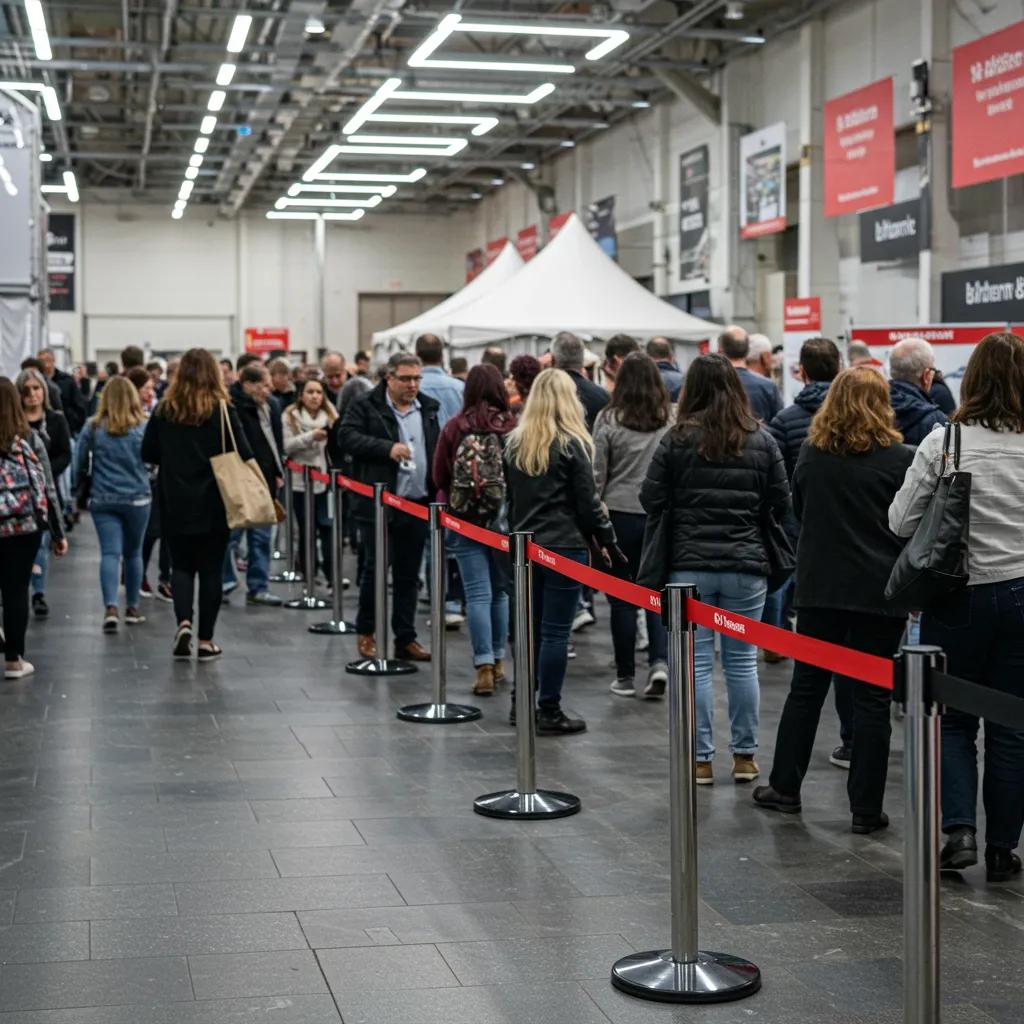
Effective crowd control solutions are physical and procedural measures designed to manage pedestrian flow; when set up correctly they improve safety and reduce queuing time while protecting staff and assets. This guide explains the main crowd control barrier types, practical installation steps for retractable belt barriers, planning principles for events and retail, and maintenance best practices for bollards and expandable barriers. Many organisers struggle with bottlenecks, unclear sightlines and equipment choices; this article provides concise, actionable steps and checklists to resolve those issues quickly. You will learn how to match barrier types to venues, install and place retractable barriers for optimal flow, plan perimeter and internal layouts for events, and keep bollards and expandable barriers compliant and durable. The following sections cover barrier types and comparisons, step-by-step retractable barrier setup, planning checklists for event safety and pedestrian flow, plus installation and maintenance routines for bollards and expandable units. Throughout, the guide references barrier attributes such as material, portability, belt length and base type to help you select the right equipment for the task.
What Are the Key Types of Crowd Control Barriers and Their Uses?
Crowd control barriers are physical devices—hyponyms include retractable belt barriers, rope stanchions, safety bollards, expandable/accordion barriers and temporary fencing panels—designed to direct or restrict pedestrian movement for safety and flow. Each type works by creating visual and physical channels that guide behaviour, reduce cross-traffic and establish clear entry or exit points, improving queue predictability and incident prevention. Choosing the right barrier affects portability, durability, and aesthetics, so understanding core attributes helps match equipment to context. The table below summarises typical use-cases and quick pros/cons for common barrier types to aid selection.
Understanding the fundamental principles of crowd management is crucial for effective event planning.
Crowd Management and Special Event Planning: A Comprehensive Guide
Crowd management is the process of planning for large crowd events. Examples of such events include political rallies, sporting events, parades, or shopping centre events. When planning for these anticipated large crowd events, the following considerations should be taken into account: the number of people expected, the size and layout of the venue, the type of event, the duration of the event, and the potential for overcrowding.
Crowd Management and Special Event Planning, 2020
Different barrier types compared for common use-cases and attributes.
|
Barrier Type |
Best Use-Case |
Portability / Durability |
|---|---|---|
|
Retractable belt barriers |
Indoor queues, ticketing, retail checkout |
High portability / Moderate durability |
|
Rope stanchions |
Aesthetic queue lines, VIP areas |
Moderate portability / Low-moderate durability |
|
Safety bollards |
Pedestrian protection, vehicle exclusion |
Low portability / High durability |
|
Expandable/accordion barriers |
Temporary closures, short-term lane control |
High portability / Moderate durability |
This comparison clarifies how portability and durability trade off against aesthetics and permanent protection, helping you shortlist suitable barrier types.
Which Crowd Control Barriers Are Best for Different Event Types?
Matching barrier type to event depends on crowd size, environment and desired permanence; small retail stores prioritise customer experience while festivals require perimeter strength and rapid deployment. For retail checkout lanes, retractable belt barriers and rope stanchions balance appearance with directional control and are easy to move as peak times change. For outdoor festivals and construction sites, temporary fencing panels and heavy-duty bollards provide perimeter security and vehicle exclusion under weather exposure. Consider material and finish—galvanised or powder-coated steel increases corrosion resistance outdoors—while portable plastic or lightweight bases favour short-term indoor layouts.
How Do Retractable, Rope, Bollard, and Expandable Barriers Compare?
When choosing between barrier hyponyms, weigh cost, ease of setup, and long-term maintenance: retractable belts score for flexibility, rope stanchions for look, bollards for impact protection, and expandable barriers for quick lane closures. Portability typically correlates with lower base weight and simpler connectors, while durability links to material and mounting type. Maintenance needs vary: belts need inspection for fraying, bases for stability, and bollards for anchor and corrosion checks. Use this table as a quick decision aid when selecting equipment for a specific venue.
A thorough understanding of how different types of crowds behave is essential for effective event planning and management.
Spectator Crowd Dynamics: A Prerequisite for Effective Event Planning
An understanding of and planning for diverse spectator crowds are fundamental to effective crowd control and management. Lacking a clear grasp of crowd dynamics renders efforts at crowd control and management arbitrary and ineffectual.
Understanding and planning for different spectator crowds, 1995
|
Barrier Type |
Ease of Installation |
Typical Material |
|---|---|---|
|
Retractable belt barriers |
Quick, tool-free on flat surfaces |
Steel post with fabric belt |
|
Rope stanchions |
Quick, minimal tools |
Polished metal or chrome finish |
|
Safety bollards |
Moderate to complex (anchored) |
Steel or galvanised metal |
|
Expandable barriers |
Very quick, no anchoring |
Plastic/metal composite |
This side-by-side helps you prioritise features such as ease-of-install versus long-term resilience when planning layouts.
How Do You Install Retractable Barriers for Effective Queue Management?
Retractable belt barriers are a core tool for queue management because they create clear, configurable lanes quickly and provide visual cues that reduce cut-ins and confusion. Installation depends on post base type and belt cassette design; selecting the right belt length and sufficiently weighted base ensures stability and appropriate queue geometry. Begin with a site assessment—measure available width and desired queue length—then position posts to maintain sightlines and emergency access. The short table below highlights key retractable barrier attributes that affect installation choices for retail and events.
Analyzing pedestrian movement patterns is vital for accurately estimating capacity and ensuring safety, especially in high-traffic areas.
Pedestrian Flow Characteristics: Understanding Movement for Capacity and Safety
The dimensionality of pedestrian infrastructure facilities significantly influences pedestrian movements and has a considerable impact on the natural environment of the facility. Understanding pedestrian movements is crucial for accurately estimating system capacity, particularly in transport terminals such as railway stations, bus terminals, and airports, where large crowds gather and transfer. To ensure safe and comfortable movement under normal conditions, as well as rapid evacuation in emergencies, pedestrian movement patterns must be analysed and modelled appropriately.
Fundamental diagrams of pedestrian flow characteristics: A review, K Ramachandra Rao, 2017
Key retractable barrier attributes to check before installation.
|
Attribute |
Recommended Value |
Reason |
|---|---|---|
|
Belt length |
2–3 m per run (select per space) |
Allows serpentine or straight lanes |
|
Base weight |
Heavy base for high-traffic areas |
Prevents tipping under load |
|
Finish |
Powder-coated or chrome |
Balances aesthetics and wear resistance |
Checking these attributes before purchase reduces on-site adjustments and improves safety during busy periods.
What Are the Essential Steps to Set Up Retractable Belt Barriers?
Set up retractable belt barriers following a clear sequence to ensure stability and predictable flow: site prep, base placement, post alignment, belt connection and testing. First, clear the area and mark the desired lane lines, ensuring minimum aisle widths for accessibility and staff movement. Place weighted bases on level ground at consistent spacing—typically 1.5–2 metres—and align posts so belts connect straight without twisting. Connect belt cassettes securely, test retraction and locking functions, and walk the queue to verify sightlines and emergency egress remain unobstructed. If belts jam or a base feels unstable, recheck alignment and consider heavier bases or floor anchors for high-traffic sites.
- Prepare site: Mark lanes and clear obstructions.
- Place bases: Ensure level surfaces and consistent spacing.
- Connect belts: Attach cassettes and verify locks.
- Test flow: Walk queues to check sightlines and emergency access.
These steps reduce installation errors and typical troubleshooting needs while creating predictable queues.
Where Should Retractable Barriers Be Placed for Optimal Crowd Flow?
Placement rules for optimal flow emphasise sightlines, spacing and access: keep post spacing consistent, design for natural movement, and preserve emergency routes and staff access points. For straight queues use 1.5–2 metre post spacing and allow at least 1.2–1.5 metre aisle width for wheelchair access and comfortable passage. Serpentine queues increase capacity in limited floor area—use measured bay widths and clear entry/exit signage to prevent congestion. Always maintain unobstructed emergency egress paths and provide staff access gaps; position stewards near turning points to manage surges and maintain flow.
- Recommended post spacing: 1.5–2 m
- Minimum aisle width: 1.2–1.5 m for accessibility
- Design tip: Use serpentine layouts to increase capacity without extending queue length
These placement metrics help balance throughput, comfort and compliance in retail and event environments.
How Can You Plan Crowd Control Solutions for Event Safety and Pedestrian Flow?
Planning crowd control solutions starts with a site risk assessment that identifies capacity, chokepoints and emergency routes; this informs barrier selection and staffing levels to prevent hazards. A planning checklist ensures you cover critical elements: expected attendance, ingress/egress points, adjacent vehicle routes, signage needs and medical or security staging. Integrate barrier attributes—material, portability, visibility—into the plan so equipment matches duration and environmental exposure. Planning that combines barrier choice, staff roles and clear wayfinding reduces response times to incidents and improves overall pedestrian flow.
A short checklist to plan crowd control layout and staffing.
- Assess capacity and choke-points: Map where people will congregate.
- Identify ingress/egress: Ensure multiple, marked exits for emergencies.
- Select barriers and signage: Match durability to event duration and weather.
- Determine staffing and roles: Assign stewards for flow and incident response.
A concise plan linking site assessment to barrier selection and staffing creates a practical operational blueprint for safe events.
What Are the Principles of Effective Crowd Management and Safety Planning?
Effective crowd management follows three core principles: predict, prevent and respond—predict crowd behaviour using data and layouts, prevent hazards through design and barriers, and respond quickly with trained staff and clear communication. Predictive steps include modelling peak flows and sizing queues; preventative measures use barriers, signage and physical separation to control movement. Response planning requires trained personnel, communication protocols and unobstructed emergency access. Referencing current research and standards helps ensure your approach aligns with accepted safety practices and reduces liability.
How Do You Tailor Crowd Control Strategies for Retail and Event Venues?
Tailoring strategies means prioritising customer experience in retail while emphasising perimeter security and ingress/egress management at events. Retail layouts favour discreet, aesthetic barriers and flexible configurations to maintain brand presentation and rapid reconfiguration during peak hours. Events require modular fencing, bollards for vehicle exclusion, and durable materials that withstand weather and heavy use. Consider signage, staffing density and sightlines differently for each context to ensure both safety and a positive attendee or customer experience.
What Are Best Practices for Installing and Maintaining Safety Bollards and Expandable Barriers?
Installing bollards and expandable barriers correctly preserves their protective function and ensures long-term compliance; permanent mounts require excavation and concrete footings while surface-mounted and removable types use specified anchor plates. Site preparation must include accurate marking, locating underground services and ensuring correct embedment depths for impact resistance. Maintenance focuses on regular inspections for anchor integrity, corrosion and visibility treatments such as high-vis paint or reflectors. The maintenance table below presents recommended inspection tasks and frequencies to keep bollards and expandable barriers serviceable.
|
Component |
Maintenance Task |
Frequency / Notes |
|---|---|---|
|
Bollard anchors |
Inspect anchor bolts and welds |
Every 6 months; tighten or replace as needed |
|
Surface finishes |
Clean and repaint or touch-up |
Annually or after damage; use corrosion-resistant paint |
|
Expandable hinges |
Lubricate and check locking mechanisms |
Quarterly; replace worn parts promptly |
Structured maintenance reduces failure risk and prolongs service life, keeping protection reliable and compliant.
How Do You Install Safety Bollards to Protect Pedestrians and Assets?
For permanent bollards excavate to the required depth, set with concrete footings and ensure alignment and height visibility; surface-mount options require inspection of anchor plates and suitable substrate. Start by marking locations, checking for underground services and confirming sightline and setback requirements. Use durable materials with corrosion protection for outdoor sites and add reflective bands or high-vis paint for night visibility. Test anchorage and consider removable or demountable bollards where occasional vehicle access is required, balancing security with operational needs.
What Maintenance Is Required to Ensure Barrier Durability and Compliance?
A routine maintenance plan includes scheduled inspections, cleaning, corrosion protection and record-keeping to track repairs and replacements. Inspect belts, bases, welds, anchors and connectors for wear every 3–12 months depending on use intensity; clean components and touch up protective coatings to prevent rust. Keep logs of inspections and remedial actions to evidence compliance and to schedule replacement before failures occur. For procurement and rapid replacement of physical stock, note that some suppliers offer rapid dispatch options that can reduce downtime—consider vendor logistics when planning maintenance.
- Inspect: Check anchors, welds and belts regularly.
- Clean and protect: Remove contaminants and reapply protective coatings.
- Record: Log maintenance actions and triggers for replacement.
These steps preserve function and ensure barriers continue to meet safety needs over time.
For procurement support and a practical source of commonly used barrier types—retractable belt barriers, rope stanchions, safety bollards, expandable barriers and temporary fencing—Retail Display Direct supplies physical crowd control products and highlights customer-facing logistics such as "Lowest Price Guaranteed or We Beat It" and "Same Day Dispatch on Most Order before 11am." Mentioning supplier attributes like availability and dispatch policies helps planners reduce lead times and maintain operational readiness when specifying equipment for retail or event deployments.