Glass Whiteboard Advantages You Need to Know
12th Jan 2026
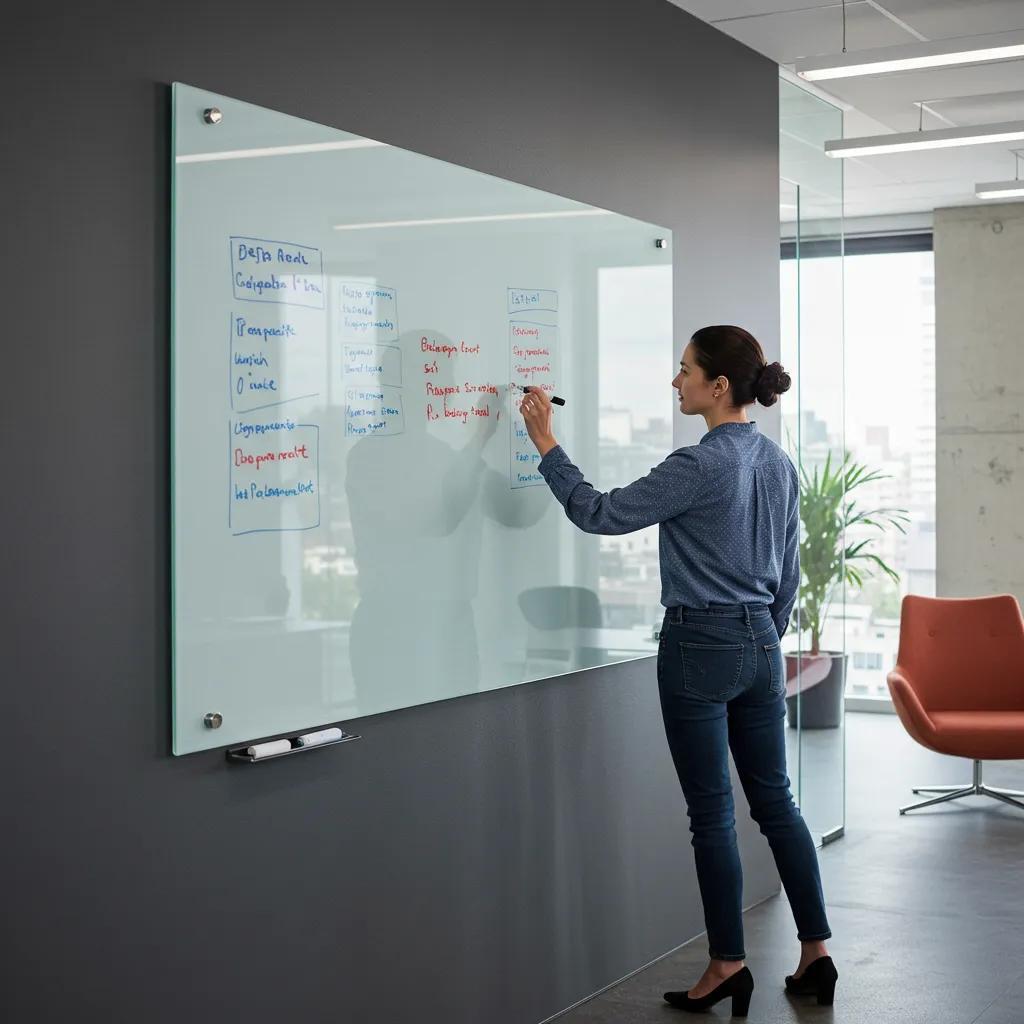
Glass whiteboards are a modern writing surface made from tempered, non-porous glass that combines durability with a clean, contemporary look. This article explains the core glass whiteboard advantages you need to know: why tempered glass resists scratches and stains, how non-porous surfaces eliminate ghosting, and which design and functional options suit offices and classrooms. Readers will learn practical cleaning methods, durability comparisons with conventional boards, aesthetic choices such as frameless and backpainted panels, and whether magnetic or projection-capable variants fit specific workflows. We also address common buyer concerns — cost, installation and safety — and offer mitigation strategies to reduce purchase friction. Finally, practical product directions and vendor guidance are included for buyers who want to explore tempered glass options and compatible supplies from a local Australian supplier.
What Makes Glass Whiteboards More Durable Than Traditional Boards?
Glass whiteboards are more durable than traditional whiteboards because tempered glass increases surface strength, while the non-porous construction prevents surface degradation from ink and cleaning. The principal mechanism is tempering, which raises impact resistance and surface hardness versus melamine or painted steel surfaces, producing a longer usable lifespan and less surface wear. Practically, this means fewer replacements and lower lifecycle waste for busy meeting rooms and classrooms. The durability advantage also influences warranty and cost-per-year calculations when comparing options.
Glass whiteboards deliver these durability gains through materials engineering, and that practical longevity leads naturally into how tempering and scratch resistance work in detail.
How Does Tempered Glass Enhance Whiteboard Durability?

Tempered glass is produced by controlled heating and rapid cooling that creates surface compression and internal tension, making the panel stronger and safer under impact. This manufacturing step increases resistance to chips and flexing compared with untreated glass or softer whiteboard surfaces, and it changes break behaviour to smaller, less dangerous fragments if extreme force occurs. The result is a robust writing surface suited to high-use environments where accidental knocks or leaning equipment are common. Understanding tempering clarifies why glass boards remain flat, true to plane and structurally stable over years of daily use.
These strength properties also help explain why glass boards retain their appearance and require different maintenance than porous alternatives.
Why Are Glass Whiteboards Scratch Resistant and Long Lasting?
Glass whiteboards resist scratches because the glass surface has higher hardness and is not coated with porous finishes that abrade under marker or eraser friction. The non-porous glass surface prevents micro-abrasions from trapping ink and particulates, which commonly cause dulling on lower-grade whiteboards. In practical terms, a glass writing surface benefits from reduced surface grooming and retains a like-new finish longer, lowering visible wear in public-facing areas. For buyers, this translates to better visual presentation and reduced replacement frequency, particularly in high-traffic meeting rooms and educational settings.
This scratch resistance connects directly to cleaning performance and ghosting prevention, which we address next.
|
Material |
Scratch Resistance |
Typical Lifespan |
|---|---|---|
|
Tempered glass panel |
High — hard, non-porous surface |
Long — multiple years with minimal wear |
|
Painted steel whiteboard |
Medium — susceptible to surface abrasion |
Moderate — depends on finish quality |
|
Melamine whiteboard |
Low — porous surface prone to scratching |
Short — visible wear within months in heavy use |
Why Are Glass Whiteboards Easy to Clean and Stain Resistant?
Yes — glass whiteboards are easy to clean and stain resistant because the non-porous tempered glass prevents marker dye from seeping into the surface, so ink wipes away cleanly. The mechanism is simple: without pores or absorptive coatings, solvents and dry erasers remove pigments rather than lift stains embedded in the substrate. For custodial teams and frequent users this reduces time spent on maintenance and eliminates persistent ghosting that plagues lower-grade boards. Practical cleaning routines and compatible cleaners further preserve clarity and performance over time.
Practical cleaning guidance follows to show the simplest methods for daily and deeper maintenance.
What Cleaning Methods Keep Glass Whiteboards Spotless?
Below are proven cleaning approaches that maintain clarity and prevent ghosting on glass writing surfaces. Follow daily wiping for light use and scheduled deep cleaning for heavy-use environments.
1. Daily dry wipe: Use a good-quality dry eraser after each session to remove fresh marker strokes.
2. Weekly spray and wipe: Apply isopropyl alcohol or a glass cleaner and wipe with a soft, lint-free cloth for routine maintenance.
3. Deep clean monthly: For stubborn residue, use a dedicated whiteboard cleaner or diluted alcohol solution and a non-abrasive microfiber pad.
Regular cleaning prevents ink build-up and preserves the board’s reflective clarity. For high-frequency locations, pairing daily dry wipes with weekly alcohol-based cleaning keeps the surface near-new and reduces the need for stronger solvents.
|
Surface |
Cleaning Method |
Result |
|---|---|---|
|
Fresh marker ink |
Dry eraser then microfiber cloth |
No residue, immediate reuse |
|
Light staining |
Isopropyl alcohol or glass cleaner |
Streak-free, restores clarity |
|
Heavy build-up |
Dedicated whiteboard cleaner + non-abrasive pad |
Removes ghosting, renews surface |
Retail Display Direct stocks glass whiteboards and supplies alongside mounting accessories, and the retailer lists compatible cleaning products as part of its product offering for buyers seeking one-stop procurement.
How Do Glass Whiteboards Improve Office and Classroom Aesthetics?
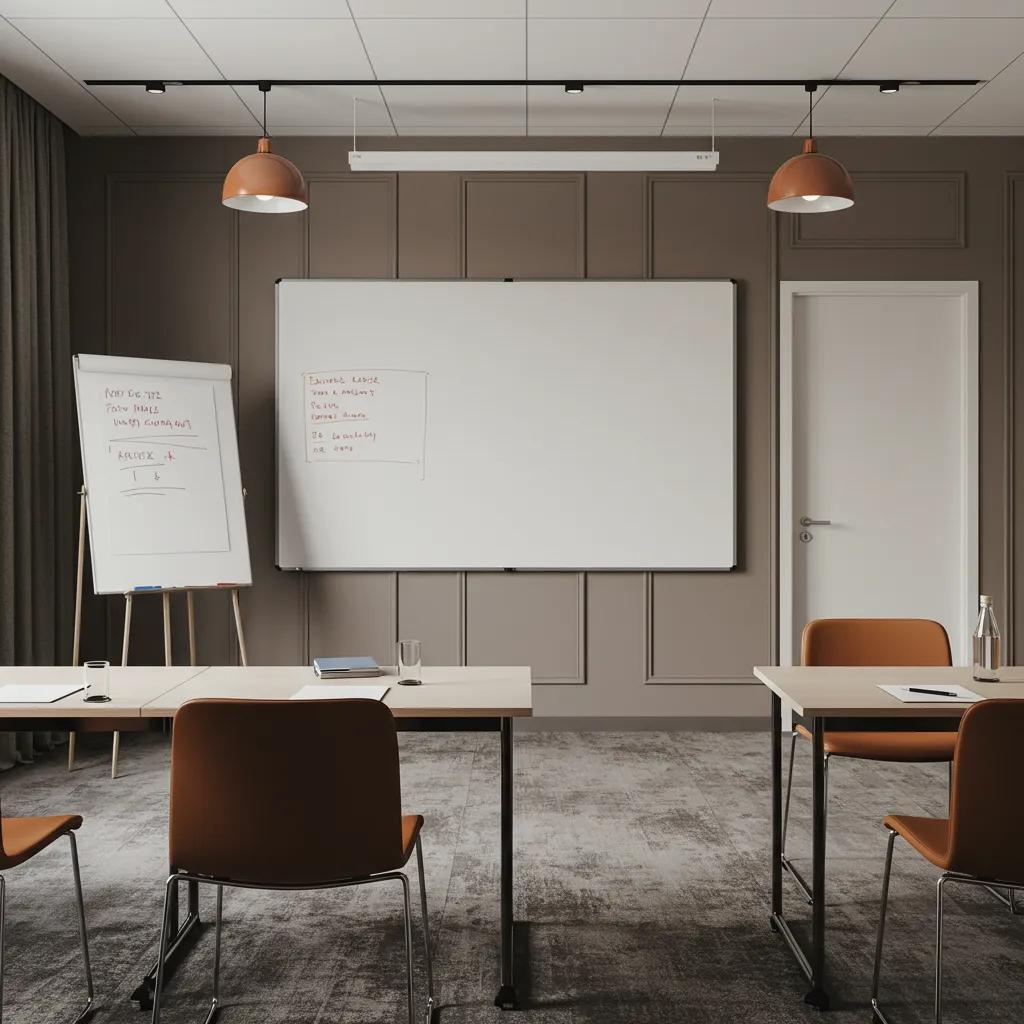
Glass whiteboards elevate interiors because frameless panels, coloured backpaint and custom branding create a minimal, high-end visual language that integrates with modern design schemes. The non-porous reflective plane adds perceived depth to small meeting rooms and provides a crisp backdrop for presentations and signage. Designers and facilities managers choose glass writing surfaces to create cohesive spaces where the board complements glass partitions, polished furniture and contemporary lighting. These aesthetic benefits also support brand presentation in client-facing areas.
Design choices tie directly to installation and placement decisions, which we outline next in typical options and use cases.
What Design Options and Colours Are Available for Glass Whiteboards?
Common design options include clear glass, white backpaint for maximum contrast, coloured backpaint for brand hues, and custom printed logos or graphics. Clear glass suits collaborative spaces that benefit from transparency; white backpaint provides a classic whiteboard appearance with high marker contrast; coloured backpaint or printed branding transforms a board into a visual feature wall. Custom sizes and edge finishes allow adaptation to reception areas, classrooms and executive boardrooms where bespoke dimensions matter.
These design choices inform mounting style and placement, which affects the perceived premium feel discussed in the following subsection.
|
Design Option |
Typical Use Case |
Visual Impact |
|---|---|---|
|
Frameless clear glass |
Open-plan meeting rooms |
Sleek, minimal, transparent |
|
White backpaint |
Training rooms and classrooms |
High contrast for markers |
|
Coloured backpaint / printed logo |
Reception and branded spaces |
Statement feature, brand reinforcement |
How Does Frameless Design Elevate Professional Spaces?
Frameless glass panels create a floating effect that reduces visual clutter and conveys a premium aesthetic in meeting rooms and executive suites. With hidden or minimal fixings, frameless boards blend into wall treatments and allow surrounding finishes to remain the focal point. For visual impact, position boards against neutral backgrounds or glass partitions and align edges with architectural lines to maximise harmony. A simple installation tip: leave a consistent reveal around the panel for a balanced, intentional appearance.
Frameless styling also pairs well with magnetic or projection-capable variants, which we explore in the final section.
Are Glass Whiteboards Magnetic and How Does This Enhance Functionality?
Glass whiteboards can be magnetic or non-magnetic; magnetic variants use a steel backing behind the glass to accept magnets, while non-magnetic panels prioritise ultra-thin frameless aesthetics. The mechanism for magnetic capability is adding a ferromagnetic layer that does not compromise the glass writing surface, enabling document attachment and modular planning while preserving easy cleaning. This option enhances collaboration by combining writing and physical anchoring in one surface, and it also supports hybrid meetings where pinned visuals help continuity between in-person and remote participants.
Next, practical collaboration benefits and considerations for projection use are detailed.
What Are the Benefits of Magnetic Glass Whiteboards for Collaboration?
Magnetic glass panels enable quick attachment of charts, printouts and visual aids using neodymium or ceramic magnets, streamlining planning sessions and iterative workflows. Teams use magnetic surfaces to cluster ideas, anchor timelines and switch between digital and physical artefacts without interrupting the whiteboard surface. For hybrid meetings, magnetic boards act as a tactile focal point that cameras can capture, improving remote participants’ context. Consider magnet strength and clip choices when attaching heavier materials to ensure secure hold.
These collaborative advantages make magnetic options attractive for agencies, healthcare teams and classrooms that mix media during sessions.
Can Glass Whiteboards Be Used as Projection Surfaces?
Glass whiteboards can serve as projection surfaces in controlled conditions, but gloss and ambient light affect image contrast; white backpainted panels with low ambient glare work best for short-throw, high-brightness projectors. The primary limiting factors are surface reflectivity and room lighting — bright, glossy glass will cause specular reflections that reduce image legibility. For consistent projection quality choose matte-finish glass or dedicated projection-capable glass panels, or pair a glass board with a removable projection screen when high fidelity is required.
When projection is a priority, weigh projector brightness, screen material and room control together to determine whether a projection-capable glass board is suitable.
Retail Display Direct offers magnetic-backed and projection-capable glass board variants as part of its product range, giving buyers options that match collaboration and AV needs.
Retail Display Direct, an Australian supplier based in Padstow, NSW, stocks a range of glass whiteboards and related display solutions for offices and public spaces. The retailer highlights practical buyer benefits such as Same Day Dispatch on Most Orders before 11am and a Lowest Price Guaranteed or We Beat It promise, which can reduce lead time and procurement risk for local projects. Explore the retailer's glass whiteboard range to compare magnetic, frameless and backpainted options and confirm availability for specific installations.