
Explore Effective Portable Donation Boxes for Events: Secure, Customisable, and Mobile Fundraising Solutions
2nd Jan 2026
Portable donation boxes are compact, mobile containers designed to collect cash, coins and contactless gifts at events while combining visibility, security and branding. These devices work by offering a secure receptacle with a slot for donations, an optional clear panel for transparency, and portability features such as handles or wheels to move collection points as needed. Using the right portable charity box increases donor trust, simplifies event logistics and helps capture spontaneous donations from high-footfall areas. This guide explains the best material and style choices, why portability matters, how customisation drives giving, and which security features reduce loss and tampering. Readers will find practical checklists, concise comparisons between acrylic, metal and contactless options, and selection tips tailored to festivals, school fetes, religious gatherings and indoor galas. Throughout, the focus is on actionable buying criteria and event-ready recommendations so organisers can choose donation collection containers that balance visibility, mobility and protection.
What Are the Best Types of Portable Donation Boxes for Event Fundraising?
Portable donation boxes come in several core types—clear acrylic boxes, metal collection bins, lightweight plastics and temporary cardboard units—that each trade off visibility, weight and security. The right choice depends on event type, expected footfall and whether you need indoor visibility or outdoor durability; transparent options increase donor confidence while metal bins deter tampering. Below we compare the most common material styles and show quick recommendations by event scenario to help organisers decide quickly. Suppliers and local display specialists can provide each style in floor-standing, countertop or wall-mount formats to match placement needs.
How Do Acrylic Donation Boxes Offer Transparency and Security?
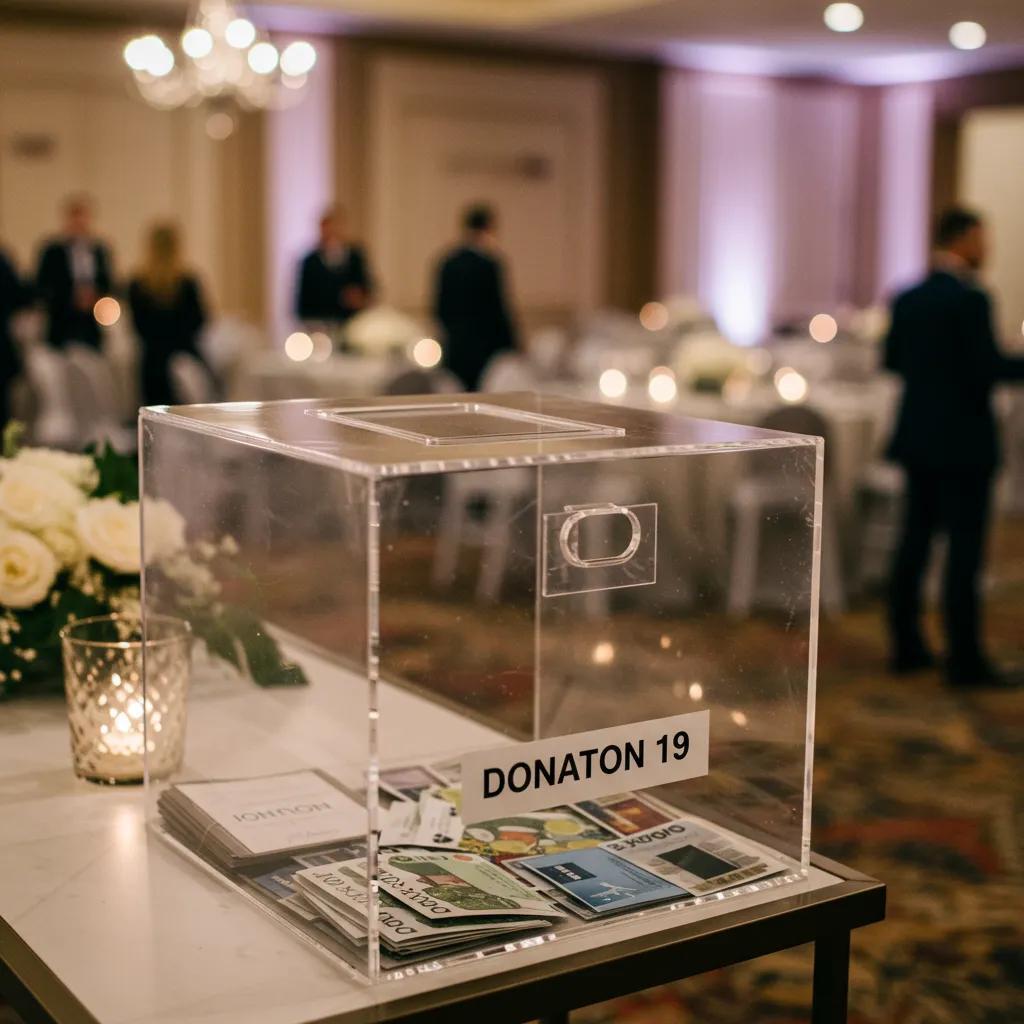
Acrylic donation boxes are prized for clear visibility, which shows donors the contents and builds trust while also signalling active fundraising. They are typically lightweight and portable, making them suitable for countertop displays, pop-up stalls and indoor galas where visibility matters more than extreme tamper resistance. Many acrylic boxes include cam or keyed locks and reinforced seams to balance transparency with basic security, and thickness (measured in millimetres) affects both durability and weight. Routine maintenance is simple—cleaning the clear panels keeps messaging legible and helps staff inspect for tampering during events.
Why Choose Metal Collection Bins for Durable Outdoor Use?
Metal collection bins excel where durability and theft resistance are primary concerns, offering robust panels and higher resistance to forced entry compared with thin plastics. Coated steel or aluminium variants tolerate weather and high-traffic festival environments, making them the preferred choice for outdoor markets, street appeals and fairs where bins might be left unattended for periods. Their weight and anchoring options reduce opportunistic theft but mean they are less convenient to move during short shifts, so plan placement carefully. For high-risk outdoor use, metal bins with reinforced locks and bolting points provide the best balance of security and longevity.
Different donation box materials compare across visibility, security, weight and cost, helping organisers match a box to event needs.
|
Material Type |
Key Attribute |
Best Use |
|---|---|---|
|
Acrylic |
High visibility, lightweight |
Indoor counters, galas, receptions |
|
Metal |
High durability, tamper-resistant |
Outdoor festivals, markets |
|
Plastic |
Lightweight, low cost |
Short-term events, pop-ups |
|
Cardboard |
Cheap, recyclable, temporary |
School fetes, one-off drives |
This comparison shows that acrylic supports trust through transparency while metal prioritises security; organisers should match material to event risk profile and desired visibility.
How Can Portability Enhance Donation Collection at Events?
Portability enhances donation collection by enabling staff to relocate collection points quickly to high-footfall zones, capture impulse donors and adapt to crowd movement across an event. Mobile boxes with handles, wheels or quick-clip assembly reduce setup time and storage footprint, making them practical for multi-stage festivals or rotating stall shifts. Portability also lowers staffing burdens because a single team can service multiple locations during short shifts, improving coverage without extra labour. Consider portability alongside security: highly portable boxes suit supervised indoor use, while heavier anchored units are better when leaving containers unattended.
What Features Make Donation Boxes Easy to Transport and Set Up?
Transport-friendly donation boxes include ergonomic handles, lockable wheels and tool-free assembly so volunteers can deploy them quickly between shifts or venues. Foldable bases or snap-fit panels speed packing and reduce vehicle space requirements when moving between events. Lightweight materials such as acrylic and plastic make single-person handling feasible, while clear assembly diagrams and labelled parts minimise setup errors. Expect a short setup cycle of a few minutes for modern portable boxes when these features are present.
How Does Portability Improve Fundraising Reach and Flexibility?
Portability allows you to test different placements and move collection points closer to queues, food stalls or stage exits where donations are more likely to occur. Rotating boxes between hotspots during peak times increases exposure and can raise overall collections without adding staff. Portable units also enable pop-up giving at unexpected moments, such as guest appeals or prize draws, increasing the probability of spontaneous donations. Plan staff rotations and clear signage to maximise the benefit of moving boxes through an event.
How Can Customisation and Branding Maximise Donation Impact?
Customisation places your cause front and centre by combining clear calls-to-action, logos and event-specific messaging on donation boxes—this increases legitimacy and donor confidence. Simple branding elements like header cards, printed logos and vinyl wraps make the purpose obvious at a glance and encourage donations by reducing hesitation. Below is a compact comparison of common customisation options and their expected visibility and trust impacts to guide design choices. When ordering customised units, allow for production lead times and confirm material print compatibility with suppliers.
What Customisation Options Are Available for Portable Charity Boxes?
Common customisation options include full-colour logo printing, detachable header cards for changing campaigns, vinyl wraps for bold graphics and bespoke colour-matched panels for brand consistency. Print method and material compatibility matter: acrylic and metal accept different print finishes, and vinyl wraps suit curved or larger surfaces. Typical custom work may require minimum order quantities and modest lead times, so plan artwork and messaging early to align with event dates. Local display suppliers can often apply these custom finishes as part of a donation box category offering.
|
Customisation Option |
Attribute |
Typical Impact |
|---|---|---|
|
Logo printing |
Permanent branding |
High trust increase |
|
Header card |
Swap-in messaging |
Flexible campaign use |
|
Vinyl wrap |
Full-coverage graphics |
High visibility |
|
Colour matching |
Brand consistency |
Professional appearance |
Custom branding enhances visibility and builds legitimacy; choose options that work with your box material and event timeline.
How Does Branding Increase Donor Trust and Event Visibility?
Branding communicates that the collection is official and managed, which reduces donor uncertainty and increases conversion from passers-by to contributors. Clear messaging that states purpose, suggested donation amounts or beneficiary details makes giving easier and more immediate. Visual consistency with event signage and staff uniforms reinforces legitimacy and encourages donations through recognition. Keep calls-to-action short and prominent to convert attention into donations quickly.
What Security Features Should You Look for in Portable Donation Boxes?
Security features protect funds from theft and tampering and should be matched to event risk and placement. Look for lock types, tamper-proof slots, reinforced panels and bolt-down options as primary security attributes; each contributes differently to resistance against opportunistic or determined tampering. Below is a concise comparison of common security features and recommended use cases so organisers can weigh convenience against protection. Suppliers and display specialists typically list secure options within donation box categories to help selection.
How Do Locking Mechanisms and Tamper-Proof Designs Protect Donations?
Locking mechanisms such as cam locks and keyed barrels restrict unauthorised access and provide straightforward operational control for event staff. Tamper-evident slots and one-way entry ports prevent easy fishing and reveal interference, while reinforced seams and internal coin boxes add layers of protection. Operational practices—secure key storage, regular staff checks and removing funds frequently—complement hardware features to reduce loss. When selecting locks, prefer designs that balance ease of authorised access with resistance to common tampering methods.
Research into donation box security highlights the importance of robust design features to combat theft.An Anti-Theft Donation Box Design for Improved Security
Donation boxes are commonly employed to collect funds from the public for charitable purposes. An increasing incidence of theft involving donation boxes suggests that current designs lack adequate security. A research survey has been conducted, and a newly designed Anti-Theft Donation Box is presented in this paper. Mild steel was selected for the prototype due to its strength and durability. The manufacturing processes involved welding, grinding, and drilling. Specific features of this donation box include a dual manual locking mechanism and a button-activated alarm system.
Conceptual Design for an Anti-Thief Donation Box, F Idral, 2018
Why Are Durable Materials Essential for Fund Security at Events?
Durable materials such as coated steel and thicker acrylic resist forced entry and withstand weather, abrasion and public handling during busy events. Material choice should match the event profile: outdoor, unsupervised collections demand metal or reinforced units while short-term indoor drives may accept acrylic or plastic. Regular inspection and maintenance preserve security features over repeated use and prevent small damages from becoming vulnerabilities. Combining durable construction with good operational practice maximises protection for collected funds.
|
Security Feature |
Characteristic |
Recommended Use |
|---|---|---|
|
Cam/keyed locks |
Moderate security, simple use |
Supervised indoor use |
|
Tamper-proof slot |
Prevents fishing, shows tampering |
Any public-facing box |
|
Reinforced panels |
High resistance to force |
Outdoor unattended locations |
|
Bolt/anchoring points |
Fixed placement, theft deterrent |
Long-term outdoor displays |
- Portable features: Handles and wheels make moving boxes straightforward and reduce setup time.
- Customisation options: Clear logos, header cards and vinyl wraps increase trust and visibility.
- Security checklist: Use locks, tamper-proof slots and anchoring where risk is higher.
Each bullet summarises a practical takeaway and points organisers toward a balanced selection of portability, branding and security. Retail Display Direct is a local Australian supplier that lists 'Donation Box and Suggestion Box' products and can provide a range of styles including acrylic and metal options to match these criteria. Suppliers like this often offer customisation and secure models suited to event fundraising needs.