
Double-Sided A-Frame Signs: Why They Matter for Business Visibility and Foot Traffic
20th Feb 2026
Introduction
Double-sided A-frame signs deliver immediate visual impact by presenting messages on two faces, engaging passersby from every direction. These portable outdoor displays reduce missed opportunities and support local marketing budgets by attracting curious visitors directly to storefronts. Businesses that optimise sign design, placement, and upkeep can convert street interest into measurable foot traffic and sales. This guide will define double-sided A-frame signs, explore their core benefits, outline customisation strategies, recommend high-impact placements and detail maintenance best practices to extend sign lifespan.
What Are Double-Sided A-Frame Signs and How Do They Work?
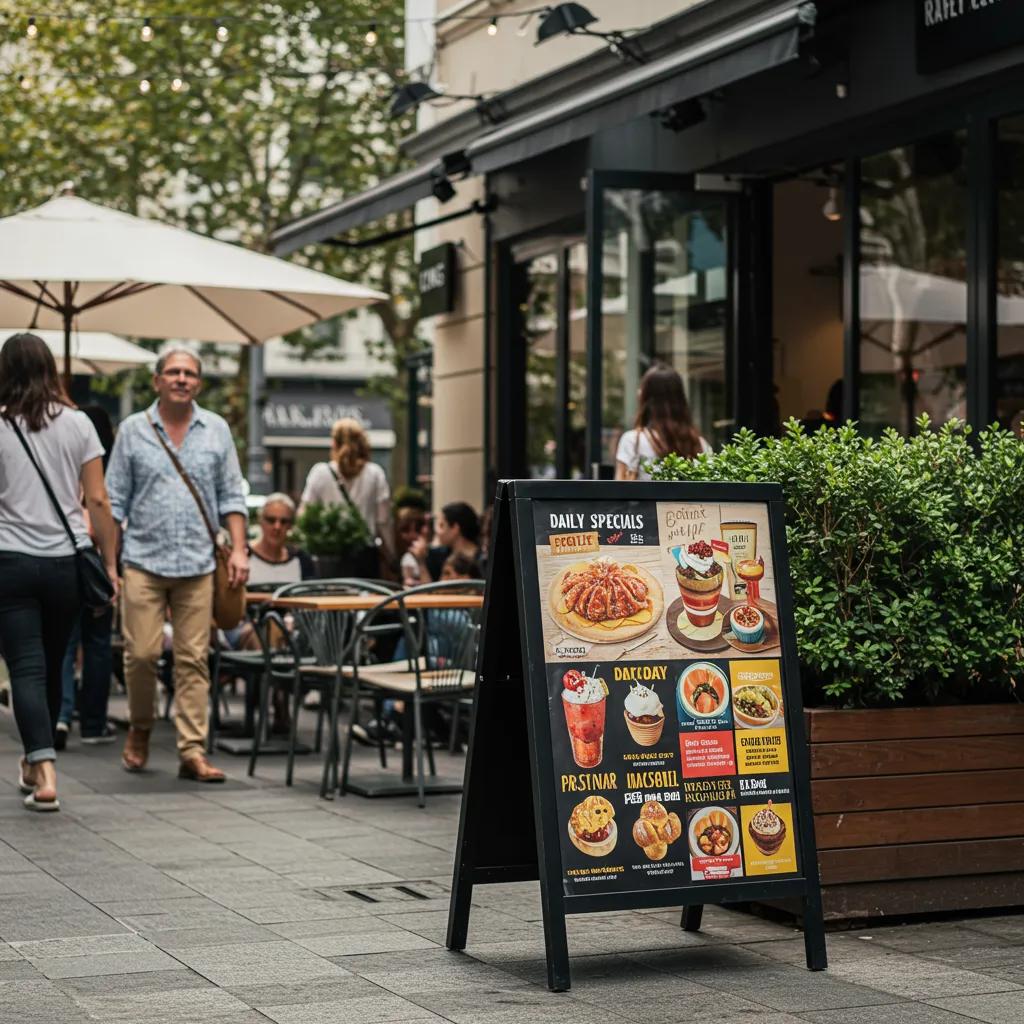
Double-sided A-frame signs are self-standing sandwich boards featuring two rigid panels connected at the top, forming an “A” shape for structural stability. The hinged design allows clear messaging on both sides, doubling exposure and reinforcing brand visibility. For example, a café can display its daily specials to pedestrians approaching from opposite directions, enhancing engagement and inspiring impulse visits.
What is an A-Frame Sign and Its Common Synonyms?
An A-frame sign, also known as a sandwich board or pavement sign, is a portable advertising display typically placed on sidewalks. Its freestanding structure provides hands-free promotion, enabling swift relocation to high-traffic spots. Many local retailers deploy sandwich boards outside their premises to highlight promotions, guiding footfall from street level directly to point of sale.
How Does the Double-Sided Design Enhance Visibility?
A double-sided configuration doubles viewing angles, ensuring that messaging is seen by oncoming pedestrians and passing vehicles. The mirrored panels reinforce brand recall through repeated exposure, which studies show can boost recognition by over 40 percent. Enhanced visibility leads to faster decision-making among potential customers and seamlessly drives them inside.
What Materials Are Used in Durable A-Frame Signs?
High-traffic environments demand weather-resistant materials such as aluminium, high-density plastic (PVC) and treated wood. Each substrate provides distinct advantages in strength, weight and graphic compatibility.
|
Material |
Characteristic |
Advantage |
|---|---|---|
|
Aluminium |
Lightweight rigidity |
Resists corrosion and wind stress |
|
PVC |
High-density plastic |
Offers impact resistance and easy cleaning |
|
Treated Wood |
Weather-sealed timber |
Delivers a premium aesthetic and durability |
These material choices establish a foundation for maintenance strategies and influence long-term cost-effectiveness.
What Are the Key Benefits of Using Double-Sided A-Frame Signs?
Double-sided A-frame signs provide cost-effective marketing by combining low investment with high return in local footfall. Their portability means businesses can test different positions throughout the day to capture peak pedestrian flows. Investing in quality sandwich boards also reflects professional credibility, supporting trust and encouraging impulse purchases.
How Do A-Frame Signs Increase Foot Traffic and Sales?
A-frame signs increase foot traffic and sales through three primary mechanisms:
- Directional Attraction – Clear arrows or call-to-action prompts guide pedestrians into stores.
- Promotional Highlights – Eye-catching graphics spotlight limited-time offers, prompting immediate visits.
- Brand Reinforcement – Consistent messaging across both panels strengthens recognition and recall.
By combining visual cues with strategic CTAs, businesses convert casual viewers into paying customers, enhancing overall revenue.
Why Are A-Frame Signs Cost-Effective for Small Businesses?
Small enterprises benefit from low upfront costs, minimal upkeep and reusable graphics panels. Unlike static billboards or digital screens, sandwich boards require no installation fees and can be updated in minutes. This flexibility allows periodic redesigns to match seasonal campaigns without large marketing budgets.
How Do Portable Outdoor Signs Maximise Marketing Flexibility?
Portable outdoor signs empower staff to reposition messaging based on real-time footfall patterns. Clear-frame units fold flat for convenient storage and transport, supporting pop-up events, markets or temporary promotions. This adaptability ensures marketing remains responsive to changing consumer behaviour and weather conditions.
How Can Businesses Customise and Design Effective Double-Sided Pavement Signs?
Customisation transforms generic frames into branded experiences that resonate with local audiences. By selecting tailored colours, finishes and graphic inserts, businesses reinforce their unique identity on busy streets.
What Are Popular Customisation Options for A-Frame Signs?
Full-colour UV printing creates vibrant, fade-resistant graphics.
- Chalkboard surfaces invite hand-drawn specials and personalised messages.
- Interchangeable corflute inserts allow rapid content swaps for events.
- Branded clip-on panels reinforce consistency across multiple locations.
These options support dynamic promotions and strengthen brand authority in high-traffic zones.
How to Design Readable and Eye-Catching A-Frame Sign Graphics?
Effective graphics prioritise contrast, font size and concise wording to capture attention within seconds. Bold headlines paired with simple icons guide viewers, while a clear call to action drives next steps. For instance, a 25mm-high font ensures legibility from 2 metres, boosting readability for hurried passersby and reinforcing the sign’s message.
Where Should You Place Double-Sided A-Frame Signs for Maximum Impact?
Strategic placement near busy intersections or building entrances maximises exposure and channelled foot traffic. Positioning signs where sightlines converge—such as corners, crosswalks and shared walkways—captures the largest audience segments.
What Are the Best Locations to Attract Foot Traffic?
High-volume pedestrian zones near transit stops, shopping precincts and restaurant clusters consistently deliver stronger engagement. Placing sandwich boards at eye level just outside entryways prompts impulse decisions, guiding potential customers inside.
How Do Local Regulations Affect Pavement Sign Placement?
Local authorities often regulate pavement sign size, weight and allowable placement hours to ensure pedestrian safety. Compliance with council guidelines—such as minimum walkway clearance and permit requirements—avoids fines and preserves a professional business reputation.
How Do You Maintain and Extend the Lifespan of Double-Sided A-Frame Signs?
Regular cleaning and protective measures preserve graphic clarity and structural integrity. Establishing a maintenance schedule safeguards lightweight frames and prevents weather-related wear.
What Are Best Practices for Cleaning and Weather Protection?
Use mild detergent and soft cloths to remove dirt and pollutants without scratching surfaces. Applying clear, UV-protective sprays on printed panels prevents fading. Storing signs indoors during severe conditions minimises moisture damage and prolongs service life.
How Does Material Choice Affect Durability and Maintenance?
Material selection dictates the maintenance regimen required to sustain sign performance and appearance.
|
Substrate |
Maintenance Requirement |
Durability Outcome |
|---|---|---|
|
Aluminium |
Wipe with mild detergent bi-weekly |
Retains structural integrity for years |
|
PVC |
Rinse and dry monthly |
Maintains colour vibrancy under UV |
|
Treated Wood |
Reapply sealant quarterly |
Prevents warping and moisture ingress |
Choosing the appropriate substrate simplifies upkeep routines and extends the return on investment.