
Cost-Effective Crowd Control Solutions for Every Event: Affordable Barriers and Budget Management
7th Jan 2026
Cost-effective crowd control balances safety, flow and cost by choosing barriers that deliver the right durability, portability and appearance for each event. This article explains how to evaluate affordable event barriers, compares common low-cost options, and gives practical deployment and maintenance strategies to reduce lifetime cost while keeping crowds safe. Many organisers face tight budgets and last-minute changes; efficient barrier selection and simple installation techniques solve those pain points without compromising safety. Below we cover the most affordable barrier types, step-by-step budget crowd-management tactics, matching barriers to event scenarios, and concrete tips to extend equipment life and reduce repeat spending. Read on for direct comparisons, quick decision checklists and easy-to-follow lists and tables that help you choose retractable belt barriers, rope barriers, steel and plastic barriers, or temporary fencing for the best cost-per-use outcomes. The guidance uses common procurement and hire trade-offs so you can decide whether to buy or hire based on frequency, storage and urgency.
What Are the Most Affordable Crowd Control Barriers for Events?
Affordable crowd control barriers trade lower upfront cost for varying lifespan and aesthetics, making them suitable where cost-per-use and portability matter most. Retractable belt barriers, rope barriers, plastic barriers and steel pedestrian barriers typically represent the best mix of affordability and function for most events. Choosing between them depends on expected reuse, venue surface and required appearance, with plastic and retractable options offering the quickest return on investment for short-term needs. Below is a short list of top affordable barrier types and why they deliver value.
This list highlights the main low-cost barrier categories and their primary strengths:
1. Retractable belt barriers: Compact, quick to set up and ideal for indoor queues and ticketing.
2. Rope barriers: Affordable way to add a premium look for VIP lines and galleries.
3. Plastic barriers: Lightweight and fast to deploy for temporary, low-impact perimeters.
4. Steel pedestrian barriers: Higher upfront cost but best for durable outdoor and high-traffic use.
These types cover most event needs and lead naturally to a concise comparison of attributes and costs that informs buy-or-hire decisions.
Barriers compared by typical upfront cost, lifespan and ideal use case:
|
Barrier Type |
Typical Upfront Cost |
Best Use Case |
|---|---|---|
|
Retractable belt barriers |
Low–medium |
Indoor queues, ticketing, temporary queuing |
|
Rope barriers |
Low |
VIP areas, galleries, visual separation |
|
Plastic barriers |
Low |
Short-term outdoor perimeters, quick deployment |
|
Steel pedestrian barriers |
Medium–high |
Outdoor festivals, crowd containment, long-term reuse |
This table shows trade-offs between initial spend and expected value, helping you match barrier type to event priorities and budget.
Which Retractable Belt Barriers Offer the Best Value for Queues?
Retractable belt barriers deliver cost-effectiveness by combining compact storage, reliable belt mechanisms and moderate durability suitable for repeated indoor use. Look for metal posts with sturdy bases and proven belt retraction mechanisms when prioritising longevity, and lighter posts when portability and low upfront cost matter more. Belt length and ease of linking multiple posts determine how effectively they manage queue flow; choose models that balance belt reliability with base stability. For quick needs or last-minute increases in queue control, suppliers offering fast dispatch and competitive pricing make retractables a practical option.
Retail Display Direct supplies retractable belt and rope barrier categories and emphasises value through price guarantees and rapid dispatch, which can be useful when short lead times or budget constraints drive procurement choices.
How Do Budget-Friendly Rope Barriers Enhance Event Aesthetics?
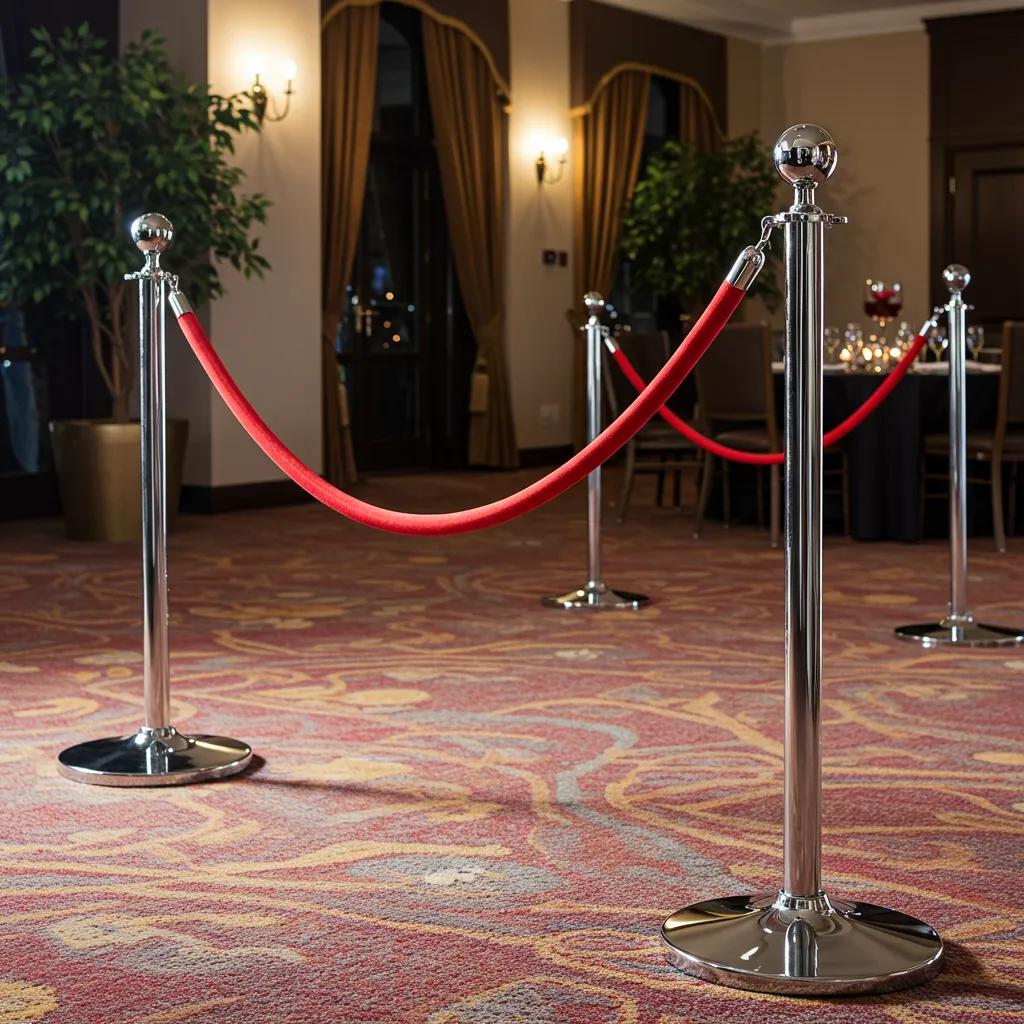
Rope barriers provide an affordable route to a premium visual impression, using simple posts and interchangeable ropes to create a high-end look without the higher price of decorative fixtures. Materials such as braided rope or velvet-effect coverings can be swapped to match event branding while using the same basic post hardware to reduce costs. Rope barriers are especially effective in galleries, award lines and VIP entrances where perceived quality matters more than heavy-duty containment. Selecting posts with durable bases and versatile rope attachments increases reusability and lowers cost-per-event over time.
A concise summary: rope barriers give premium appearance at low cost when paired with durable posts and interchangeable ropes that spread the investment across many events.
How Can You Manage Event Crowds Effectively on a Tight Budget?
Managing crowds on a tight budget hinges on prioritising barrier placement by risk, using multi-purpose equipment, and leveraging simple layout and signage to maximise control with fewer units. Focus spending on areas with the highest risk—entry points, ticketing, stage fronts—and use economical options elsewhere to conserve funds. Clear signage and trained staff complement modest barrier investments by directing flow and reducing physical containment needs. The following checklist helps you evaluate options and implement low-cost crowd management quickly.
Key decision and deployment steps for budget crowd control:
- Assess high-risk zones first and allocate durable barriers there.
- Use retractable belts and rope barriers for adaptable queuing and premium zones.
- Combine signage and minimal staffing to reduce the number of barriers needed.
These steps lead into the buy-versus-hire decision that often determines overall cost-effectiveness for infrequent versus frequent events.
|
Option |
When to Choose |
Cost/Benefit Summary |
|---|---|---|
|
Buy |
Frequent reuse, storage available |
Higher upfront cost but lower long-term cost-per-use |
|
Hire |
One-off or rare events, limited storage |
Lower upfront expense; hiring includes logistics |
|
Mixed (buy essentials, hire extras) |
Regular events with occasional scale-up |
Balance of fixed capability and flexible capacity |
This buy-vs-hire matrix clarifies when purchasing pays off and when hiring avoids wasted capital.
What Are the Key Factors in Choosing Cost-Effective Crowd Control Solutions?
Deciding on cost-effective solutions requires weighing event type, expected frequency, storage capacity and desired aesthetics to calculate true cost-per-use rather than just upfront price. Durability and reusability reduce lifetime cost; portable, stackable items save on transport and storage fees; and aesthetic needs may justify slightly higher spend where perception matters. Also account for terrain and weather exposure, which affect whether lightweight plastic or heavy steel is appropriate. Evaluating these factors with simple cost-per-use calculations helps prioritise purchases that deliver measurable savings.
These evaluation factors flow directly into a simple rule for buy versus hire based on usage frequency and logistics.
When Should You Buy Versus Hire Crowd Control Barriers?
Buy when you will use equipment regularly, have storage and can amortise the purchase over many events; hire when events are infrequent, storage is limited or when you need large, temporary expansions. A quick rule: if you expect to run the same barrier setup for more than a handful of events per year, buying often becomes cheaper; otherwise, hiring keeps capital free and includes transport and maintenance. Also consider suppliers that offer fast dispatch for urgent hires, which makes hiring a safer choice for last-minute needs. Use this decision rule to estimate break-even points and choose the most economical path.
Retail Display Direct’s product categories and logistics strengths, including a lowest-price guarantee and same-day dispatch on most orders placed before 11am, can influence whether quick purchase or hire is the most practical option for urgent events.
Which Cheap Temporary Barriers Are Best for Different Event Types?
Different events require different barrier attributes: festivals need durability and interlocking security, corporate events prioritise discreet aesthetics and compact storage, and community markets benefit from lightweight quick-deploy options. Match barrier performance attributes—durability, portability, anchoring capability and visual impact—to the event scenario to get the best cost-per-use. Consider terrain and weather: stable interlocking steel for outdoor crowds, and portable plastic or retractable belts for indoor or short-term setups. The following table maps barrier types to event examples and deployment notes.
|
Barrier Type |
Best For |
Deployment Notes |
|---|---|---|
|
Steel pedestrian barriers |
Outdoor festivals, road closures |
Interlock for secure perimeter; durable against weather |
|
Retractable belt barriers |
Indoor conferences, ticketing |
Quick setup, compact storage, suitable for queues |
|
Plastic barriers & temporary fencing |
Community markets, short-term perimeters |
Lightweight, fast to deploy, suitable for variable terrain |
This mapping helps you pick the right balance of cost, deployment speed and durability for each event type.
What Makes Steel Pedestrian Barriers Ideal for Outdoor and High-Traffic Events?
Steel pedestrian barriers justify higher upfront costs through robust durability, interlocking stability and long service life that lower cost-per-use across many events. Their weight and anchoring options resist crowd pressure and wind, making them suitable for festival perimeters and temporary road closures where safety and security are priorities. Steel barriers require less frequent replacement, reducing long-term procurement and maintenance cycles relative to cheaper plastic options. For organisers running regular outdoor events, the investment in steel often yields the best long-term value.
This durability consideration transitions to when plastic alternatives outperform steel for quick, low-cost deployments.
How Do Plastic Barriers and Temporary Fencing Support Quick Deployment?
Plastic barriers and modular temporary fencing excel at rapid deployment, low transport cost and easy handling, making them ideal for short-duration events or where staffing for installation is limited. Their light weight means fewer people can set up large perimeters quickly, and modular panels adapt to irregular terrain when anchored properly. While less durable than steel, plastic systems reduce labour and logistics expense, and renting these systems often proves cheaper for rare events. Choosing plastic for temporary needs preserves budget while maintaining acceptable safety and visibility.
Using plastic and portable systems well requires simple maintenance and storage practices to maximise lifespan and reduce replacement frequency.
What Are the Best Tips to Maximise Value from Cost-Effective Crowd Control Equipment?
Maximising value focuses on maintenance, smart storage, multipurpose use and installation practices that increase lifespan and reduce replacement frequency. Routine inspections, cleaning and simple repairs prevent premature failures and keep mechanisms—like retractable belts—functioning reliably. Store posts and panels upright in dry, stacked configurations to avoid base damage and warping, and label components for faster setup that saves staff time and hire fees. These practices convert cheaper equipment into long-term assets by lowering total cost of ownership.
Below are practical maintenance and reuse actions to implement across barrier types.
1. Regular Inspections: Check belts, connectors and bases before and after events.
2. Preventive Cleaning: Remove dirt and salt to prevent corrosion on metal parts.
3. Smart Storage: Store vertically and protect from UV exposure to extend life.
How Can Maintenance and Reusability Reduce Long-Term Costs?
Simple maintenance extends service life and reduces total cost by preventing small issues from becoming replacements, and reusing modular components across events spreads the initial investment over many uses. Lubricating moving parts, replacing worn belts and repairing bases are low-cost interventions that preserve performance. Documenting inspection schedules and minor repairs also helps with resale or hire valuations if you choose to upgrade equipment later. A disciplined maintenance routine is one of the most effective ways to achieve lower cost-per-event for budget-conscious organisers.
What Are the Best Practices for Installing Budget Crowd Control Barriers?
Optimise installation by placing barriers where they have greatest operational impact—entry points, choke-points and areas facing potential surges—so fewer units achieve effective control. Anchor lightweight fencing appropriately and stagger posts to guide flow naturally rather than relying on continuous lines, and combine clear signage with staff direction to reduce the number of physical barriers required. Test layouts in advance when possible and train a small crew on rapid deployment sequences to save time and hire costs. Strategic placement and simple staff coordination maximise control while keeping the equipment footprint small and cost-effective.
These installation practices complete the cost-effective lifecycle approach from selection through upkeep and deployment.
Retail Display Direct offers categories including retractable belt barriers and rope barriers and highlights competitive advantages such as a lowest-price guarantee and same-day dispatch on most orders before 11am, which can be helpful when balancing cost, speed and availability for event planning.