
Choosing the Right Retractable Safety Barrier for Your Business: Types, Features, and Applications
30th Jan 2026
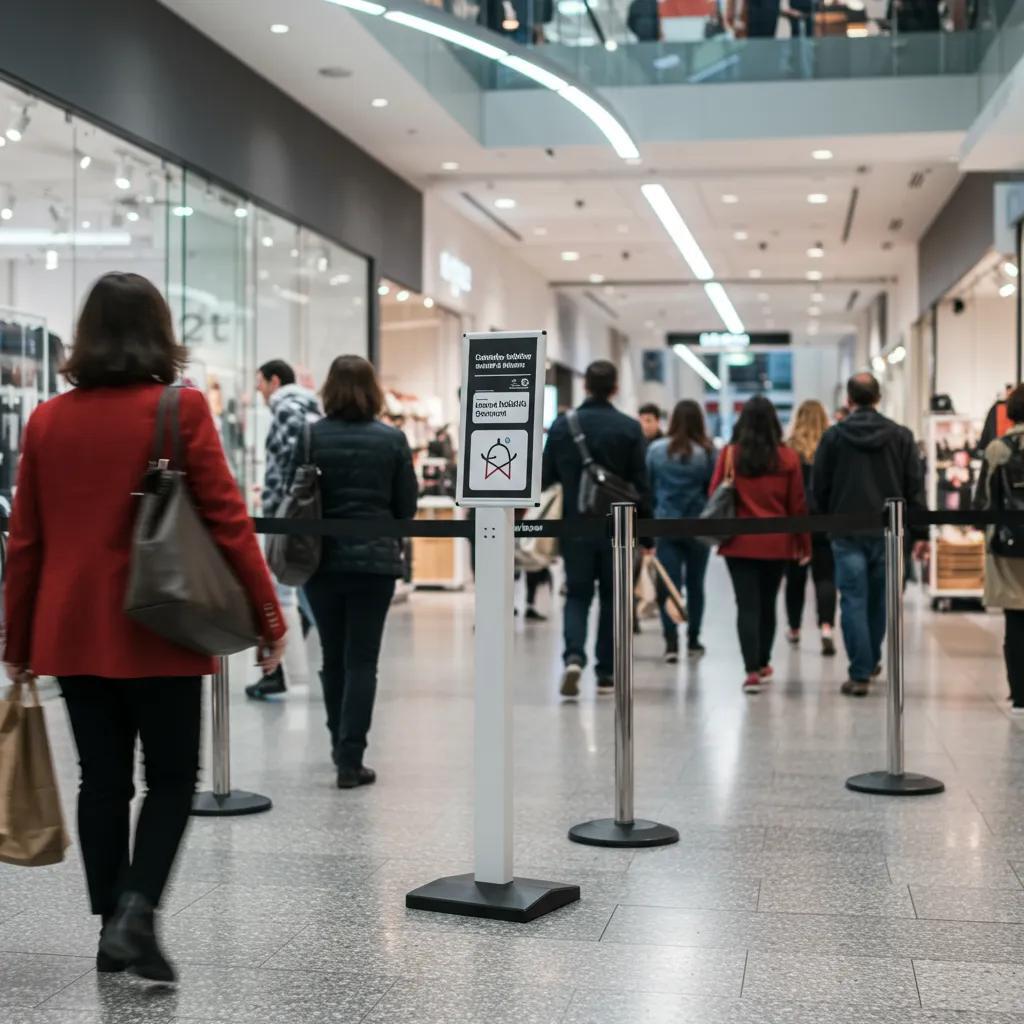
Retractable safety barriers are modular crowd-control and safety devices that use a spring-loaded belt, post and base system to create temporary pedestrian boundaries quickly and safely. Businesses choose retractable belt barriers to manage queues, isolate hazards and create flexible, configurable zones without permanent fixtures. This guide explains the main barrier types, the key technical features to weigh, how different industries deploy retractable barriers, and the Australian regulatory factors that should shape your purchase decision. You will find concise comparisons, decision-focused lists and practical EAV tables to map materials, bases and belt specs to typical use-cases. By the end of this article you will be able to match a barrier type and specification to a retail, warehouse, event or construction scenario and follow a short compliance checklist for safe deployment.
What Are the Main Types of Retractable Belt Barriers for Businesses?
A retractable belt barrier is a crowd control system composed of a retractable belt cassette, a post (stanchion) and a base that together regulate pedestrian flow and isolate areas. This system works by extending a woven or knitted belt between posts or into a wall cassette to form a visible, adjustable barrier that can be rapidly reconpd to meet operational needs. The practical benefit is immediate, temporary segregation of space that balances visibility, portability and storage efficiency for businesses of any size.
These are the main types and where they fit best:
1. Freestanding retractable belt barrier: Ideal for flexible queueing and temporary isolation in retail and lobbies.
2. Wall-mounted retractable barrier: Best for tight corridors and permanent anchor points where floor footprint is limited.
3. Twin-belt retractable barrier: Suited to enhanced visibility and accessibility needs, providing redundancy and clearer demarcation.
4. Expandable retractable barrier: Useful for closing wider gaps or creating variable-width exclusion zones quickly.
Introductory comparison of these types follows in the table and the next paragraphs explain two key contrasts in practice.
|
Type |
Mobility |
Typical Belt Length |
Suitability |
|---|---|---|---|
|
Freestanding retractable belt barrier |
High — portable |
1.5–3 m |
Retail queues, events, temporary laneing |
|
Wall-mounted retractable barrier |
Low — fixed |
2–5 m |
Entrances, corridors, compact sites |
|
Twin-belt retractable barrier |
Medium — portable/fixed |
Two belts, each 1.5–2.5 m |
Accessibility routes, added visibility |
|
Expandable retractable barrier |
High — foldable |
Variable coverage |
Wide aisle closures, emergency sealing |
This EAV table maps type attributes to typical business uses and helps prioritise mobility versus permanence. For practical sourcing, Retail Display Direct offers product categories including rope barriers and retractable barriers that align with these types and can serve as real-world examples for freestanding, wall-mounted and twin-belt configurations.
How Do Freestanding and Wall-Mounted Retractable Barriers Differ?
Freestanding posts rely on weighted or fillable bases that prioritise portability and easy reconfiguration, while wall-mounted cassettes fix the belt mechanism to a vertical surface for a cleaner permanent look. The mechanism for both uses the same retracting spring cassette, but freestanding units require storage space and stable bases, whereas wall-mounted units need secure fixing and leave floors clear. Maintenance differs: freestanding bases benefit from periodic base checks and anti-slip pads, and wall-mounted units require inspection of fixings and cassette springs to ensure reliable retraction. Understanding these trade-offs will guide whether you prioritise quick redeployment or a streamlined permanent solution on site.
What Are the Benefits of Twin Belt and Expandable Retractable Barriers?
Twin-belt systems provide two horizontal belts at staggered heights, increasing visibility, reducing trip hazards and offering redundancy for higher-safety environments. This configuration supports accessibility by clearly marking both eye-level and lower obstruction thresholds, which can be important in ADA-equivalent considerations and crowded settings. Expandable barriers cover variable widths without multiple posts, enabling rapid closure of large openings or aisles during incidents or events. In practice, twin-belt models suit busy retail entrances and service counters, while expandable barriers serve event marshals and temporary hazard isolation needs.
Which Key Features Should You Consider in Retractable Safety Barriers?
Selecting the right barrier depends on material, base design, belt characteristics and connectivity options, each of which affects durability, stability and functional flexibility. Materials determine corrosion resistance and appearance; base designs balance portability with wind resistance; belts vary by length, width and print options; connectivity defines how posts link in linear or multi-directional configurations. Evaluating these factors together ensures the chosen system meets both operational demands and safety expectations.
Key features to weigh:
- Material and finish: stainless steel posts versus powder-coated or plastic posts.
- Base type: weighted steel base, fillable plastic base or low-profile fixed base.
- Belt specs: standard lengths and widths, slow-retract mechanisms and custom printed belts for messaging.
- Connectivity: 2-way, 3-way and 4-way cassettes for modular layouts.
|
Component |
Attribute |
Value / Recommendation |
|---|---|---|
|
Post material |
Durability & corrosion resistance |
Stainless steel: high; Powder-coated steel: medium; Plastic: indoor/light use |
|
Base type |
Stability vs portability |
Weighted base: stable; Fillable base: portable when empty; Low-profile fixed: for permanent locations |
|
Belt spec |
Visibility & messaging |
2–3 m lengths; 50–100 mm widths; custom printing for brand/signage |
This comparison table clarifies trade-offs between materials and base choices. Retail Display Direct supplies options that match these attributes, including stainless steel posts and custom printed belts, which can be specified to meet aesthetic and messaging needs for retail and corporate environments.
How Do Materials and Base Types Affect Barrier Durability and Stability?
Stainless steel posts resist corrosion and maintain appearance in high-traffic indoor and sheltered outdoor environments, while powder-coated steel offers cost-effective durability where some exposure to moisture is expected. Heavy-duty plastic posts with fillable bases provide lightweight portability for event teams but require regular inspection and secure filling for stability. Bases designed specifically for wind resistance or with anti-slip features increase safety outdoors, and choosing the correct material-base combination reduces long-term maintenance and replacement costs.
What Belt Specifications and Connectivity Options Enhance Safety and Customisation?
Belt width and length affect visibility and physical coverage: wider belts increase conspicuity and reduce through-visibility, and longer belts allow fewer posts for the same span. Slow-retract mechanisms lower the risk of belt snap-back injury and extend cassette life. Connectivity options—2-way linear joins, 3-way corner joins or 4-way hubs—allow modular laneing, cross-aisles and temporary enclosures. Custom printed belts provide on-belt messaging for directional, safety or promotional content without additional signage.
How Are Retractable Safety Barriers Used Across Different Industries?
Retractable barriers adapt to sector-specific needs by prioritising either appearance, durability or rapid deployment depending on use-case, which makes them valuable across retail, warehousing, events, construction and public spaces. The right configuration reduces trip incidents, clarifies circulation and supports operational flow while remaining removable when not required. Industry demands determine whether aesthetics, heavy-duty stability or quick pack-down are primary selection criteria.
Recommended features by industry:
- Retail: Attractive finishes, custom printed belts and modular queueing for branded customer flow.
- Warehousing: High-visibility belts, heavy bases and robust posts for demarcation of loading zones.
- Events: Lightweight, portable posts with easy-connect hubs for fast deployment.
Retail Display Direct supplies solutions suited to retail, warehousing and events and can advise on customised configurations to meet those sector-specific needs while aligning barrier selection to operational risk profiles.
What Are the Best Retractable Barriers for Retail, Warehousing, and Events?
Retail spaces often favour stainless or powder-coated posts with custom-printed belts to convey directions, promotions or safety notices, prioritising aesthetics and customer experience. Warehouses require heavy-duty bases, visible belts (bright colours or reflective trims) and secure connectivity to delineate vehicle/pedestrian zones. Event managers value compact storage, rapid setup and modular connectivity to form temporary corridors and crowd egress routes. Choosing correct belt messaging and base stability reduces incidents and improves flow.
How Do Construction and Public Spaces Benefit from Retractable Crowd Control Barriers?
On construction sites and public works, retractable barriers create temporary exclusion zones to protect pedestrians from hazards while allowing controlled access for authorised workers. Durability and weather resistance are crucial, as is base stability against wind and accidental knocks. High-visibility colour schemes and clear printed messaging aid compliance and reduce confusion around detours. For temporary works, combining barriers with signage and inspection logs supports safer, auditable site management.
How Do Australian Safety Regulations Impact Your Choice of Retractable Barriers?
Australian workplace safety guidance influences barrier selection by emphasising hazard identification, adequate visibility, stable installations and documented maintenance; these factors should steer procurement and deployment decisions. Complying with Safe Work Australia principles requires businesses to perform risk assessments, choose barriers that match identified hazards and maintain inspection records. Selecting products that meet these practical requirements reduces liability and improves worker and public safety.
Key regulatory action points:
- Conduct a simple risk assessment to identify pedestrian hazards and required barrier strength.
- Choose barriers with appropriate visibility, stability and signage to match assessed risks.
- Implement inspection and maintenance routines and retain records to demonstrate due diligence.
|
Business Type |
Attribute |
Quick Recommendation |
|---|---|---|
|
Retail |
Aesthetics & messaging |
Stainless/powder-coated posts with custom belts |
|
Warehouse |
Durability & visibility |
Heavy bases, high-visibility belts |
|
Events/Temporary Works |
Portability & rapid setup |
Lightweight posts, modular connectors |
This short EAV checklist links common business types to recommended barrier features and supports compliant procurement and deployment. After following the checklist, businesses can source suitable options and request site-specific advice; Retail Display Direct's local operation in Padstow, NSW supplies relevant product categories and can provide quotations or configuration guidance to match these recommendations.
What Australian Workplace Safety Standards Apply to Retractable Barriers?
Safe Work Australia provides overarching OHS guidance that affects barrier selection by requiring that controls be suitable, maintained and appropriate to the risk; specific standards for pedestrian safety and temporary works should be referenced when planning deployments. In practice, the standards influence requirements for visibility, stability and signage rather than prescribing a single product type. Ensuring a barrier's material and base are fit-for-purpose relative to environmental exposure and pedestrian volumes meets the intent of these standards.
How Can Businesses Ensure Barrier Compliance and Best Practices?
To ensure compliance, businesses should perform a documented risk assessment, select barriers matched to identified risks, install and secure units according to manufacturer guidance, and schedule regular inspections to verify belt integrity and base stability. Training staff on correct deployment, storage and inspection procedures reduces misuse and improves response during incidents. Maintain a simple inspection log with dates and observations to demonstrate ongoing maintenance and due diligence under Australian workplace safety expectations.
Inspection checklist:
- Check belt tension and cassette function monthly.
- Verify base fill levels and anti-slip features before outdoor use.
- Record and correct any structural damage immediately.
This article's buyer-focused checklist and comparisons map the right retractable barrier types and features to common business needs and compliance duties. For purchasing or tailored advice, consider contacting Retail Display Direct in Padstow, NSW to discuss retractable and rope barrier options or request a quote for a configuration that matches your operational and regulatory requirements.