
Choosing the Right Custom Retractable Safety Barriers with Signage in the UK
31st Dec 2025
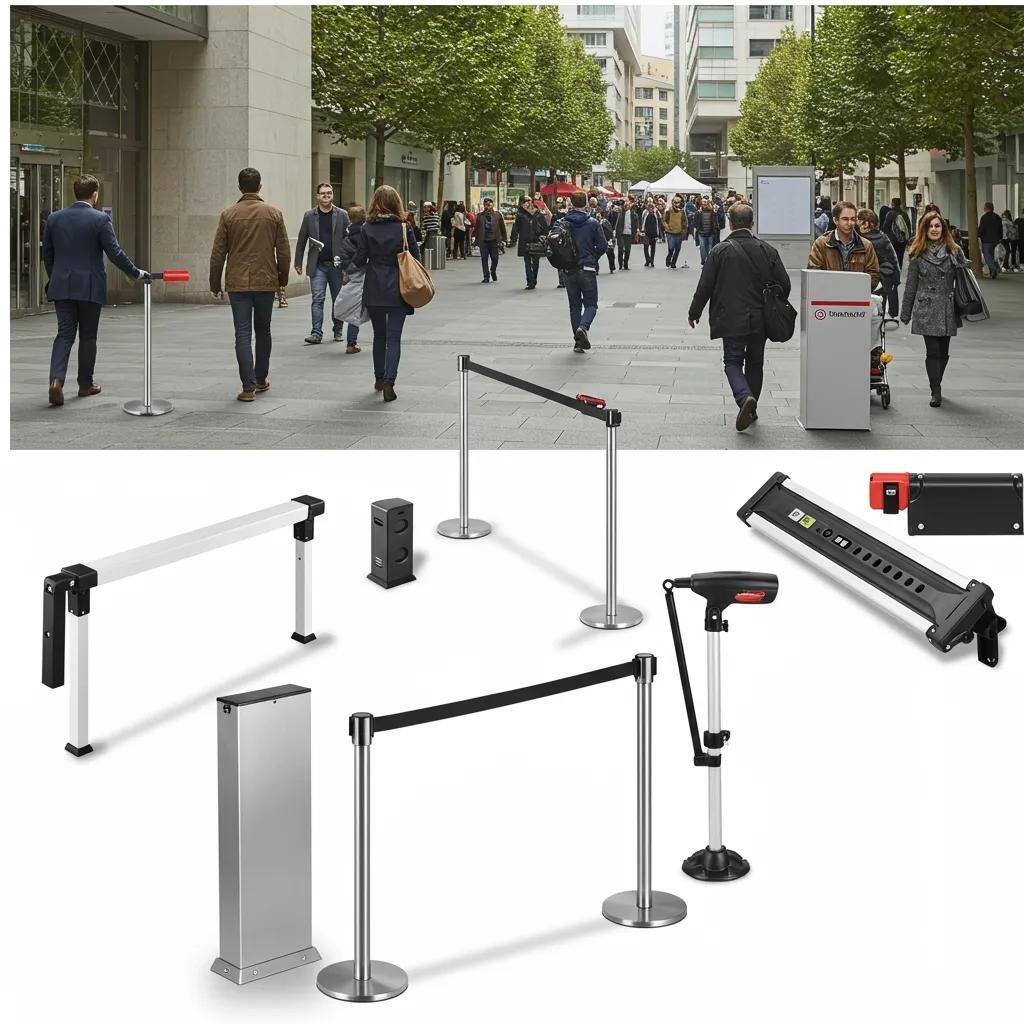
Retractable safety barriers with signage are portable crowd control and safety devices that use retractable webbing or expandable elements combined with clear messages to restrict access, direct flows, or highlight hazards. This guide helps buyers understand retractable barrier types, customisation options for effective signage, key selection factors relevant to UK settings, and common industry applications so you can match a solution to your operational need. Many organisations struggle to choose the right barrier because options vary by span, durability and visibility; knowing the technical trade-offs and compliance checks speeds procurement and improves on-site safety. Read on for a concise comparison of belt, wall-mounted and expandable systems, practical customisation ideas including printed belts and post-top sign frames, a selection checklist keyed to materials and locking mechanisms, and examples of how retailers, warehouses and event teams deploy these devices. The guidance integrates UK safety practice suggestions and highlights where to find retail display suppliers such as Retail Display Direct for rope and retractable barrier categories while remaining vendor-neutral in selection advice.
What Are the Main Types of Retractable Safety Barriers Available?
Retractable safety barriers are primarily available as portable belt stanchions, wall-mounted retractable cassettes, and expandable or accordion-style barriers; each type controls access by creating a visible and often signed physical limit. Belt retractable barriers use webbing that extends between posts for queue management and temporary cordons, wall-mounted units offer space-saving semi-permanent restrictions, and expandable barriers cover irregular openings or temporary closures with folding elements. Choosing the right type affects deployment speed, span covered and storage requirements, so compare span, base stability and mounting method before purchasing to match the setting.
How Do Belt Barriers Compare to Wall-Mounted and Expandable Barriers?
Belt barriers are the most common retractable barrier type, combining a stanchion post, weighted base and belt/webbing that locks into adjacent posts or wall receivers. They are highly portable, quick to deploy, and well suited to retail queues and temporary cordons where visibility and branding matter; the main trade-offs are storage footprint and susceptibility to tipping if bases are undersized. Wall-mounted retractable units save floor space and provide tidy semi-permanent cordons for corridors or narrow openings but require secure fixing and limited belt span. Expandable barriers adapt to odd openings and can be heavy-duty for construction zones, offering irregular span coverage at the cost of slower setup and larger storage when collapsed.
Which Barrier Types Are Best for Industrial and Crowd Control Use?
Industrial and crowd control settings demand stability, durability and high visibility, so choose heavy-duty posts with wide bases, reinforced belt webbing, or weatherproof expandable units for outdoors. For warehouses, wider belts, high-visibility striping and durable bases reduce trip and tip risks while post-top sign frames communicate hazard instructions. For outdoor crowd control at events, opt for heavier bases, outdoor-rated materials such as stainless steel or powder-coated posts, and anchoring options where wind or terrain could compromise stability. Consider how each option affects rapid reconfiguration during peak operations and whether post-top sign frames are needed to display directional or hazard messages clearly.
Here is a quick comparison table to match barrier types to typical settings and highlight pros and cons.
|
Barrier Type |
Best Use |
Pros / Cons |
|---|---|---|
|
Belt retractable barriers |
Retail queues, indoor cordons |
Portable and brandable; base tipping risk |
|
Wall-mounted retractable barriers |
Doorways, corridors |
Space-saving and tidy; limited span |
|
Expandable barriers |
Irregular openings, temporary closures |
Flexible span; heavier and bulkier to store |
This table helps identify which barrier type aligns with your environment and storage constraints, leading naturally to questions about how to add effective signage.
How Can You Customise Retractable Safety Barriers with Effective Signage?
Customising retractable safety barriers with signage improves clarity, compliance and brand presence while ensuring restricted areas are instantly recognisable. Options include custom printed belts with logos or safety messages, post-top sign frames for pictograms and instructions, and pre-printed webbing for standard warnings; material choice affects print durability and outdoor suitability. Design best practice pairs short instruction text with universal pictograms, uses high-contrast colours for legibility, and selects materials rated for expected wear and UV exposure. Retail Display Direct lists rope and retractable barrier categories suitable for customisation needs, but assess print area and webbing material before ordering to ensure a durable finish and clear messaging.
What Are the Options for Custom Printed Belts and Post-Top Sign Frames?
Custom printed belts are available in single-colour or full-colour options and can carry logos, directional arrows, or safety messages; textile webbing accepts dye sublimation while vinyl supports surface printing. Post-top sign frames come in standard sizes that accommodate pictograms and short instructions, and you should check maximum printable area and attachment method when specifying frames. For retail situations, short promotional messages or directional arrows work best; for warehouse or industrial hazards, combine a high-visibility base colour with a clear hazard pictogram and concise instruction to aid quick comprehension.
- Custom printed belts expand brand visibility and safety messaging.
- Post-top sign frames provide elevated, eye-level instructions for passersby.
- Choose belt material compatible with intended print technique and environment.
These custom options increase message clarity while preserving rapid deployment; the next section explains how signage improves both safety and perception.
How Does Signage Improve Safety and Brand Visibility?
Effective signage on retractable barriers reduces confusion about restricted areas and helps people comply with safety rules quickly, which lowers the risk of accidents in busy spaces. Branded belts and clear hazard pictograms also lend a professional appearance, enhancing customer trust in retail environments while reinforcing site rules in operational areas. Combining concise text with pictograms supports universal comprehension across language differences and noisy event settings, improving flow and reducing staff interventions. Well-designed signage is therefore both a safety control and an opportunity to convey sponsorship or brand information in public-facing deployments.
What Key Factors Should You Consider When Choosing Retractable Safety Barriers?
Selecting the right retractable barrier system depends on material choice, durability, portability, belt width and length, base stability, and how the locking mechanism performs under repeated use. Material options like stainless steel, aluminium and ABS plastic offer different trade-offs for corrosion resistance, weight and cost; powder coatings and sealed mechanisms increase longevity in harsh environments. Portability needs determine base design—stackable bases and lighter posts favour frequent reconfiguration while heavy bases favour permanent stability. Consider how these factors affect inspection schedules, spare parts availability and long-term maintenance to ensure reliable performance.
How Do Material, Durability, and Portability Affect Barrier Selection?
Material selection governs corrosion resistance and weight: stainless steel is robust outdoors, aluminium reduces weight for storage, and ABS or engineered plastics cut cost but may wear faster in heavy use. Durability indicators include powder coating, sealed retract mechanisms and reinforced belt ends that resist fraying; these details lengthen service life and lower maintenance frequency. Portability concerns favour lightweight posts and bases that stack, but ensure bases are heavy enough to prevent tipping in high-traffic locations. These trade-offs inform procurement choices and should be documented in your specification to support safe, long-term use.
- Inspect materials for outdoor ratings and sealed components before purchase.
- Prioritise wider belts and reinforced ends where frequent handling occurs.
- Balance portability with base weight to prevent tipping in active areas.
These selection criteria lead to the final practical requirement: compliance with UK safety guidance and routine checks.
What UK Safety Regulations and Compliance Standards Apply?
Referencing UK guidance from the Health and Safety Executive is essential: site risk assessments should determine whether fixed or temporary barriers are needed and what signage is required to communicate hazards. Practical compliance checks include ensuring barriers are visible from required approach distances, securely anchored where necessary, and fitted with legible signage using high-contrast colours and pictograms. Keep simple inspection and maintenance records and schedule periodic checks of belt integrity, locking mechanisms and base condition to evidence ongoing compliance. While this does not constitute legal advice, applying these checks aligns barrier use with reasonable practicable controls expected under UK workplace safety practice.
Where Are Retractable Safety Barriers Commonly Used Across Industries?
Retractable safety barriers serve retail, warehouse, events and public spaces by providing fast, visible means to manage queues, restrict access and communicate hazards with signage. Matching industry needs to barrier types and signage strategies improves safety and operational efficiency: retailers focus on queue flow and branding, warehouses on durable hazard marking and restricted zones, and events on rapid reconfiguration and wayfinding. Consider the operational tempo, environmental exposure and messaging needs of each industry when specifying belt width, material and post-top signage.
How Do Retail and Warehouse Environments Benefit from These Barriers?
In retail, retractable belt barriers organise queues, support promotions with branded webbing and reduce perceived wait times by creating orderly lines and clear entry points. In warehouses, robust posts with wide, high-visibility belts and clear hazard signage delineate restricted zones, protect loading areas and control pedestrian/vehicle interfaces. Operationally, both settings benefit from the speed of deployment and the option to customise signage for temporary instructions, which reduces staff time spent redirecting customers or workers and improves compliance with site controls.
- Retail benefits include brandable queue management and customers’ clear direction.
- Warehouse benefits include durable posts, wide belts and explicit hazard messaging.
- Effective barriers reduce staff interventions and speed up area reconfiguration.
These use cases show why many buyers consult display suppliers; for example, Retail Display Direct lists rope and retractable barrier options suitable for commercial applications and customisation.
What Makes Retractable Barriers Ideal for Events and Crowd Control?
Events require fast setup, frequent reconfiguration and clear wayfinding; retractable barriers meet these demands through portable posts, extendable webbing and the ability to display sponsor or directional messages on belts and post-top frames. For ticketing and queuing areas, use close-spaced posts with clear arrows and short instructions; for larger crowd flows, heavier bases and anchor options improve stability outdoors. Weatherproof materials and UV-resistant prints are essential for outdoor events, and spacing guidelines should prioritise safe pedestrian flow while leaving emergency access routes clear.
- Use branded belts for sponsorship and directional clarity at events.
- Ensure outdoor units are weatherproof and can be anchored if needed.
- Space posts to guide flow while preserving emergency access routes.
These practical tips allow organisers to deploy retractable barrier systems that balance speed, visibility and safety across event settings.
|
Industry |
Common Use Case |
Recommended Barrier / Signage |
|---|---|---|
|
Retail |
Queue control and promotions |
Belt stanchions with printed belts |
|
Warehouse |
Hazard marking, restricted zones |
Heavy-duty posts, wide belts, pictograms |
|
Events |
Wayfinding and ticketing queues |
Portable posts, post-top frames, branded webbing |
|
Factor |
What to Look For |
Impact on Selection |
|---|---|---|
|
Material |
Outdoor rating, corrosion resistance |
Durability and lifetime costs |
|
Portability |
Base design, stackability |
Ease of reconfiguration and storage |
|
Visibility |
Belt width, high-contrast prints |
Comprehension and compliance |
Retail Display Direct is one supplier that categorises rope and retractable barriers in its commercial offering, providing a useful starting point when sourcing custom printed belts or post-top sign frames. Use the guidance above to draft a concise specification—covering material, base stability, belt print area and maintenance checks—before requesting options from suppliers so you get a retractable safety barrier system that meets UK operational and safety needs.