
Acrylic Brochure Holders vs Other Materials: Which Is Better for Your Business?
26th Dec 2025
Acrylic brochure holders are clear, rigid display pockets made from PMMA that present printed collateral with high visibility and minimal visual distortion. This article explains how acrylic compares with polycarbonate, metal, wood, PVC and cardboard across clarity, durability, cost and sustainability so businesses can choose the right material for specific settings. Many decision-makers weigh trade-offs between aesthetic impact, longevity and environmental footprint; understanding material attributes helps reduce replacement costs and improve marketing impressions. The guide covers acrylic benefits, head-to-head material comparisons, eco-friendly alternatives and a practical decision checklist to match material to use-case. Read on to learn where acrylic excels, when alternatives are preferable, and how to decide based on environment, budget and brand priorities.
What Are the Key Benefits of Acrylic Brochure Holders?
Acrylic brochure holders deliver superior optical clarity, making printed brochures easier to read and more engaging at point-of-purchase. Their rigidity and scratch resistance protect collateral and reduce replacement frequency, which lowers lifetime costs for high-visibility displays. Acrylic is also lightweight and simple to mount, supporting countertop and wall-mounted installations without heavy hardware or complex fittings. These combined properties mean acrylic often provides the best cost-per-impression for indoor retail and hospitality settings, especially when brand presentation matters.
Acrylic brochure holders offer several practical advantages for business displays:
1. Acrylic provides high transparency that preserves brochure colours and contrast for improved reader engagement.
2. Acrylic is lightweight yet rigid, making it easy to reposition displays without sacrificing stability.
3. Acrylic resists everyday scratches and abrasion better than many basic plastics, reducing replacement needs.
Together these benefits make acrylic a default choice for indoor literature presentation, and the next section maps acrylic properties to common business use-cases.
|
Material |
Attribute |
Value |
|---|---|---|
|
Acrylic Holder |
Use-case |
Retail counter, reception desk, trade show tabletop |
|
Acrylic Holder |
Mounting options |
Countertop pockets, wall-mounted units, multi-pocket displays |
|
Acrylic Holder |
Key benefit |
Clarity and low maintenance |
This table ties acrylic properties to business applications, showing why clarity and mounting flexibility matter for promotional impact and operational ease. The following subsection explains why clarity and durability translate directly into marketing effectiveness.
Why Is Clarity and Durability Important for Acrylic Holders?
Clarity ensures brochures are legible from common viewing distances, which increases the chance a customer picks up material and reads it. Durability preserves the initial presentation quality, preventing yellowing or cracking that undermines brand perception and forces early replacement. Together, clarity and durability reduce the cost-per-impression by extending display life and maintaining visual appeal in high-traffic zones. For retailers and hospitality venues, clearer displays improve conversion for promotions and help staff maintain tidy presentation areas. Understanding these mechanisms makes it easier to justify material choice based on measurable benefits rather than aesthetics alone.
Which Business Settings Benefit Most from Acrylic Brochure Holders?
Acrylic excels in indoor environments where visual presentation and hygiene are priorities, such as retail counters, hotel receptions and medical waiting rooms. In retail, clear acrylic enhances impulse promotions at points of sale; in hospitality, it supports polished lobby displays that reflect brand standards; in healthcare, easy-to-clean surfaces are a hygiene advantage. Acrylic is also well suited to trade-show tabletop exhibits where portability and clarity matter for brief, high-impact interactions. Assessing these settings by visibility need, cleaning frequency and desired aesthetic helps determine when acrylic is the appropriate default choice.
How Do Other Brochure Holder Materials Compare to Acrylic?
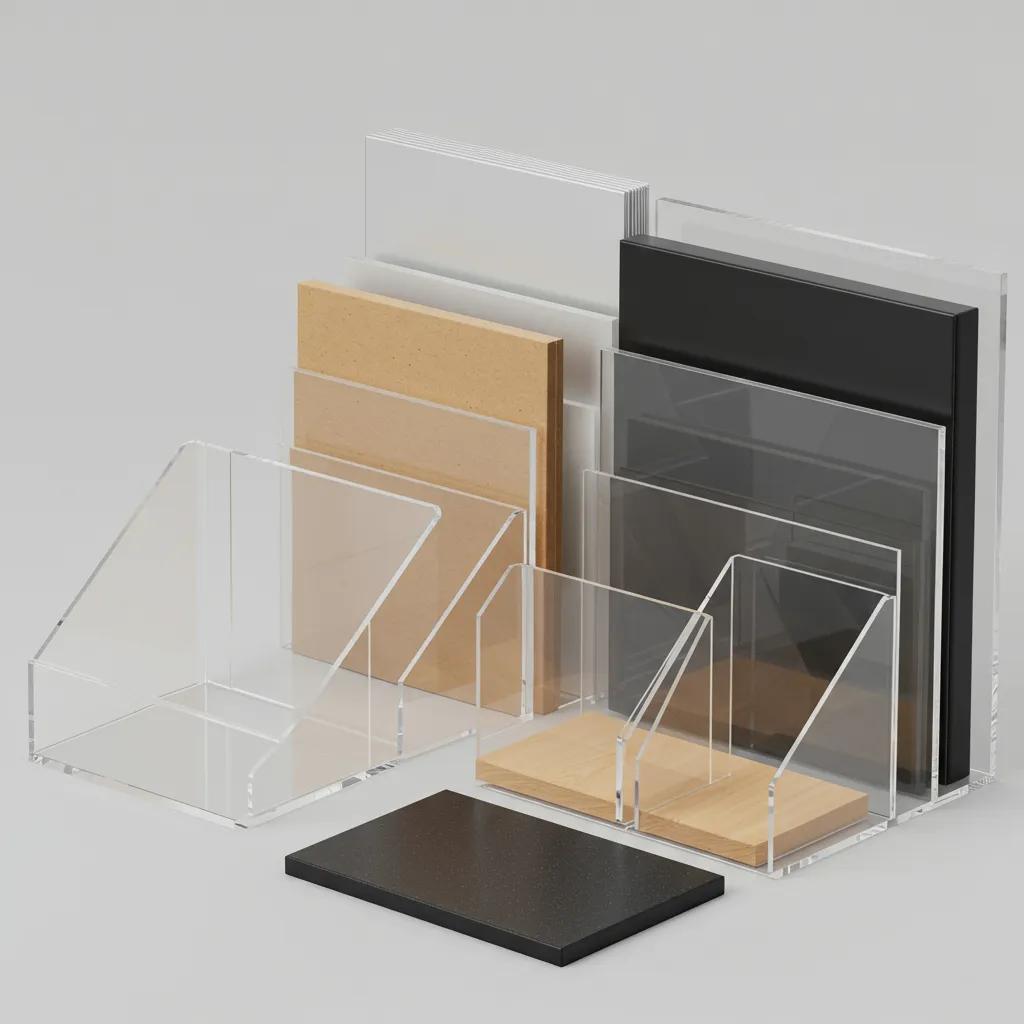
Other materials trade different strengths against acrylic’s clarity and aesthetic neutrality; understanding those trade-offs helps pick the right material for environment and budget. Polycarbonate prioritises impact resistance for rough conditions, metal emphasises stability and premium finishes, wood provides a natural premium look, PVC offers low-cost practicality, and cardboard supports short-term recyclable options. The right selection depends on expected wear, UV exposure, weight tolerance and cost constraints.
Compare the core attributes of common materials using this EAV-style comparison to see where acrylic sits relative to alternatives.
|
Material |
Attribute |
Value |
|---|---|---|
|
Acrylic |
Clarity |
High |
|
Polycarbonate |
Impact resistance |
Very high |
|
Metal |
Stability |
High |
|
Cardboard |
Recyclability |
High |
|
PVC |
Cost |
Low |
This comparison highlights that acrylic leads on clarity while polycarbonate and metal outperform acrylic on impact resistance and stability respectively. The next subsections examine polycarbonate and metal in more detail to guide material selection for demanding settings.
What Are the Advantages and Disadvantages of Polycarbonate Holders?
Polycarbonate offers exceptional impact resistance and superior weather tolerance, which makes it the preferred choice for outdoor events and high-traffic installations where breakage risk is a concern. The trade-offs include higher material cost and slightly reduced optical clarity compared with acrylic, so printed collateral may not appear as crisp. Polycarbonate can also yellow over long UV exposure unless treated for UV stability, so finish selection matters for longevity. Choose polycarbonate when physical resilience or outdoor durability outweighs the premium and when clarity is a secondary priority.
How Do Metal Brochure Holders Offer Robustness and Professional Appeal?
Metal holders provide strong structural stability and a premium aesthetic suited to lobbies, corporate receptions and industrial exhibits where a heavy-duty look is desirable. The weight of metal increases stability but reduces portability, and metal may require corrosion-resistant finishes for humid environments. Metal designs often support larger-format literature and freestanding floor racks, making them ideal when permanence and professional branding trump lightweight convenience. For brand-first environments, metal’s tactile quality reinforces premium messaging where mobility is less important.
What Are the Eco-Friendly and Cost-Effective Alternatives to Acrylic?
Sustainable or budget-conscious campaigns often use cardboard, recycled plastics or wooden stands as lower-impact or lower-cost alternatives to acrylic. Cardboard is recyclable and ships flat for temporary promotions, wooden holders convey an eco-premium look for permanent indoor use, and recycled-material plastics balance durability with improved lifecycle credentials. Selecting an eco-friendly option depends on campaign duration, reuse potential and available recycling infrastructure in your region.
When considering sustainability trade-offs, compare recyclability, durability and lifecycle cost using this EAV-style table focused on eco attributes.
|
Material |
Attribute |
Value |
|---|---|---|
|
Cardboard |
Recyclability |
High |
|
Recycled Plastic |
Durability |
Moderate |
|
Wood |
Aesthetic longevity |
High |
|
PVC |
Recyclability |
Low |
This table clarifies that cardboard is optimal for short-term, low-cost campaigns while wood and recycled plastics suit longer-term, sustainable presentations. The following subsections cover when cardboard, wood and PVC are the sensible choices.
Why Choose Cardboard Brochure Holders for Temporary or Eco-Friendly Displays?
Cardboard stands are lightweight, cost-effective and highly recyclable, making them ideal for trade shows, pop-ups and short-term promotions where recovering materials after use is straightforward. Flatpack shipping reduces freight cost and storage footprint, which benefits seasonal campaigns and event logistics. The drawback is limited durability — cardboard won’t withstand prolonged moisture or continuous handling — so it is best used where disposability and sustainability outweigh longevity. For temporary activations, cardboard delivers lowest upfront cost and best end-of-life recyclability.
Sustainable Materials for Point-of-Purchase Displays: Cardboard versus Traditional Alternatives
Environmentally friendly and cost-effective corrugated cardboard, as a substitute for metal, plastic, and wood, has been adopted for point-of-purchase (POP) displays. POP displays are expected to see widespread use in major shopping centres across most Chinese cities. Packaging enterprises should prioritise research and development into POP display technologies.
Design and Material Selection of Shopping Malls Point-of-Purchase Displays, 2016
When Are Wooden and PVC Brochure Holders the Best Choice?
Wooden brochure holders are appropriate when a natural, premium aesthetic is needed for long-term indoor displays; they age well and support bespoke finishes that reflect brand character. PVC is a budget-friendly indoor material that resists moisture better than cardboard and is simple to fabricate for bespoke shapes, though recycling options may be limited. Choose wood for permanent, decor-driven settings and PVC for economical, durable indoor solutions where recyclability is a lesser priority. These choices balance visual identity, cost and expected lifecycle.
How Can You Choose the Best Brochure Holder Material for Your Business Needs?
Selecting the best material requires a structured checklist that weighs environment, brand, budget and lifecycle impact. Start by defining where the holder will live (indoor counter, outdoor display, freestanding lobby) and how often it will be handled; match those conditions to attributes like UV resistance, impact strength and scratch resistance. Operational considerations such as shipping weight, mounting hardware and replacement cadence factor into total cost of ownership and should influence the purchase decision.
Consider this checklist to guide the decision-making process:
1. Environment: Choose materials rated for expected indoor or outdoor exposure to weather and UV.
2. Budget and lifespan: Compare initial cost against expected replacement frequency to estimate lifetime cost.
3. Brand image: Prioritise clarity and finish where visual presentation directly affects customer perception.
4. Portability and weight: Select lighter materials for temporary events and heavier materials for permanent stability.
5. Sustainability: Prefer recyclable or recycled materials for campaigns with environmental goals.
This checklist helps narrow options by aligning material properties with business priorities; the next subsection explains how Retail Display Direct can support sourcing.
What Factors Should Influence Your Material Choice?
Key decision factors include environmental exposure, desired aesthetic, expected handling frequency and long-term cost implications. For outdoor events, prioritise impact and UV resistance; for premium lobbies, emphasise finish and material texture; for short campaigns, favour recyclable or flatpack solutions. Weight and mounting constraints determine whether countertop pockets, wall-mounted units or floor stands are practical. Evaluating these factors in sequence produces a material recommendation tailored to use-case and budget.
How Does Retail Display Direct Support Your Brochure Holder Selection?
Retail Display Direct supplies a range of acrylic brochure holders, specifically including countertop and wall-mounted acrylic units under their acrylic display category, which aligns with common retail and reception applications. Their service propositions noted in supplier information include a Lowest Price Guaranteed promise and same-day dispatch on most orders placed before 11am, offering quick fulfilment for urgent display needs. For businesses deciding between materials, Retail Display Direct can provide readily available acrylic countertop and wall-mounted configurations to test aesthetics and fit before committing to larger runs.